- 中文
- English
- Español
The Origin of Diamond Grading(Ⅱ)
2023-03-29 14:50:40
Click:
“
The old color grading rules are the prototype of diamond color grading rules in
”
The old color grading rules are the prototype of diamond color grading rules in European countries. Some current standards, such as the standards formulated by the International Gold, Silver and Jewelry Federation (CIBJO) and the International Diamond Council (IDC), are all in On this basis, it has been gradually developed through improvement.
Old Color Grade term | Meaning | Explanation |
Jager | Excellent blue and white | Named after the Jagersfontein diamond mine in South Africa, it is used to refer to white diamonds with a blue tinge. Represents the best color grade at that time |
River | Blue and white | Diamonds from placer deposits, relatively rare in hue, are used to indicate colorless diamonds, which tend to be of better quality |
Top Wesselton Wesselton | Above white White | The name of the Wesselton diamond mine in South Africa, referring to diamonds with a yellowish tinge. Diamonds from this mine are of better quality than those from surrounding mines |
Top Crystal Crystal | Very light yellowish white
light yellow white | Crystal evolved from Crystal Glass (crystal glass) produced in the UK. Because of the process used to produce this glass at that time, the crystal glass always has a certain yellow tinge. Refers to white diamonds with a very pale yellow tinge |
Top Cape Cape | yellowish white light yellow white | Cape is the abbreviation of Cape of Good Hope, a place name in South Africa. The diamonds in this property are yellower than those in India and Brazil. used to refer to a diamond with a distinct yellow tinge |
Light Yellow Yellow | light yellow yellow |
Although the terms used to describe the color of diamonds in the table are related to the place of origin of the diamond, as a term specifically used to describe the color of the diamond, it no longer has the meaning of the place of origin.
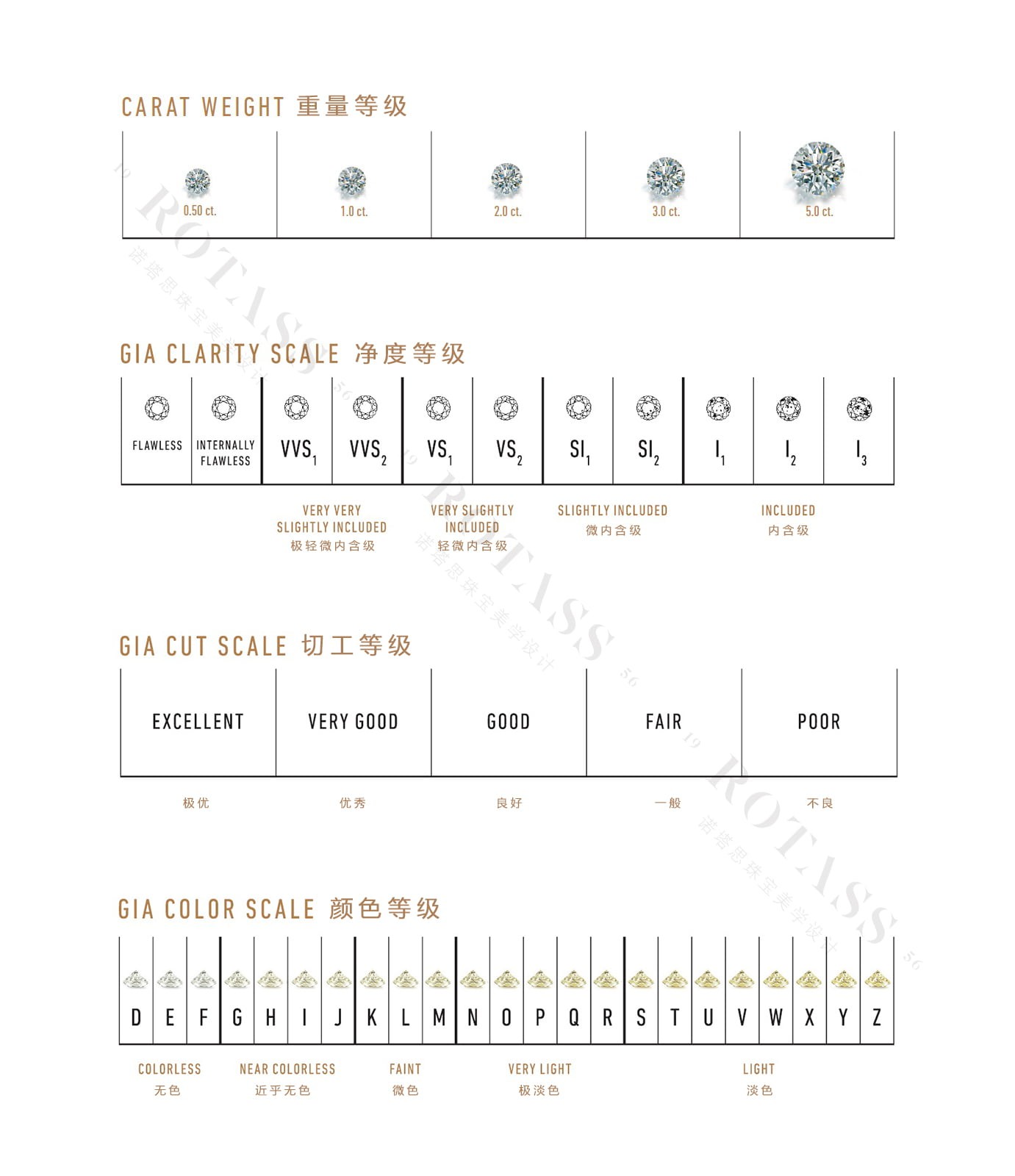
In the 1930s, the Gemological Institute of America (GIA) proposed the 4C concept of modern diamond grading, that is, from the four aspects of color (Colour), clarity (Clarity), cut (Cut) and carat weight (Carat weight). The quality of diamonds is graded, referred to as "4C" grading.

Once the modern diamond grading term was proposed, it quickly replaced the original "old term". Color grade, clarity, cut and carat weight have become internationally accepted concepts, adapting to the international development of diamond production and commerce. With the continuous development of the diamond trade, the "4C" grading standard was further revised and perfected. In the 1950s, a systematic theory and method was formed, and a set of scientific and perfect modern diamond "4C" grading standard was proposed.
On this basis, in 1963, Germany defined the diamond "4C" grading term. In 1969, the European Scandinavian Diamond Council (Scan.D.N) diamond "4C" grading standard promoted the establishment and improvement of diamond grading standards in European countries

In 1970, Germany added part of the cut grading to the diamond "4C" grading standard;
In 1974, CIBJO perfected the diamond "4C" grading standard.
In my country, since the 1980s, the "4C" classification of diamonds has gradually become known to people.
The diamond "4C" grading standard is gradually formed and improved with the continuous development of the world diamond trade, which ensures the healthy and steady development of the diamond market. At the same time, it also greatly promoted the prosperity and internationalization of diamond trade.









-

CVD Single-Crystal Diamonds: An Analysis of the Complete Processing Workflow from Gas-Phase Deposition to Finished Diamond Chips
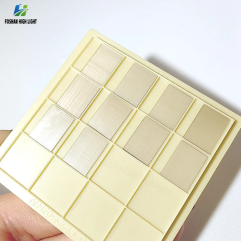
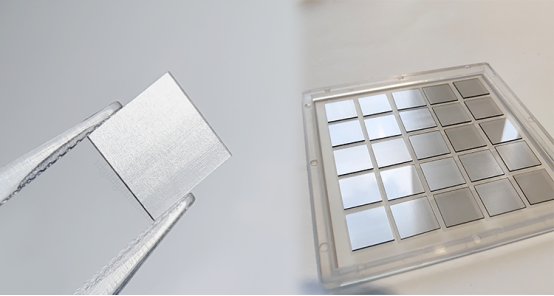
MPCVD (Microwave Plasma Chemical Vapor Deposition) technology is currently the core process for producing high-quality single-crystal diamond s. Thanks to its advantages of low defect rates, high purity, and controllable large dimensions, it is widely used in fields such as semiconductor heat dissipation, precision optics, and high-end sensors. The final quality of single-crystal diamond s depends on comprehensive process control throughout the entire workflow—from vapor deposition growth to pos
-
Single-Crystal or Polycrystalline Diamond — Which Has Greater Potential?
As diamond continues to enter industries such as semiconductors, thermal management, optics, high-power electronics, and precision machining, the requirements for diamond materials are also evolving.
-
Diamond Polishing and Grinding Processes: Core Challenges and Industry Hurdles
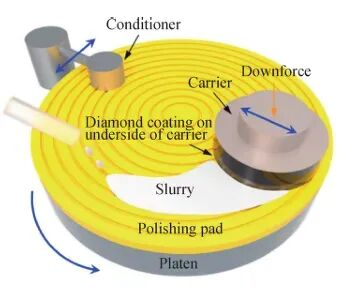
Diamond is often hailed as the “ultimate material” – ranking 10 on the Mohs hardness scale, boasting an ultra‑high thermal conductivity (~2,200 W/(m·K)), excellent chemical stability, and broad optical transparency. These properties make it irreplaceable in cutting‑edge applications such as semiconductor heat dissipation, high‑end optics, and quantum chips. Yet the paradox of “good materials are hard to process” is nowhere more evident than in diamond. From rough grinding for planarization to at
-
Single-Crystal vs Polycrystalline CVD Diamond: Process Difference Lies in Growth Logic, Not Equipment
The process difference between single crystal and polycrystalline CVD diamond lies not in equipment, but in growth logic. Single crystal and polycrystalline CVD diamond are two functional new materials with completely independent growth mechanisms, lattice structures and performance systems. Their process logic, product features and application boundaries diverge fundamentally from the very start of deposition and growth. Comparing or selecting materials without considering their underlying crys