- 中文
- English
- Español
How to Choose the Right MPCVD Equipment?
2026-04-10 16:34:41
Click:
“
MPCVD equipment is a critical asset across a wide range of industries, including industrial manufacturing, semiconductor thermal management, precision cutting tools, and lab-grown diamonds. Choosing the right equipment not only boosts production efficiency and ensures consistent product quality but also effectively controls long-term costs, making your entire production process smoother and more competitive. Many people struggle with the question: How do I make the right choice? Today, drawing o
”
MPCVD equipment is a critical asset across a wide range of industries, including industrial manufacturing, semiconductor thermal management, precision cutting tools, and lab-grown diamonds. Choosing the right equipment not only boosts production efficiency and ensures consistent product quality but also effectively controls long-term costs, making your entire production process smoother and more competitive. Many people struggle with the question: How do I make the right choice? Today, drawing on High Light’s years of industry experience, we share a practical and easy-to-understand guide to selecting MPCVD equipment.
Ⅰ. First, Clarify Your Products and Production Scale
The first step in choosing equipment is not to look at parameters, but to define your actual needs.
• Are you producing lab-grown diamonds (white diamonds, fancy color diamonds, large-carat rough diamonds)?
• Or industrial diamonds, such as heat sinks, optical-grade diamonds, and single-crystal/polycrystalline wafers?
• Or precision tools like diamond cutting tools and diamond coatings?
• Is your production scale for laboratory R&D, small-batch trial production, or large-scale mass production?
Different products and output volumes require different equipment types, power ratings, and chamber sizes. Getting your direction right first will prevent costly missteps later.

Ⅱ. Focus on Core Technical Parameters of MPCVD Equipment
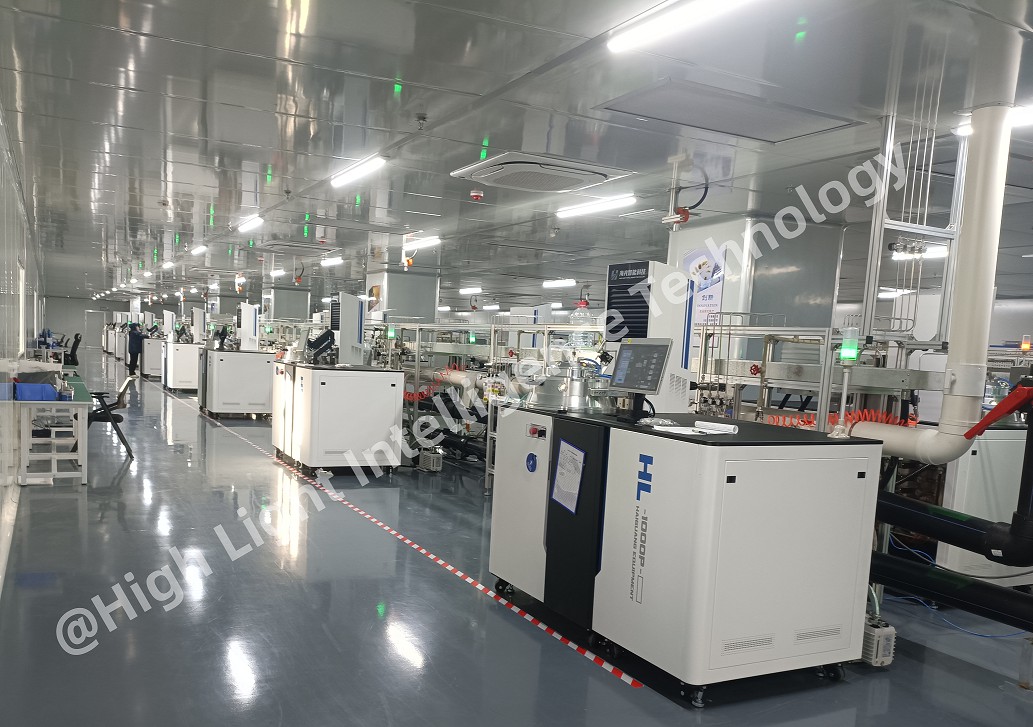
The mainstream, stable and high-quality solution in the industry today is MPCVD (Microwave Plasma Chemical Vapor Deposition) equipment. High Light offers the following main MPCVD models:
1. Power and Deposition Area
• 6kW Model: 50–60mm deposition area, high growth rate and excellent air tightness, ideal for R&D and small-batch production.
• 10kW Model: 80–90mm deposition area, fast deposition speed and uniform plasma coverage, perfect for stable mass production.
• 15kW Model: Supports a 100mm (4-inch) large chamber, with fast deposition and uniform energy distribution, designed for large-scale high-volume production.
2.Plasma Uniformity
The coverage of the plasma ball and the uniformity of energy distribution from the center to the periphery directly determine the quality of your diamonds—including purity, stress levels, freedom from impurities, and crack resistance.
3.Automation and Control Precision
Check if the equipment is equipped with a Z-axis automatic lifting platform, whether it can achieve an adjustment accuracy of 0.01mm, and if the lifting range meets your needs. Higher automation means less manual intervention and better batch-to-batch consistency.
4.Specialized Model Selection
For polycrystalline diamond production, prioritize the 15kW bias-type model for superior uniformity and efficiency. For single-crystal diamonds, lab-grown diamonds, and heat sinks, standard MPCVD models are more suitable.

Ⅲ. Don’t Just Look at the Machine: Comprehensive Service Matters More
Buying equipment is not a one-time transaction. Post-sales technical support, installation, training, and upgrades directly determine how quickly and stably you can start production.
A complete service package should include:
CAD plant layout planning
Design and construction support for gas, water and electrical systems
On-site equipment installation and commissioning
Hands-on operation training for your engineers
Long-term technical support including process optimization, software upgrades, and deposition area expansion
Only manufacturers that offer turnkey project services can make your journey from factory setup to full production as hassle-free as possible.

Ⅳ. Prioritize Manufacturers with Full Industrial Chain Capabilities
The reliability of equipment, maturity of processes, and cost advantages all depend heavily on whether the manufacturer has a complete industrial chain.
At High Light Intelligence Technology, we have 17 years of dedicated expertise in diamond materials. We have built a complete closed-loop industrial chain covering independent R&D and manufacturing of MPCVD equipment, CVD diamond growth, R&D, processing and sales, as well as production of industrial diamonds, heat sinks, cutting tools and finished jewelry.
We also maintain deep partnerships with research institutes and core component suppliers to continuously iterate our equipment and processes. Because we use our own equipment for long-term production, we truly understand what our customers need—and that’s how we build equipment that is more stable and user-friendly.
Finally,choosing MPCVD equipment is essentially choosing stability, efficiency, cost-effectiveness, and long-term support.
By first clarifying your products and production scale, then understanding core technical parameters, valuing end-to-end services, prioritizing manufacturers with full industrial chain capabilities, and considering future scalability, you will be able to select the equipment that best fits your needs.
We hope this guide helps those considering entering the CVD diamond industry. If you have any questions or interests, feel free to contact us.
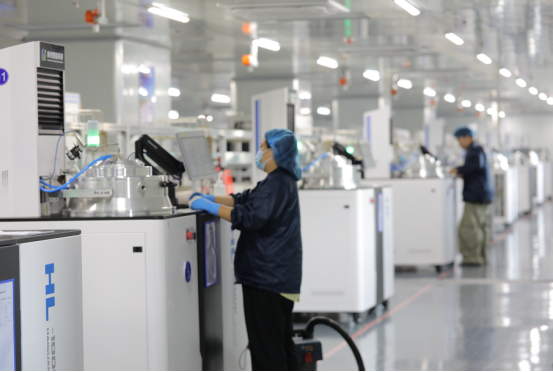
High Light Intelligence Technology, a pioneer in the CVD diamond industry, has advanced MPCVD technology and CVD diamond production workshops. We focus on producing high-purity lab-grown diamonds for the jewelry industry, and at the same time create industrial-grade CVD diamond products, covering single crystals, polycrystalline, films and diamond surface metallization. We also provide 6kw/10kw/15kw MPCVD equipment to help customers in all aspects, from equipment to products, and then to all-round services, to create brilliance together.









-

CVD Single-Crystal Diamonds: An Analysis of the Complete Processing Workflow from Gas-Phase Deposition to Finished Diamond Chips
MPCVD (Microwave Plasma Chemical Vapor Deposition) technology is currently the core process for producing high-quality single-crystal diamond s. Thanks to its advantages of low defect rates, high purity, and controllable large dimensions, it is widely used in fields such as semiconductor heat dissipation, precision optics, and high-end sensors. The final quality of single-crystal diamond s depends on comprehensive process control throughout the entire workflow—from vapor deposition growth to pos
-
Single-Crystal or Polycrystalline Diamond — Which Has Greater Potential?
As diamond continues to enter industries such as semiconductors, thermal management, optics, high-power electronics, and precision machining, the requirements for diamond materials are also evolving.
-
Diamond Polishing and Grinding Processes: Core Challenges and Industry Hurdles
Diamond is often hailed as the “ultimate material” – ranking 10 on the Mohs hardness scale, boasting an ultra‑high thermal conductivity (~2,200 W/(m·K)), excellent chemical stability, and broad optical transparency. These properties make it irreplaceable in cutting‑edge applications such as semiconductor heat dissipation, high‑end optics, and quantum chips. Yet the paradox of “good materials are hard to process” is nowhere more evident than in diamond. From rough grinding for planarization to at
-
Single-Crystal vs Polycrystalline CVD Diamond: Process Difference Lies in Growth Logic, Not Equipment
The process difference between single crystal and polycrystalline CVD diamond lies not in equipment, but in growth logic. Single crystal and polycrystalline CVD diamond are two functional new materials with completely independent growth mechanisms, lattice structures and performance systems. Their process logic, product features and application boundaries diverge fundamentally from the very start of deposition and growth. Comparing or selecting materials without considering their underlying crys