- 中文
- English
- Español
Single-Crystal vs Polycrystalline CVD Diamond: Process Difference Lies in Growth Logic, Not Equipment
2026-09-14 15:25:02
Click:
“
The process difference between single
crystal and polycrystalline CVD diamond lies not in equipment, but in growth logic.
Single
crystal and polycrystalline CVD diamond are two functional new materials with completely independent growth mechanisms, lattice structures and performance systems. Their process logic, product features and application boundaries diverge fundamentally from the very start of deposition and growth. Comparing or selecting materials without considering their underlying crys
”
The process difference between single-crystal and polycrystalline CVD diamond lies not in equipment, but in growth logic.
Single-crystal and polycrystalline CVD diamond are two functional new materials with completely independent growth mechanisms, lattice structures and performance systems. Their process logic, product features and application boundaries diverge fundamentally from the very start of deposition and growth. Comparing or selecting materials without considering their underlying crystal structures will easily cause material mismatch in high end scenarios and overestimation of performance in mass-production projects. This will block the practical application of the materials.
1. Growth mechanism determines lattice-structure differences
The performance and process gaps between CVD diamond products stem from their totally different growth modes. This is the fundamental cause of all their other differences.
Single-crystal CVD diamond: ordered epitaxy, ultra-pure single-lattice structure
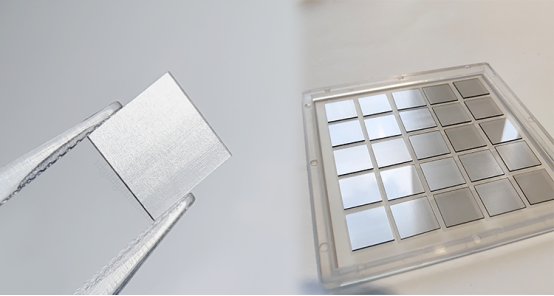
High-quality oriented single-crystal diamond is required as the seed crystal for single-crystal CVD diamond production. During deposition, separated carbon atoms strictly follow the inherent lattice orientation of the substrate. They grow layer by layer in an ordered epitaxial way. Inside the finished product, crystals are neatly arranged with highly consistent lattice orientation. This greatly reduces impurities and micro-defects. The final material has high purity and a continuous, complete crystal structure. It contains no grain boundaries or lattice dislocations and shows excellent structural stability.
This growth mode demands extremely strict production environments and precise parameters. It has a slow growth rate and low process tolerance. Large-size plates are hard to produce. But this method can fully retain the native outstanding properties of diamond. Single crystal CVD diamond is an essential material for high-end precision applications.

Polycrystalline CVD diamond: random nucleation, composite structure of micro-crystals
Polycrystalline CVD diamond does not need an oriented single-crystal seed crystal. A large number of diamond nuclei with random orientations form on a common substrate. These nuclei grow independently and merge with one another. The final product is an aggregate made of countless tiny diamond grains. Grain boundaries and micro-lattice defects naturally exist inside the material. They are inherent structural features that cannot be eliminated.
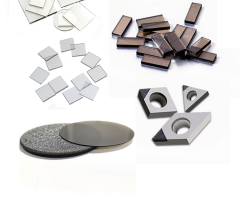
Compared with the single-crystal process, polycrystalline diamond grows faster. Its production process allows wider parameter tolerance. Its overall manufacturing cost is lower. It has great advantages in large-scale mass production. However, internal grain boundaries limit its performance. Key indicators such as material uniformity and thermal stability are generally lower than those of single-crystal products.

2. Process differences
Single-crystal process: extreme control, trading speed for ultimate performance
The core of single-crystal CVD diamond production is ordered homo-epitaxial growth. It fully relies on high quality single-crystal seed crystals. Parameters including cavity temperature, air pressure, hydrocarbon gas concentration and plasma status are controlled at the micrometer level. The main goal is to suppress secondary nucleation. Carbon atoms must stack along one single lattice direction. Grain boundaries, defects and dislocations must be avoided.
Strict process standards give single-crystal diamond outstanding structural consistency and ultra-low impurity content. Its thermal conductivity can steadily exceed 2000 W/m·K. It features high thermal stability and excellent mechanical precision. It is a must-have material for ultra-high-power RF devices, hot-spot heat dissipation of high-end chips, precision optics and high-precision machining. This process has a long growth cycle and tough yield control. Large-size production is not feasible, which leads to relatively high costs.
Polycrystalline process: controlled nucleation, trading partial performance for industrial-scale output
The core of polycrystalline CVD diamond production is controlled multi-site random nucleation. Operators adjust plasma parameters, gas ratios and substrate conditions. They induce evenly-distributed nuclei with random orientations on the substrate surface. Diamond grains grow at the same time and connect together. Binder-free pure diamond plates are formed.
This process allows wider parameter tolerance and much higher growth efficiency. Large-size plates of 8-inch and above can be stably mass-produced. Its production cycle and total cost are 1/3-1/2 of those for single-crystal diamond. Due to scattering at internal grain boundaries, its thermal conductivity stays between 1000 W/m·K and 1500 W/m·K.
3. Application matching: no better or worse process, proper fit creates core value
With more than ten years of industrial experience, we stick to one core idea. Single-crystal and polycrystalline CVD diamond processes have no absolute advantages or disadvantages. They are suitable for different scenarios. Only accurate material matching can maximize material value.
Single-crystal CVD diamond: prioritize extreme performance for high-end precision sectors
Manufacturers trade off cost, dimension and production speed for top-level thermal conductivity, high structural stability and ultra high precision. This material serves ultra-high-power semiconductors, precision cooling for advanced chips, aerospace precision components and high-end cutting tools. It meets industry demands for extreme material performance.
Polycrystalline CVD diamond: balance performance and cost to drive large-scale industrial upgrading
A moderate drop in performance brings large-size output, lower costs and mass-production capacity. It perfectly fits high volume, cost-effective markets such as AI server heat dissipation, industrial diamond tool coatings, infrared optical windows and general high-end precision machining. It helps industries cut costs and expand production.

In the future, the core competitiveness of the CVD-diamond industry will not depend on equipment quantity or total production capacity. It will lie in the ability to select proper processes based on fundamental growth logic. If you are looking for a supplier of single-crystal or polycrystalline CVD diamond, please contact our professional team.
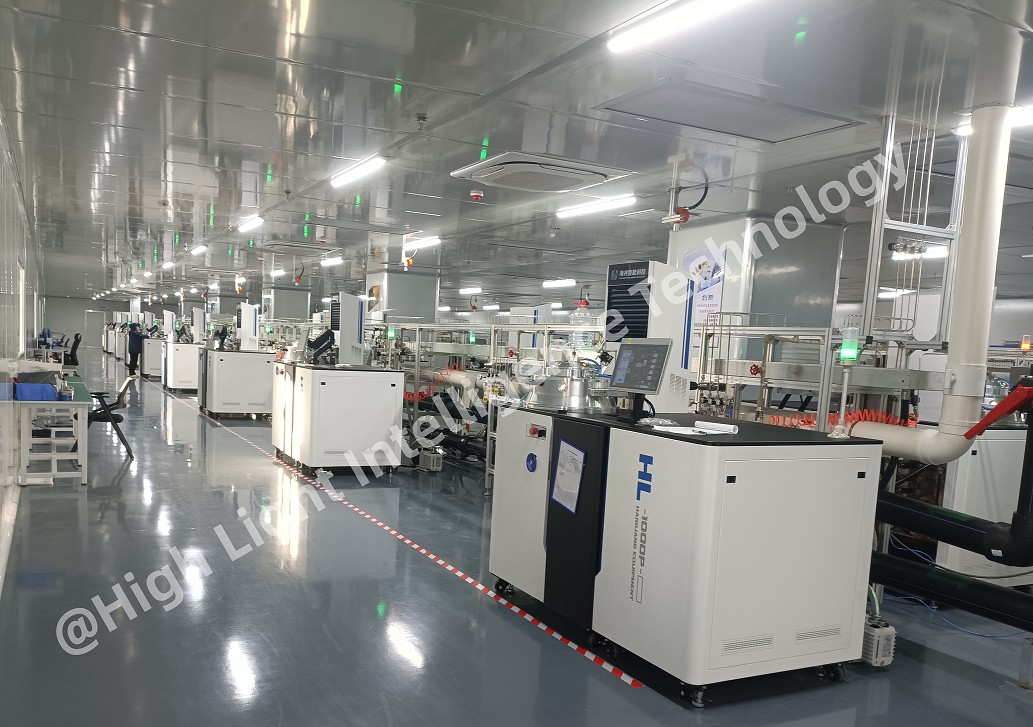
High Light Intelligence Technology, a pioneer in the CVD diamond industry, has advanced MPCVD technology and CVD diamond production workshops. We focus on producing high-purity lab-grown diamonds for the jewelry industry, and at the same time create industrial-grade CVD diamond products, covering single crystals, polycrystalline, films and diamond surface metallization. We also provide 6kw/10kw/15kw MPCVD equipment to help customers in all aspects, from equipment to products, and then to all-round services, to create brilliance together.









-

Single-Crystal vs Polycrystalline CVD Diamond: Process Difference Lies in Growth Logic, Not Equipment
The process difference between single crystal and polycrystalline CVD diamond lies not in equipment, but in growth logic. Single crystal and polycrystalline CVD diamond are two functional new materials with completely independent growth mechanisms, lattice structures and performance systems. Their process logic, product features and application boundaries diverge fundamentally from the very start of deposition and growth. Comparing or selecting materials without considering their underlying crys
-
From Lab-Grown Diamonds to Industrial Diamonds: Is It Time to Build an MPCVD Factory?
The lab-grown diamond industry is entering a new stage. Over the these few years, lab-grown diamonds have gradually gained wider acceptance in the jewelry market. With the development of production technology, equipment maturity and supply chain improvement, the industry is becoming more standardized and efficient. But beyond jewelry, another opportunity is attracting more attention:Industrial diamond applications.
-
Diamond‑Copper Composite: A Next‑Generation Solution for High‑Power Electronics Thermal Management
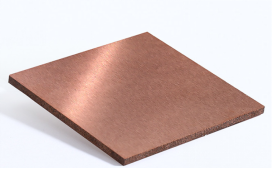
Diamond‑copper composite (DC) is an advanced metal‑matrix composite material consisting of diamond particles as the reinforcement phase and copper as the matrix, fabricated through state‑of‑the‑art composite preparation techniques. Diamond has the highest thermal conductivity of any naturally occurring material, with isotropic values ranging from 1200 to 2300 W/m·K. Copper, with a thermal conductivity of 401 W/m·K, ranks second only to silver among common metals. By combining the two, the compo
-
Mosaic Single‑Crystal Diamond: Breaking Size Limits
With an ultra‑wide bandgap of 5.47 eV, ultra‑high thermal conductivity (>2000 W/m·K), high carrier mobility (electron mobility up to 4500 cm²·V⁻¹·s⁻¹), and ultra‑high theoretical breakdown field strength (>10 MV/cm), Single‑Crystal Diamond (SCD) is an ideal candidate for next‑generation high‑power, high‑frequency and extreme‑environment electronic devices. However, both natural diamond and HPHT‑synthesized single‑crystal diamond are limited in lateral size, which greatly hinders large‑scal