- 中文
- English
- Español
Diamond Color and Grade (2)
2023-04-13 16:22:33
Click:
“
The color of a diamond, on the one hand, can affect the appearance of the diamond; on the other hand, it can also reflect the rarity of the diamond. The more colorless a diamond is, the rarer it is. Although the hue difference between diamonds that are close to colorless has no real effect on the appearance of the diamond.
”
According to my country's national diamond grading standard (GB/T16554-2010), the color of unmounted diamonds is divided into 12 grades, and diamond color grades are described in two ways: letter terms and number terms
diamond color grade(GB/T16554-2010) | Reference characteristics of the corresponding master stone | |
D | 100 | Grade D: Extremely white to slightly watery blue |
E | 99 | E grade: pure white |
F | 98 | Class F: white |
G | 97 | Grade G: almost no yellow tinge on the pavilion and girdle sides |
H | 96 | Grade H: The pavilion and the sides of the girdle appear to have a yellowish tint |
I | 95 | Grade I: Very slight yellowish white on the side of the pavilion and girdle |
J | 94 | Grade J: slightly yellowish-white on the side of the pavilion and girdle, very slightly yellowish-white on the crown |
K | 93 | Grade K: very light yellow-white on the side of the pavilion and girdle, slightly yellow-white on the crown |
L | 92 | L grade: light yellowish white on the side of the pavilion and girdle, slightly yellowish white on the crown |
M | 91 | Grade M: Pale yellowish-white on the side of the pavilion and girdle, and light yellowish-white on the crown |
N | 90 | Grade N: The diamond has an obvious light yellow color when viewed from any angle |
<90 | ||
The world's major diamond grading agencies have no essential difference in diamond color grading standards. European color grades use A descriptive term whose meaning is close to that of a color phenomenon, and which is easy for people without professional knowledge to understand.
The color of a diamond, on the one hand, can affect the appearance of the diamond; on the other hand, it can also reflect the rarity of the diamond. The more colorless a diamond is, the rarer it is. Although the difference in hue between diamonds that are close to colorless has no real effect on the appearance of the diamond, they are still classified into different grades and differ in price more than diamonds with darker hues. big. The color of a diamond is closely related to its price. Under the same conditions as the other three "Cs", the higher the color grade, the higher the price. The price difference between each color grade is between 10% and 45%. The price difference of high-color diamonds is greater than that of low-color diamonds. It is precisely because of the huge difference in the value of diamonds of different color grades that it is necessary to accurately grade the color of diamonds.










-

Foshan Highlight Intelligent Technology invites you to the 140th Canton Fair—join us at Booth 21.2A23-24 in the Friendship Hall to share in the brilliance.
Foshan Highlight Intelligent Technology invites you to the 140th Canton Fair—join us at Booth 21.2A23-24 in the Friendship Hall to share in the brilliance.
-
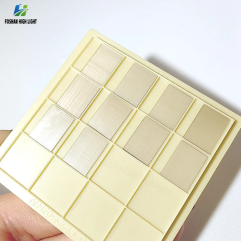
CVD Single-Crystal Diamonds: An Analysis of the Complete Processing Workflow from Gas-Phase Deposition to Finished Diamond Chips
MPCVD (Microwave Plasma Chemical Vapor Deposition) technology is currently the core process for producing high-quality single-crystal diamond s. Thanks to its advantages of low defect rates, high purity, and controllable large dimensions, it is widely used in fields such as semiconductor heat dissipation, precision optics, and high-end sensors. The final quality of single-crystal diamond s depends on comprehensive process control throughout the entire workflow—from vapor deposition growth to pos
-
Single-Crystal or Polycrystalline Diamond — Which Has Greater Potential?
As diamond continues to enter industries such as semiconductors, thermal management, optics, high-power electronics, and precision machining, the requirements for diamond materials are also evolving.
-
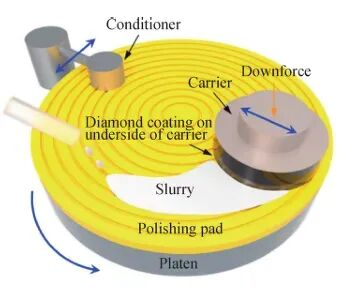
Diamond Polishing and Grinding Processes: Core Challenges and Industry Hurdles
Diamond is often hailed as the “ultimate material” – ranking 10 on the Mohs hardness scale, boasting an ultra‑high thermal conductivity (~2,200 W/(m·K)), excellent chemical stability, and broad optical transparency. These properties make it irreplaceable in cutting‑edge applications such as semiconductor heat dissipation, high‑end optics, and quantum chips. Yet the paradox of “good materials are hard to process” is nowhere more evident than in diamond. From rough grinding for planarization to at