- 中文
- English
- Español
The new results of the team of Academician Tian Yongjun of Yanshan University are published in Nature again: room temperature structural transformation and migration of diamond interface
2024-01-16 09:01:38
Click:
“
On January 4, 2024, Beijing time, Nature magazine published online the latest results of the team of Academician Tian Yongjun of the High Voltage Science Center of the State Key Laboratory of Metastable Materials Preparation Technology and Science at Yanshan University. Researchers systematically characterized multiple atomic-level configurations coexisting on Σ3{112}/<110>incoherent twin boundaries in nanotwinned diamond and recorded in situ the dislocation-mediated interface at room temp
”

In nanotwin materials with face-centered cubic structure or diamond structure, Σ3{112}/<110>incoherent twin boundary (ITB) is a common interface. In metals, this interface will migrate rapidly when the twin thickness is lower than a certain critical value, inducing the detwinization process, which is also the key reason for the softening of metal materials with nanotwin structures. Unlike metal materials, nanotwinned cubic boron nitride and nanotwinned diamond do not soften as the twins are further refined, and the hardness of the materials continues to increase. This shows that Σ3{112} ITB has high stability in covalent materials that is very different from that of metal systems. Exploring the structural origin of this high stability is of great significance for understanding the continuous hardening mechanism of nanotwinned diamond and developing high-performance nanotwinned structural materials.
This research work was supported by the National Natural Science Foundation, the National Key Research and Development Program, the Hebei Provincial Natural Science Foundation and other projects.
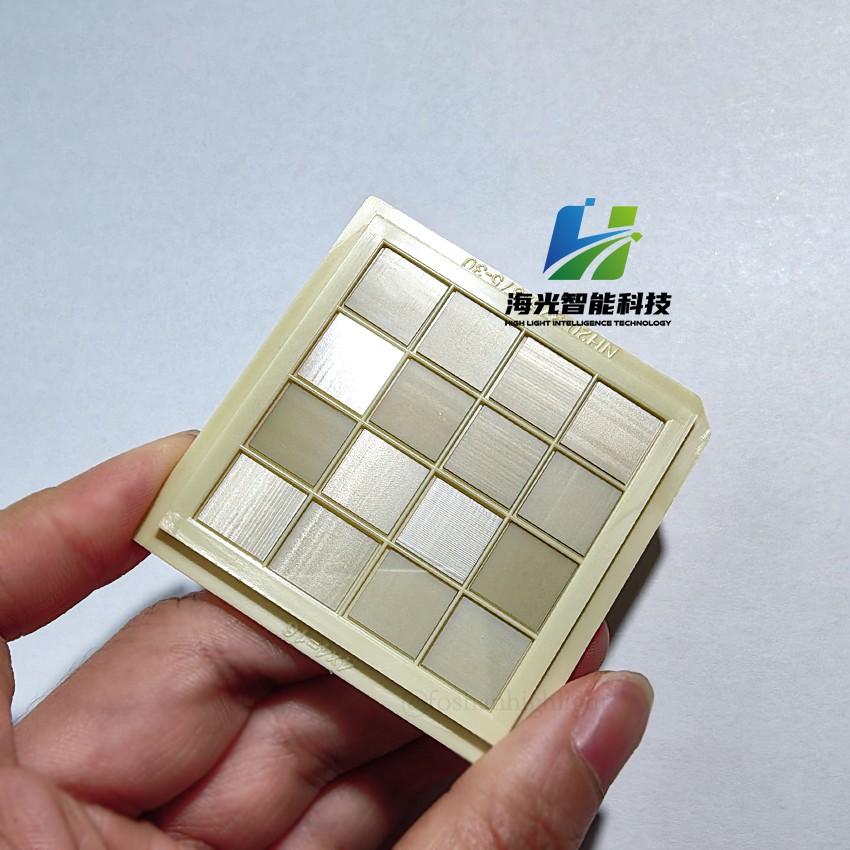
As a semiconductor diamond production supplier, High Light Intelligence Technology is developing rapidly in the semiconductor industry. We also provide diamond materials to major commercial customers and academic researchers, contributing to the development of semiconductor technology and materials.With MPCVD technology as the core, we have long been committed to the R&D and manufacturing of high-quality diamond materials and related equipment. We have advanced MPCVD equipment, laser processing equipment and precision polishing equipment.









-
CVD Single-Crystal Diamonds: An Analysis of the Complete Processing Workflow from Gas-Phase Deposition to Finished Diamond Chips
MPCVD (Microwave Plasma Chemical Vapor Deposition) technology is currently the core process for producing high-quality single-crystal diamond s. Thanks to its advantages of low defect rates, high purity, and controllable large dimensions, it is widely used in fields such as semiconductor heat dissipation, precision optics, and high-end sensors. The final quality of single-crystal diamond s depends on comprehensive process control throughout the entire workflow—from vapor deposition growth to pos
-
Single-Crystal or Polycrystalline Diamond — Which Has Greater Potential?
As diamond continues to enter industries such as semiconductors, thermal management, optics, high-power electronics, and precision machining, the requirements for diamond materials are also evolving.
-
Diamond Polishing and Grinding Processes: Core Challenges and Industry Hurdles
Diamond is often hailed as the “ultimate material” – ranking 10 on the Mohs hardness scale, boasting an ultra‑high thermal conductivity (~2,200 W/(m·K)), excellent chemical stability, and broad optical transparency. These properties make it irreplaceable in cutting‑edge applications such as semiconductor heat dissipation, high‑end optics, and quantum chips. Yet the paradox of “good materials are hard to process” is nowhere more evident than in diamond. From rough grinding for planarization to at
-
Single-Crystal vs Polycrystalline CVD Diamond: Process Difference Lies in Growth Logic, Not Equipment
The process difference between single crystal and polycrystalline CVD diamond lies not in equipment, but in growth logic. Single crystal and polycrystalline CVD diamond are two functional new materials with completely independent growth mechanisms, lattice structures and performance systems. Their process logic, product features and application boundaries diverge fundamentally from the very start of deposition and growth. Comparing or selecting materials without considering their underlying crys