- 中文
- English
- Español
Diamond’s latest Nature breaks the controversy!
2024-03-06 09:38:26
Click:
“
Professor Huang Xiaoli's team from the School of Physics of Jilin University collaborated with Professor Norman Yao from the University of California, Berkeley, Lawrence Berkeley National Laboratory and Harvard University, and successfully achieved ultrahigh pressure sensing of hydrogen-rich compounds using diamond nitrogen-vacancy color center quantum sensing technology. The experimental measurement of the Snar effect has made a major breakthrough in the experimental research on the superconduc
”
Recently, Professor Huang Xiaoli and others from the School of Physics of Jilin University collaborated with the team of Professor Norman Yao from the University of California, Berkeley, Lawrence Berkeley National Laboratory, and Harvard University, and achieved significant results in experimental research on the superconductivity of superconducting hydride-rich compounds under high pressure. A breakthrough, using diamond nitrogen-vacancy center (NV center) quantum sensing technology, successfully achieved the Meissner effect experimental measurement of hydrogen-rich compounds under ultra-high pressure. This major research result was titled "Imaging the Meissner effect in hydride superconductors using quantum sensors" and was published in Nature on February 28, 2024. In the same Nature issue, Professor Yang Sen from the Hong Kong University of Science and Technology and others made a highlight review titled "Quantum sensor settles debate about superconductivity in hydrides".
Since the discovery of superconductivity of elemental Hg, superconductivity, especially room temperature superconductors, has been a dream pursued by scientists. Hydrogen-rich compounds under high pressure are regarded as potential room temperature superconductors and have therefore become the focus of research in related fields. The team of Professor Huang Xiaoli of Jilin University discovered a variety of new hydrogen-rich compounds using various experimental techniques at high temperature and high pressure. In particular, we were the first to obtain superhydrides CeH9 and CeH10 with a superconducting transition temperature exceeding 100K and a metal-like hydrogen sublattice below one million atmospheres. However, the experimentally reported room-temperature superconductors C-S-H and Lu-N-H were successively withdrawn by Nature, making people question the authenticity of hydrogen-rich compound superconductors. Therefore, researchers urgently need to obtain a complete chain of evidence for the high-temperature superconductivity of superconducting hydride, especially to verify its superconducting Meissner effect, in order to resolve the controversy surrounding hydride-rich superconductors.
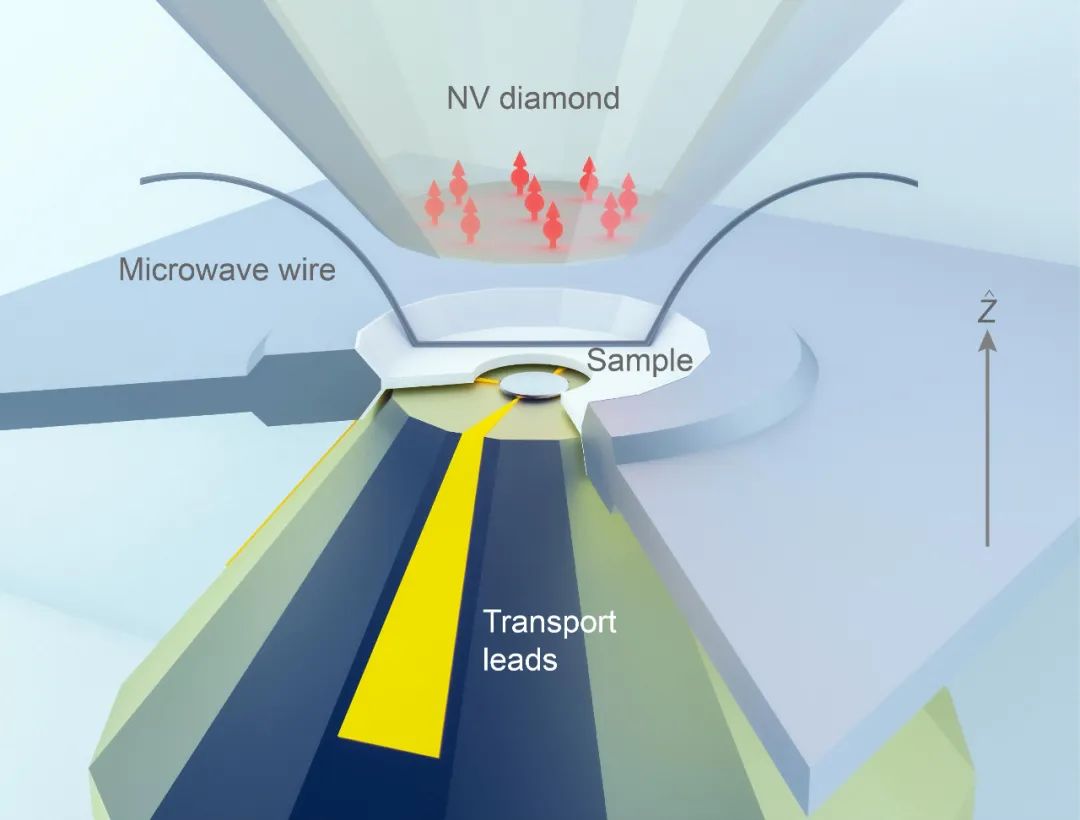
Traditional measurement methods, such as induction coils and superconducting quantum interference devices, have limitations in terms of ultimate pressure, magnetic field sensitivity and spatial resolution. Therefore, developing new magnetic detection methods and achieving accurate magnetic measurements under ultrahigh pressure are urgent issues to be solved not only for superconducting hydride research, but also for the entire high-voltage research field. NV color centers are point defects inside diamond, which have excellent magnetic field sensitivity and spatial resolution and are emerging quantum sensors. Using NV color center measurement technology, the research team was able to achieve local measurement of the Meissner effect and magnetic flux capture in trace amounts of hydride-rich samples prepared under high temperature and high pressure conditions. This makes it possible to measure the zero resistance and Meissner effect of superconductivity at the same pressure.
In 2019, research teams from the United States, France, and China independently published papers in Science magazine, kicking off the application of NV color center sensing technology in the field of high-voltage research. Among them, Professor Norman Yao's team (Science 2019, 366, 1349–1354) measured the stress distribution on the diamond anvil surface under high pressure and characterized the magnetic transition of metallic iron/gadolinium with pressure/temperature. However, how to apply NV color center measurement technology with excellent sensitivity and resolution to the study of hydrogen-rich compound superconductors under ultrahigh pressure is a new challenge. In order to overcome this challenge, Professor Huang Xiaoli's team collaborated with Professor Norman Yao's team and selected cerium hydrogen compounds that are stable to lower pressures and have excellent superconducting properties as the research object. They innovatively proposed an experimental plan for electrical and magnetic characterization of the same sample under the same pressure.
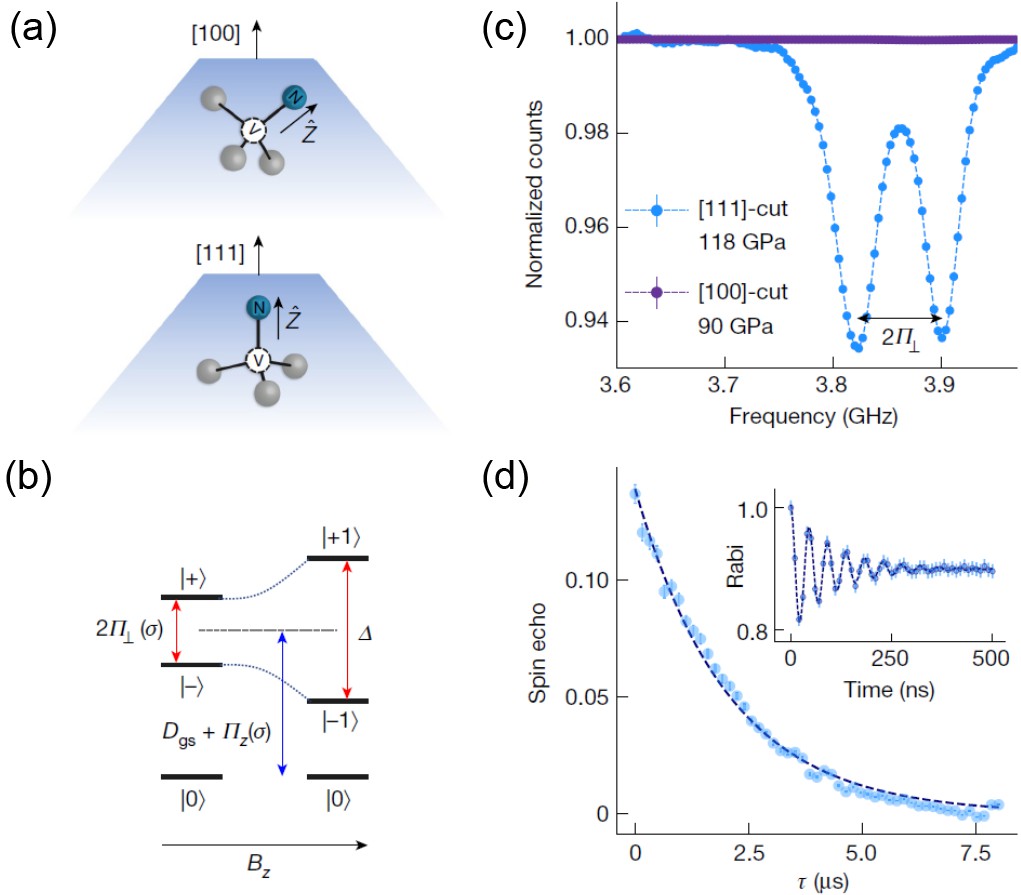
In the experiment, the team used diamond in the cutting direction to maintain the symmetry of the NV color center along the pressing direction to the greatest extent. This enabled the research team to measure the absolute strength of the magnetic field at pressures above one million atmospheres, with a sensitivity of 35 μT/√Hz and a spatial resolution of sub-micron levels. In continuous mode, the fluorescence contrast reaches 15%; in pulse mode, the spin coherence time reaches 2.04 μs, and the Rabi oscillation frequency reaches 25 MHz.
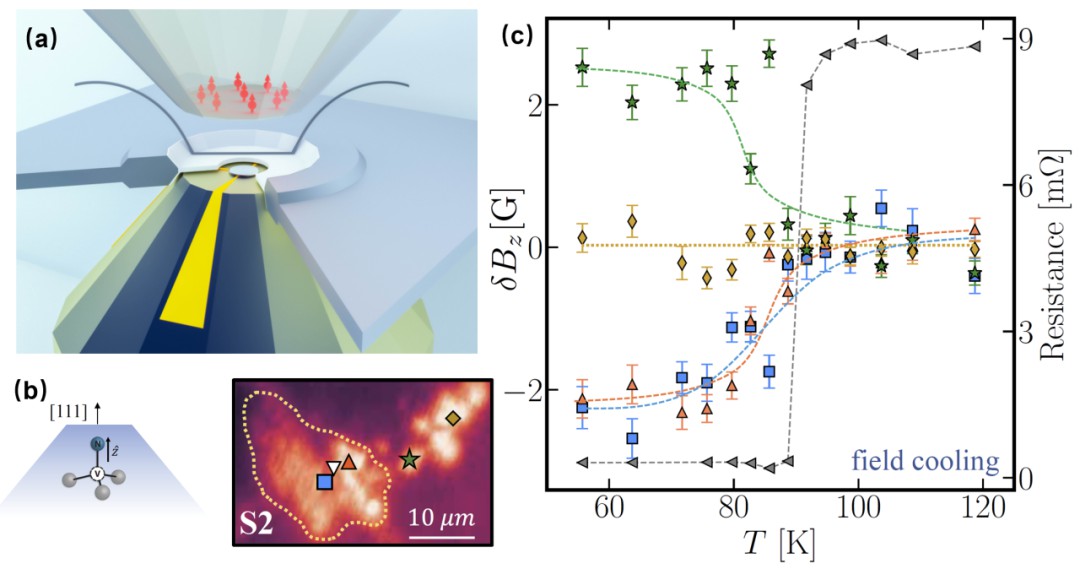
Based on this technology, the research team measured the diamagnetic properties of high-temperature superconductor CeH9 samples at different positions through field cooling (FC) and zero field cooling (ZFC), and obtained results consistent with electrical measurements, which effectively verified the superconducting cerium Meissner effect of hydrides. In addition, hysteresis caused by magnetic flux pinning was also found in the superconducting sample. The results show that the magnetic field is unevenly distributed after superconducting transformation, which is consistent with the characteristics of superconductor repulsion of magnetic fields and proves the Meissner effect of superconducting samples. The magnetic detection technology based on NV color centers has excellent spatial resolution. The research team linearly scanned the diamagnetic distribution on the surface of the sample after superconducting transformation at a specific temperature and a uniform external magnetic field with a step size of 1 micron, achieving millions of Magnetic imaging above atmospheric pressure obtained the local diamagnetic characteristics of the inhomogeneous sample, thereby determining the spatial distribution of the CeH9 superconducting sample.
This research successfully achieved high-sensitivity and spatial resolution magnetic detection under million-atmosphere pressure conditions, opening up a broad research space for magnetic measurements of trace samples under extreme conditions.
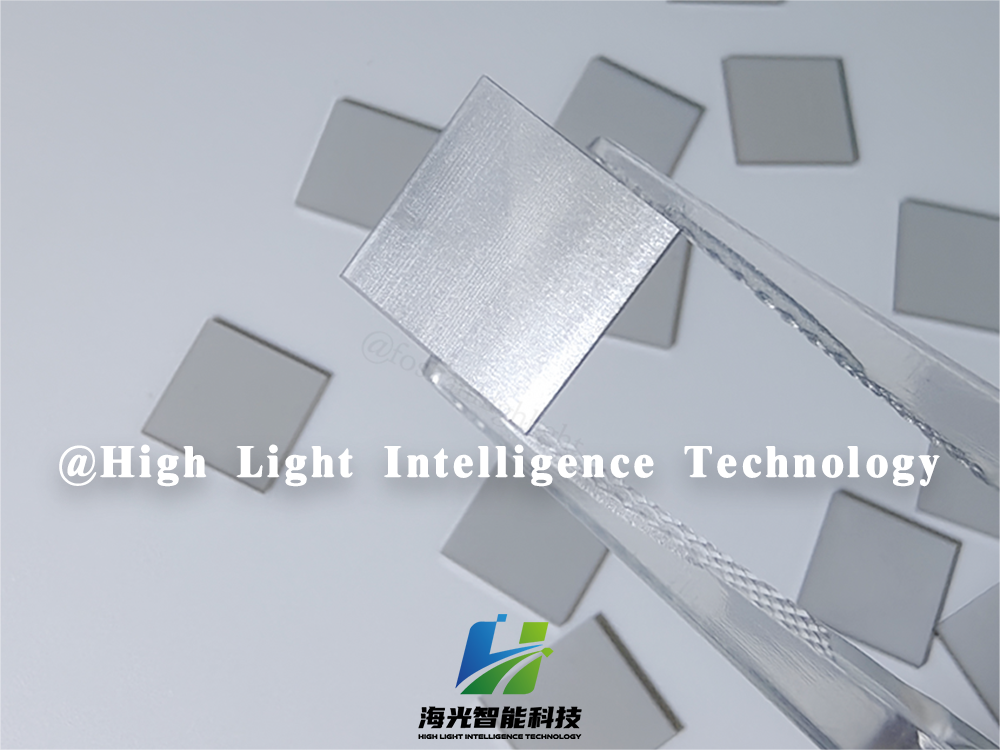
With MPCVD technology as its core, High Light Intelligence Technology has long been committed to the R&D and manufacturing of high-quality diamond materials and related equipment. It has advanced MPCVD equipment, laser processing equipment and precision polishing equipment. High Light Intelligence Technology's MPCVD technology equipment can produce high-quality diamond, thereby helping to improve the performance of integrated circuits. Our products and services are designed to provide customers with the best solutions to meet their needs for high quality diamond and integrated circuit performance.









-

CVD Single-Crystal Diamonds: An Analysis of the Complete Processing Workflow from Gas-Phase Deposition to Finished Diamond Chips
MPCVD (Microwave Plasma Chemical Vapor Deposition) technology is currently the core process for producing high-quality single-crystal diamond s. Thanks to its advantages of low defect rates, high purity, and controllable large dimensions, it is widely used in fields such as semiconductor heat dissipation, precision optics, and high-end sensors. The final quality of single-crystal diamond s depends on comprehensive process control throughout the entire workflow—from vapor deposition growth to pos
-
Single-Crystal or Polycrystalline Diamond — Which Has Greater Potential?
As diamond continues to enter industries such as semiconductors, thermal management, optics, high-power electronics, and precision machining, the requirements for diamond materials are also evolving.
-
Diamond Polishing and Grinding Processes: Core Challenges and Industry Hurdles
Diamond is often hailed as the “ultimate material” – ranking 10 on the Mohs hardness scale, boasting an ultra‑high thermal conductivity (~2,200 W/(m·K)), excellent chemical stability, and broad optical transparency. These properties make it irreplaceable in cutting‑edge applications such as semiconductor heat dissipation, high‑end optics, and quantum chips. Yet the paradox of “good materials are hard to process” is nowhere more evident than in diamond. From rough grinding for planarization to at
-
Single-Crystal vs Polycrystalline CVD Diamond: Process Difference Lies in Growth Logic, Not Equipment
The process difference between single crystal and polycrystalline CVD diamond lies not in equipment, but in growth logic. Single crystal and polycrystalline CVD diamond are two functional new materials with completely independent growth mechanisms, lattice structures and performance systems. Their process logic, product features and application boundaries diverge fundamentally from the very start of deposition and growth. Comparing or selecting materials without considering their underlying crys