- 中文
- English
- Español
Nat. Commu.: Nano-diamond, 10 times better!
2024-05-10 09:40:33
Click:
“
Electric card refrigeration uses the charging and discharging process of dielectric capacitors to achieve a high theoretical efficiency refrigeration cycle. From 2006 to 2008, the invention of electronic card (EC) ceramics and polymers attracted widespread global attention. Current research on EC equipment shows that it has the characteristics of high energy reversibility (>90%), high driving electric field energy recovery efficiency (>80%), simple driving method, compact device structure,
”
Electric card refrigeration technology is based on the charge and discharge of dielectric capacitors to achieve efficient refrigeration. EC ceramics and polymers have attracted much attention due to their high energy reversibility, high recovery rate, easy actuation and compact structure. These materials are adaptable to existing large-scale production processes and demonstrate the potential of solid-state refrigeration technology. Through active electrothermal regeneration cycle verification, EC equipment can achieve a large temperature span, comparable to traditional refrigeration technology. Electrostatically driven polymer film coolers are an important breakthrough for use in confined environments. However, in order to increase the total power, EC materials need to be added, resulting in thickening of the working body and prolonged heat transfer time. Therefore, research needs to explore more efficient EC materials to improve refrigeration performance.

In-situ XRD experiments show that the improvement in ECE results from the reduction of the non-polar-polar phase transition energy barrier in the nanocomposite. Electrostatic force microscopy (EFM) tests revealed a significant increase in ND-polymer interface potential, which may directly enhance the polarization properties of the material. Based on the dual improvement of ECE and thermal conductivity, we developed a continuous rotating cycle EC refrigeration device model. Numerical analysis shows that nanocomposites as core refrigeration components can significantly enhance the refrigeration capacity and efficiency of EC equipment. At a temperature difference of 10K, the refrigeration device using T-ND-2.6% nanocomposite has a refrigeration coefficient (COP) as high as 5.3 (terpolymer is only 0.8), and the refrigeration power remains above 240W, which is relatively pure ternary copolymer. Physical equipment increased by 10 times.











-

CVD Single-Crystal Diamonds: An Analysis of the Complete Processing Workflow from Gas-Phase Deposition to Finished Diamond Chips
MPCVD (Microwave Plasma Chemical Vapor Deposition) technology is currently the core process for producing high-quality single-crystal diamond s. Thanks to its advantages of low defect rates, high purity, and controllable large dimensions, it is widely used in fields such as semiconductor heat dissipation, precision optics, and high-end sensors. The final quality of single-crystal diamond s depends on comprehensive process control throughout the entire workflow—from vapor deposition growth to pos
-
Single-Crystal or Polycrystalline Diamond — Which Has Greater Potential?
As diamond continues to enter industries such as semiconductors, thermal management, optics, high-power electronics, and precision machining, the requirements for diamond materials are also evolving.
-
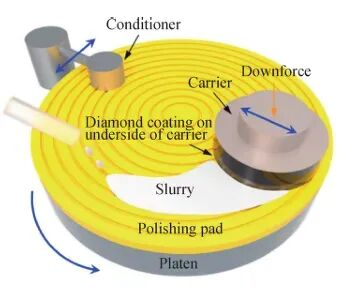
Diamond Polishing and Grinding Processes: Core Challenges and Industry Hurdles
Diamond is often hailed as the “ultimate material” – ranking 10 on the Mohs hardness scale, boasting an ultra‑high thermal conductivity (~2,200 W/(m·K)), excellent chemical stability, and broad optical transparency. These properties make it irreplaceable in cutting‑edge applications such as semiconductor heat dissipation, high‑end optics, and quantum chips. Yet the paradox of “good materials are hard to process” is nowhere more evident than in diamond. From rough grinding for planarization to at
-
Single-Crystal vs Polycrystalline CVD Diamond: Process Difference Lies in Growth Logic, Not Equipment
The process difference between single crystal and polycrystalline CVD diamond lies not in equipment, but in growth logic. Single crystal and polycrystalline CVD diamond are two functional new materials with completely independent growth mechanisms, lattice structures and performance systems. Their process logic, product features and application boundaries diverge fundamentally from the very start of deposition and growth. Comparing or selecting materials without considering their underlying crys