- 中文
- English
- Español
Diamond-based transistors, a milestone breakthrough!
2025-02-14 15:42:34
Click:
“
Recently, David Moran, Professor at the James Watt School of Engineering at the University of Glasgow, led a research team in collaboration with the Royal Melbourne Institute of Technology in Australia and Princeton University in the United States to complete a study. Their research results, 'Extreme Enhancement-Mode Operation Accumulation Channel Hydrogen-Terminated Diamond FETs with Vth <−6V and High on-Current', were published in the journal Advanced Electronic Materials.
”
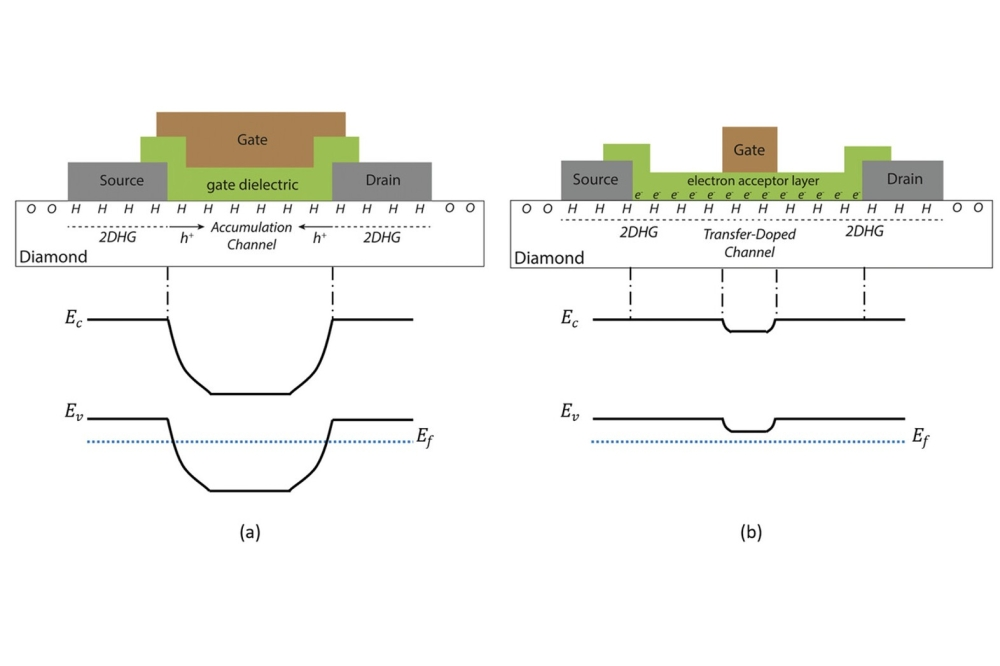
Diamond has an inherently wide bandgap that enables it to handle much higher voltages than silicon before electrical breakdown, making it particularly attractive for high-power electronic applications such as power grids or electric vehicles.
'The challenge in power electronics is that a switch needs to be designed to stay firmly closed when not in use to ensure it meets safety standards, but it also has to deliver very high power when turned on,' Moran said. 'Previous state-of-the-art diamond transistors have typically been good at one at the expense of the other - the switches were good at staying closed but not so good at delivering current on demand, or vice versa. What we've been able to do is design a diamond transistor that excels at both, which is a significant advance.'
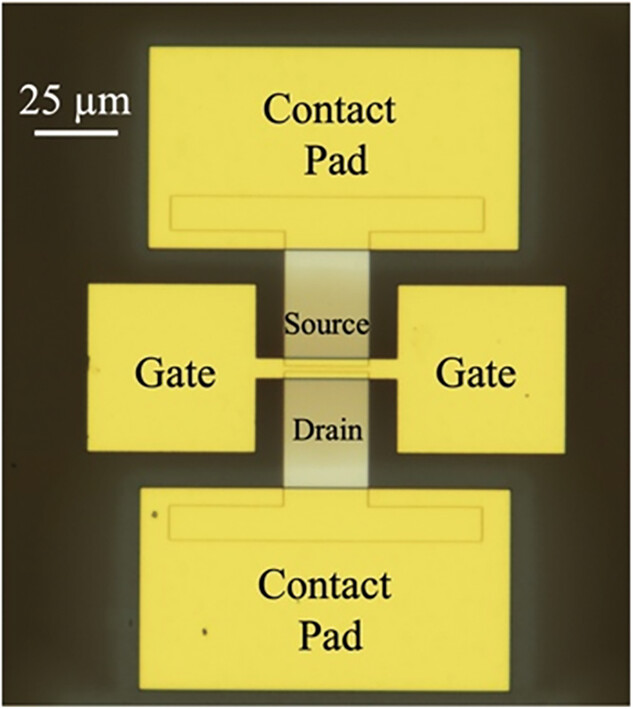
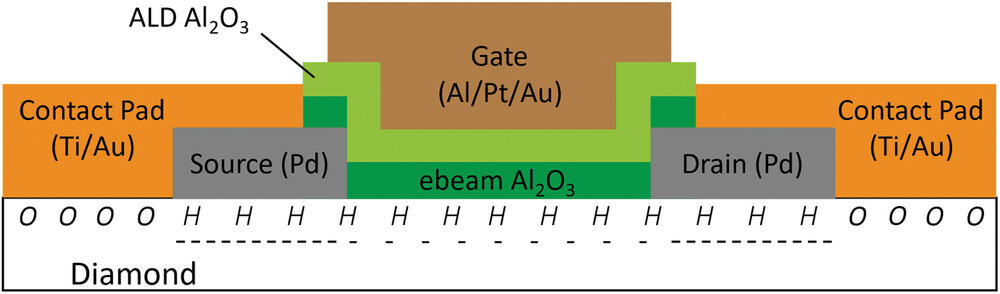
The Watt Nano Center team at the University of Glasgow used surface chemistry to improve the performance of diamond, coating it with hydrogen and then with aluminum oxide. The new diamond transistor requires 6 volts to turn on, has high current, and doubles the efficiency. When it is turned off, the resistance is extremely high, the noise is below the background, and there is almost no current leakage, which is crucial for high-power applications.









-

Single-Crystal vs Polycrystalline CVD Diamond: Process Difference Lies in Growth Logic, Not Equipment
The process difference between single crystal and polycrystalline CVD diamond lies not in equipment, but in growth logic. Single crystal and polycrystalline CVD diamond are two functional new materials with completely independent growth mechanisms, lattice structures and performance systems. Their process logic, product features and application boundaries diverge fundamentally from the very start of deposition and growth. Comparing or selecting materials without considering their underlying crys
-
From Lab-Grown Diamonds to Industrial Diamonds: Is It Time to Build an MPCVD Factory?
The lab-grown diamond industry is entering a new stage. Over the these few years, lab-grown diamonds have gradually gained wider acceptance in the jewelry market. With the development of production technology, equipment maturity and supply chain improvement, the industry is becoming more standardized and efficient. But beyond jewelry, another opportunity is attracting more attention:Industrial diamond applications.
-
Diamond‑Copper Composite: A Next‑Generation Solution for High‑Power Electronics Thermal Management
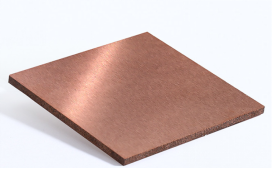
Diamond‑copper composite (DC) is an advanced metal‑matrix composite material consisting of diamond particles as the reinforcement phase and copper as the matrix, fabricated through state‑of‑the‑art composite preparation techniques. Diamond has the highest thermal conductivity of any naturally occurring material, with isotropic values ranging from 1200 to 2300 W/m·K. Copper, with a thermal conductivity of 401 W/m·K, ranks second only to silver among common metals. By combining the two, the compo
-
Mosaic Single‑Crystal Diamond: Breaking Size Limits
With an ultra‑wide bandgap of 5.47 eV, ultra‑high thermal conductivity (>2000 W/m·K), high carrier mobility (electron mobility up to 4500 cm²·V⁻¹·s⁻¹), and ultra‑high theoretical breakdown field strength (>10 MV/cm), Single‑Crystal Diamond (SCD) is an ideal candidate for next‑generation high‑power, high‑frequency and extreme‑environment electronic devices. However, both natural diamond and HPHT‑synthesized single‑crystal diamond are limited in lateral size, which greatly hinders large‑scal