- 中文
- English
- Español
The underlying logic of diamond "carat premium": Why is a 1.0ct diamond twice as expensive as a 0.9ct diamond?
2026-01-23 10:24:01
Click:
“
When buying diamonds, many people are puzzled: diamonds that differ by only 0.1 carats, with the same color grade, clarity, and cut, often have a price that is more than double that of a 0.9-carat diamond. This pricing model, which deviates from the linear increase in weight, is the diamond industry's unique "carat premium." It is not a marketing trick, but rather reflects the underlying logic of diamonds from mining to consumption.
”
When buying diamonds, many people are puzzled: diamonds that differ by only 0.1 carats, with the same color grade, clarity, and cut, often have a price that is more than double that of a 0.9-carat diamond. This pricing model, which deviates from the linear increase in weight, is the diamond industry's unique 'carat premium.' It is not a marketing trick, but rather reflects the underlying logic of diamonds from mining to consumption.
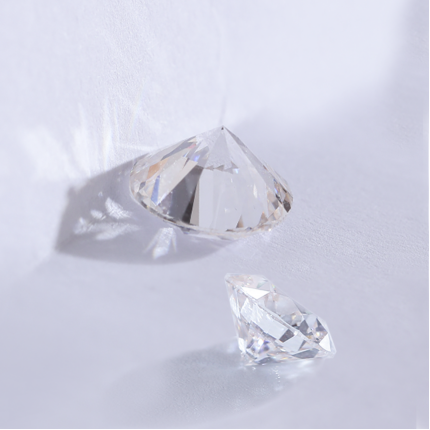
To understand carat premiums, one must first understand that the value of a diamond is never simply measured by its weight. Carat, as the unit of weight for diamonds (1 carat = 0.2 grams), is inherently linked to scarcity—a scarcity predetermined from the moment the rough diamond is mined.
Mining natural diamonds is itself a 'treasure hunt,' and high-quality rough diamonds suitable for cutting into large carat finished diamonds are extremely rare. Rough diamonds are mostly irregular crystal shapes, and cutting them requires preserving as much weight as possible while ensuring brilliance and clarity, resulting in a very high loss rate. Typically, a 1.0-carat finished diamond requires at least 2.5-3 carats of rough diamonds to cut, with a loss rate exceeding 60%; while a 0.9-carat finished diamond requires only 2.2-2.4 carats of rough diamonds, with a relatively lower loss rate. More importantly, rough diamonds without obvious cracks, with few impurities, and meeting the standards for large carat cutting account for less than 1% of all mined rough diamonds. For every 0.1-carat increase in weight, the scarcity increases exponentially.
Market supply and demand, coupled with consumer psychology, have further amplified the premium brought about by this scarcity. In the minds of consumers, whole carat weights like 1.0 carat and 2.0 carat have long transcended the meaning of 'weight' itself, becoming a symbol of love and commemoration, often used in important occasions such as wedding rings and anniversary jewelry. This natural psychological preference means that the demand for whole carat diamonds far exceeds the supply. Conversely, non-whole carat diamonds like 0.9 carats and 1.9 carats, lacking this 'ceremonial label,' have a relatively niche demand, significantly compressing their premium space and bringing their prices closer to the intrinsic value of their weight.
The industry's long-established 'weight-tiered pricing' system has further solidified the foundation for carat premiums. With 1.0 carat as the core dividing line, each time a whole carat weight threshold is crossed, the diamond's price enters a completely new range. This is not a decision made by a single merchant, but rather a unified understanding of diamond scarcity across the entire industry, precisely aligning with consumer expectations—people are willing to pay an extra premium for the commemorative significance carried by whole carat weights.
The emergence of lab-grown diamonds has completely disrupted this traditional premium pricing structure. Unlike natural diamonds, which rely on mining, lab-grown diamonds can be precisely controlled in terms of size and quality through technologies such as HPHT and CVD, thus reducing the scarcity of large-carat diamonds from the source. Therefore, the carat premium for lab-grown diamonds is far less pronounced than for natural diamonds: for diamonds of equal quality, a 1.0-carat lab-grown diamond is only 20%-30% more expensive than a 0.9-carat one, rather than the double price difference often seen with natural diamonds.

For the average consumer, understanding carat premiums is key to choosing the best value diamonds. If you prioritize the wearing effect over round carat weight, near-round carat diamonds like 0.95 or 1.05 carats are excellent choices—visually indistinguishable from round carat diamonds, but at a 30%-50% lower price. If you prefer the brilliance of larger carats, lab-grown diamonds can help you achieve 'carat freedom' at 1/3 to 1/5 the price of natural diamonds.
Ultimately, carat premiums for diamonds are a market result of the combined effects of natural scarcity and human psychological needs. The premium for natural diamonds stems from their irreplaceable natural gifts; lab-grown diamonds, on the other hand, use technology to break down the barriers of scarcity, allowing diamond consumption to return to personalization and value for money. Whether you're seeking rarity or aesthetic appeal, understanding this premium logic is crucial to choosing the diamond that best suits you.
'KF Deer' offers a wide variety of diamond ring styles to suit different occasions, as well as customization services. If you would like to learn more about lab-grown diamond styles and prices, or need professional diamond purchasing advice—for example, are you considering carat premiums? Or do you have other questions about purchasing large diamonds? Feel free to message us. We will be sharing more lab-grown diamond information and popular products with you in the future!
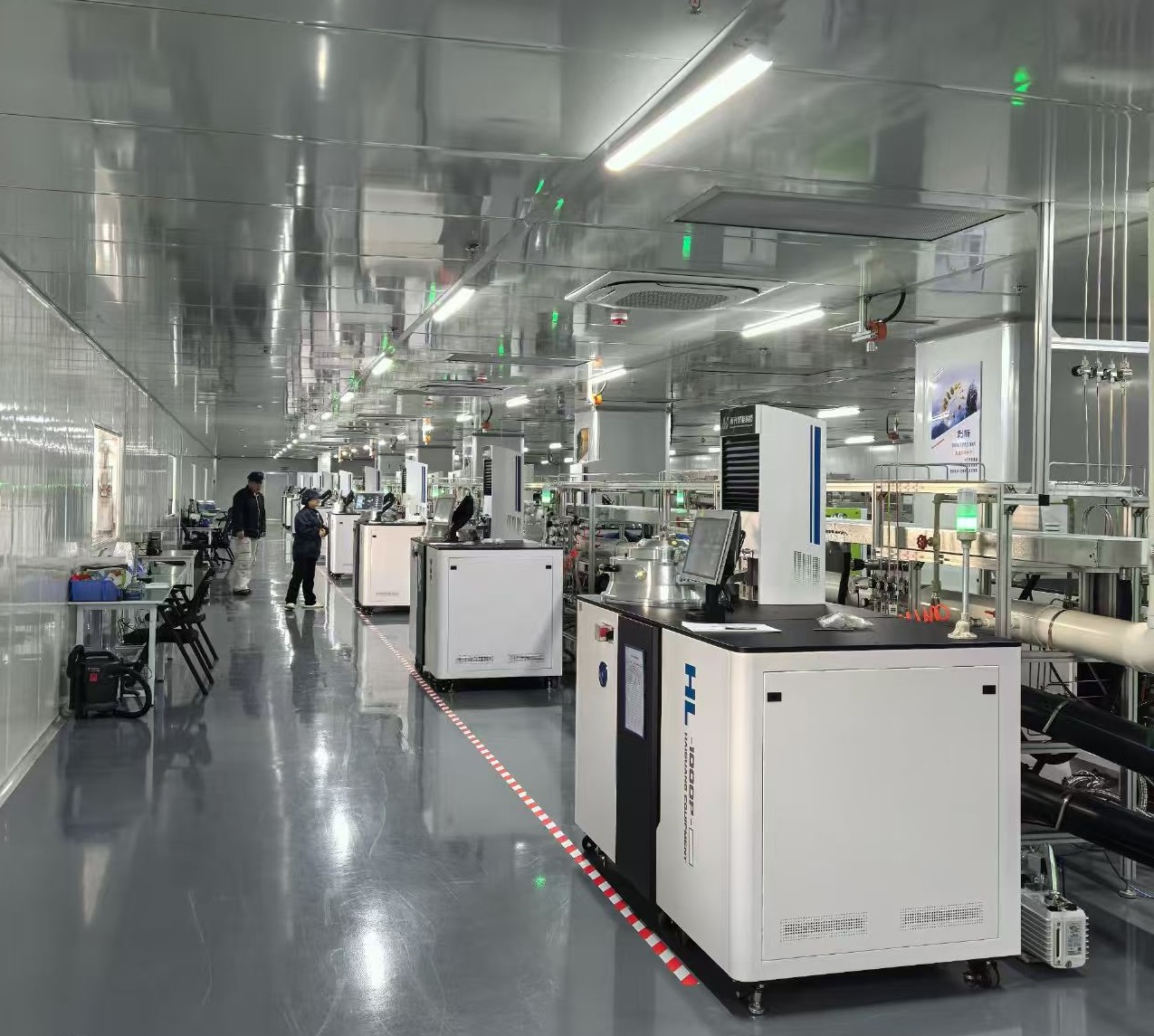
Foshan Highlight Intelligent Technology Co., Ltd. has been deeply involved in the CVD-grown diamond field for many years. Leveraging its mature core technologies and differentiated process layout, it has achieved full-dimensional coverage of white diamond products. All of the company's white diamond products are pure carbon crystals with a hardness of 10. Their physical and chemical properties are completely consistent with natural white diamonds, placing them firmly in the category of genuine diamonds.
Significant core technological advantages: Relying on a stable and controllable cultivation environment, it can produce high-color diamonds ranging from D to F, with clarity generally reaching VS1 or higher standards. They are virtually flawless to the naked eye, and their fire and brilliance rival top-grade natural white diamonds.
Our product highlights: Standardized grading standards, transparent and controllable selection: Strictly adhering to the international diamond grading system, key parameters such as color (D-J), clarity (SI1-VVS1), cut (EX-VG), and carat weight are clearly marked. Products come with authoritative IGI testing certificates, supporting full traceability and verification.
Green and sustainable development, fulfilling social responsibility: The cultivation process requires no extraction of earth's crustal resources, avoiding the environmental damage caused by natural diamond mining from the source. It is a superior choice that combines aesthetic value with environmental protection.
High cost-performance advantage, breaking down market price barriers: Compared to natural white diamonds, our CVD white diamonds are significantly more competitive in price. Within the same budget, consumers can choose larger carat or higher quality products, helping them easily achieve “real diamond freedom.”
*The articles and pictures are only for industry communication and sharing. If there is any infringement, please contact us to delete them.









-

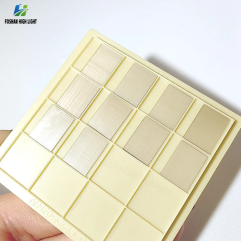
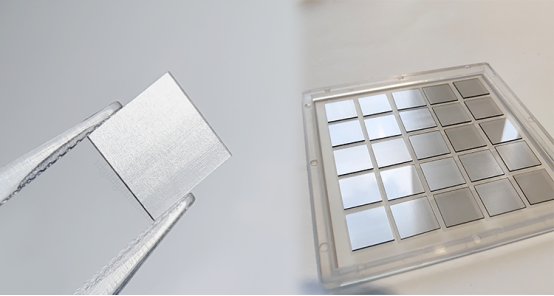
CVD Single-Crystal Diamonds: An Analysis of the Complete Processing Workflow from Gas-Phase Deposition to Finished Diamond Chips
MPCVD (Microwave Plasma Chemical Vapor Deposition) technology is currently the core process for producing high-quality single-crystal diamond s. Thanks to its advantages of low defect rates, high purity, and controllable large dimensions, it is widely used in fields such as semiconductor heat dissipation, precision optics, and high-end sensors. The final quality of single-crystal diamond s depends on comprehensive process control throughout the entire workflow—from vapor deposition growth to pos
-
Single-Crystal or Polycrystalline Diamond — Which Has Greater Potential?
As diamond continues to enter industries such as semiconductors, thermal management, optics, high-power electronics, and precision machining, the requirements for diamond materials are also evolving.
-
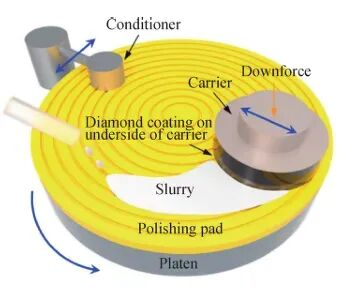
Diamond Polishing and Grinding Processes: Core Challenges and Industry Hurdles
Diamond is often hailed as the “ultimate material” – ranking 10 on the Mohs hardness scale, boasting an ultra‑high thermal conductivity (~2,200 W/(m·K)), excellent chemical stability, and broad optical transparency. These properties make it irreplaceable in cutting‑edge applications such as semiconductor heat dissipation, high‑end optics, and quantum chips. Yet the paradox of “good materials are hard to process” is nowhere more evident than in diamond. From rough grinding for planarization to at
-
Single-Crystal vs Polycrystalline CVD Diamond: Process Difference Lies in Growth Logic, Not Equipment
The process difference between single crystal and polycrystalline CVD diamond lies not in equipment, but in growth logic. Single crystal and polycrystalline CVD diamond are two functional new materials with completely independent growth mechanisms, lattice structures and performance systems. Their process logic, product features and application boundaries diverge fundamentally from the very start of deposition and growth. Comparing or selecting materials without considering their underlying crys