- 中文
- English
- Español
More Companies Begin To Embrace Lab Diamonds, Because Lab Diamonds Using Green Electricity
2022-11-09 15:43:00
Click:
“
“Lab-grown diamonds are a new paradigm”Breitling’s global head of sustainability
”
“Lab-grown diamonds are a new paradigm”Breitling’s global head of sustainability, Aurelia Figueroa said,“I hope that as we begin to place status on things like social and environmental impact and traceability, the inherent value of lab-grown diamonds will grow.”
Although most luxury companies try to avoid being linked to the ecological damage and conflict issues rife in gemstone mining, lab-grown diamonds, which using green electricity to create, are murky in it’s sustainability reputation.To qualify for SCS Global Services’ standard, which applies only to lab-grown diamonds, producers must commit to becoming climate neutral within a year of certification, a status achieved when a company offsets, or compensates, for at least as much carbon dioxide as it emits.
Lab-grown diamonds have the same physical properties as natural diamonds and take two to four weeks to produce. Gas and heat are applied to a seed crystal in a diamond machine - a method known in the industry as Microwave Plasma Chemical Vapor Deposition (MPCVD). In this process, diamond is grown from carbon-containing gases such as methane, aliphatic or aromatic hydrocarbons, alcohols, ketones, amines, ethers and carbon monoxide. Methane is widely used because it is available in high purity and has the same structure (tetrahedron) as diamond. In addition to these gases, surface site preparation requires gases such as hydrogen, oxygen, or fluorine atoms. In this process, we use methane and hydrogen to grow high-quality films. The plasma is generated by high-frequency and high-power microwaves, which are responsible for growing on the seeds. It can be seen that this is a "green power process".
There are some advantages of using MPCVD Process:
1. It is an electrode-less process and hence energy efficient, because no plasma sheath formation take place around the electrodes as in the case of Direct current plasma assisted CVD.
2. The stability and reproducibility of nonisothermal plasma allows us continuous deposition and for many hours or days.
3. The increased availability of 6 KW microwave power supply and applicators (since growth rate is proportional to microwave power) allows the experimenter to use readily available modular units.
4. It has the potential for scaling up the process to larger substrates.









-

Single-Crystal vs Polycrystalline CVD Diamond: Process Difference Lies in Growth Logic, Not Equipment
The process difference between single crystal and polycrystalline CVD diamond lies not in equipment, but in growth logic. Single crystal and polycrystalline CVD diamond are two functional new materials with completely independent growth mechanisms, lattice structures and performance systems. Their process logic, product features and application boundaries diverge fundamentally from the very start of deposition and growth. Comparing or selecting materials without considering their underlying crys
-
From Lab-Grown Diamonds to Industrial Diamonds: Is It Time to Build an MPCVD Factory?
The lab-grown diamond industry is entering a new stage. Over the these few years, lab-grown diamonds have gradually gained wider acceptance in the jewelry market. With the development of production technology, equipment maturity and supply chain improvement, the industry is becoming more standardized and efficient. But beyond jewelry, another opportunity is attracting more attention:Industrial diamond applications.
-
Diamond‑Copper Composite: A Next‑Generation Solution for High‑Power Electronics Thermal Management
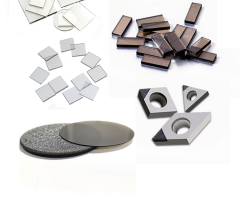
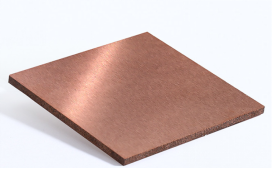
Diamond‑copper composite (DC) is an advanced metal‑matrix composite material consisting of diamond particles as the reinforcement phase and copper as the matrix, fabricated through state‑of‑the‑art composite preparation techniques. Diamond has the highest thermal conductivity of any naturally occurring material, with isotropic values ranging from 1200 to 2300 W/m·K. Copper, with a thermal conductivity of 401 W/m·K, ranks second only to silver among common metals. By combining the two, the compo
-
Mosaic Single‑Crystal Diamond: Breaking Size Limits
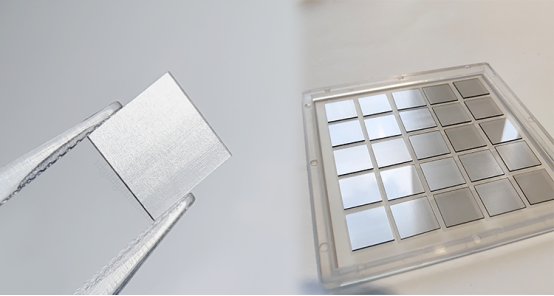
With an ultra‑wide bandgap of 5.47 eV, ultra‑high thermal conductivity (>2000 W/m·K), high carrier mobility (electron mobility up to 4500 cm²·V⁻¹·s⁻¹), and ultra‑high theoretical breakdown field strength (>10 MV/cm), Single‑Crystal Diamond (SCD) is an ideal candidate for next‑generation high‑power, high‑frequency and extreme‑environment electronic devices. However, both natural diamond and HPHT‑synthesized single‑crystal diamond are limited in lateral size, which greatly hinders large‑scal