- 中文
- English
- Español
Round Diamond Cut
2023-03-03 17:40:17
Click:
“
(1) "Hearts and Arrows" (also known as Cupid) cut "Hearts and Arrows" cut is a r
”
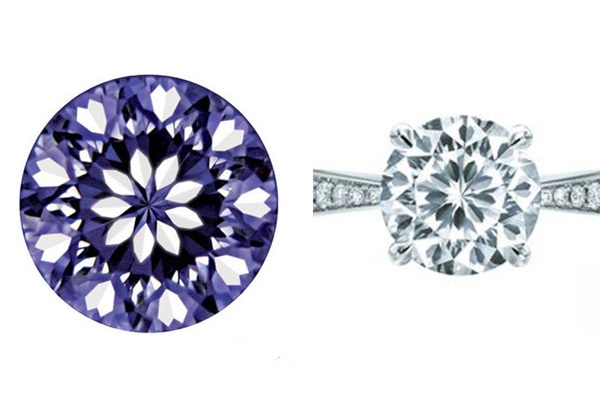
(1) "Hearts and Arrows" (also known as Cupid) cut "Hearts and Arrows" cut is a round brilliant cut, which is created when the symmetry is perfect or excellent. Looking down from directly below the diamond through a special mirror, it presents a perfectly symmetrical and full pattern of eight hearts. Looking down from directly above the diamond, you can see the pattern of eight arrows of the same size, bright light and symmetry. The entire image is complete and clear, with moderate proportions and strict symmetry. The price of diamonds with the pattern of hearts and arrows is about 20% higher than that of diamonds of the same grade without this pattern.
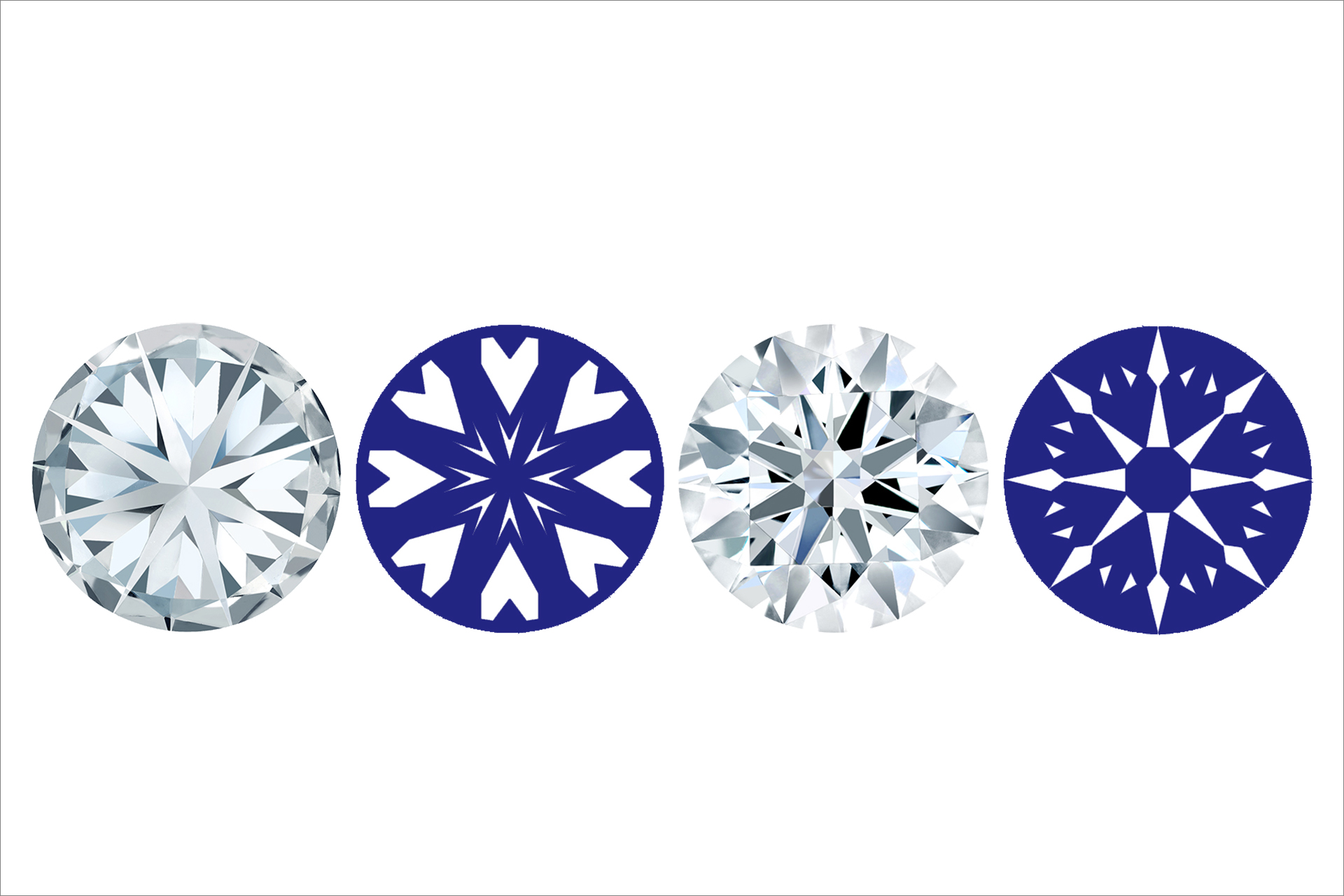
(2) "Nine Hearts and One Flower" cut "Nine Hearts and One Flower" (also known as Estrella) cut, which means "shiny star in the sky" in Spanish, was developed by RosyBlue and identified by the International Gemological Institute (IGI) , Hong Kong Xie Ruilin (TSL) Jewelry (the Asian general agent of "Estrella" cut diamonds) launched a new diamond cut similar to "Hearts and Arrows" in 2006. Each diamond has 100 facets, consisting of 37 facets in the crown and 63 facets in the pavilion. The pattern effect must be seen clearly through a special magnifying glass. Looking directly at the diamond table, there is a "flower" composed of nine facets in the center of the table, and nine "hearts" can be seen from the main facet of the crown, which are evenly arranged along the outer circumference of the table, and can be presented after light refraction The phenomenon of "nine hearts and one flower".
All "Nine Hearts and One Flower" cut diamonds must be certified by the International Gemological Institute (IGI), the world's "Nine Hearts and One Flower" cutting industry authority. Consumers who purchase "Nine Hearts and One Flower" cut diamonds can also get an international diamond appraisal certificate issued by IGI to guarantee the quality of the diamond.、
(3) blue flame cut
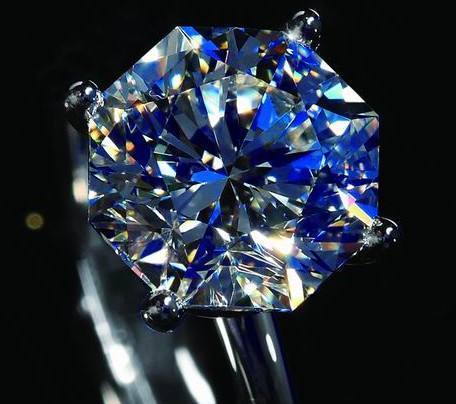
Blue flame cut diamonds are different from traditional round cut diamonds. In 2005, in order to pursue a more perfect fire, Belgian diamond cutters began to develop more advanced diamond shapes. After repeated calculations, revisions of drawings and trial cutting, it took 3 years to develop a new 89-facet diamond.
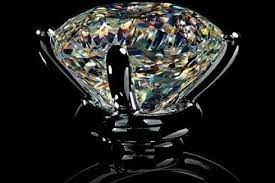
On January 30, 2009, the European Eurostar company officially released a new diamond cutting process with an exclusive patent, which is unique to Tesiro under HRD. The diamond cut is octagonal, with a total of 89 facets and a table width The ratio is 50%~65%, the ratio of total depth is 65%~72%, the ratio of crown height is 12%~14%, the ratio of pavilion depth is 47%~54%, the ratio of waist thickness is 2%~6.5%, and it is precisely cut , forming a unique fire. Looking down from the top, the diamond has octagonal edges and an optical phenomenon of overlapping double octagonal stars on the table, which is mainly formed by the refraction of light through the upper and lower girdles, named "blue flame".
"Blue Flame" cut, its diamond outline is noble and elegant, more reasonable use of optical principles, raising the diamond angle ratio and edge symmetry to a new height, so that the diamond can more perfectly release the light incident from all angles, Can make diamonds show a unique blue light. Diamonds with this cut have better fire than ordinary diamonds and have an attractive blue light
In May 2010, during the 41st World Expo in Shanghai, the "Blue Flame" diamond was exhibited at the Belgian Pavilion with its revolutionary cutting technique and unparalleled fire.









-

CVD Single-Crystal Diamonds: An Analysis of the Complete Processing Workflow from Gas-Phase Deposition to Finished Diamond Chips
MPCVD (Microwave Plasma Chemical Vapor Deposition) technology is currently the core process for producing high-quality single-crystal diamond s. Thanks to its advantages of low defect rates, high purity, and controllable large dimensions, it is widely used in fields such as semiconductor heat dissipation, precision optics, and high-end sensors. The final quality of single-crystal diamond s depends on comprehensive process control throughout the entire workflow—from vapor deposition growth to pos
-
Single-Crystal or Polycrystalline Diamond — Which Has Greater Potential?
As diamond continues to enter industries such as semiconductors, thermal management, optics, high-power electronics, and precision machining, the requirements for diamond materials are also evolving.
-
Diamond Polishing and Grinding Processes: Core Challenges and Industry Hurdles
Diamond is often hailed as the “ultimate material” – ranking 10 on the Mohs hardness scale, boasting an ultra‑high thermal conductivity (~2,200 W/(m·K)), excellent chemical stability, and broad optical transparency. These properties make it irreplaceable in cutting‑edge applications such as semiconductor heat dissipation, high‑end optics, and quantum chips. Yet the paradox of “good materials are hard to process” is nowhere more evident than in diamond. From rough grinding for planarization to at
-
Single-Crystal vs Polycrystalline CVD Diamond: Process Difference Lies in Growth Logic, Not Equipment
The process difference between single crystal and polycrystalline CVD diamond lies not in equipment, but in growth logic. Single crystal and polycrystalline CVD diamond are two functional new materials with completely independent growth mechanisms, lattice structures and performance systems. Their process logic, product features and application boundaries diverge fundamentally from the very start of deposition and growth. Comparing or selecting materials without considering their underlying crys