- 中文
- English
- Español
Diamond Clarity Grading
2023-03-16 17:34:39
Click:
“
The GIA (Gemological Institute of America) standard for grading diamonds in the
”
The GIA (Gemological Institute of America) standard for grading diamonds in the 1950s included clarity grading, which has since been widely adopted in the jewelry industry.
Gemological Institute of America (GIA) Diamond Clarity Grading Rules | |
Clarity Grade | Definition |
Flawless (FL) | No inclusions or blemishes under 10x magnification |
Internally Flawless (IF) | Under 10x magnification, no inclusions, only minor blemishes |
Very Very Slightly Included (VVS1+2) | Subtle inclusions are extremely difficult to find with a 10x magnifying glass, especially VVS1, which can only be seen from the pavilion, or are so small that they can be removed by slight re-polishing, VVS2 is also not easy to detect |
Very Slightly Included (VS1+2) | Small inclusions under 10x magnification, S1 is easy to see, S2 is very easy to see |
Slightly flawed (SI1+2) | Small inclusions under 10x magnification, S1 is easy to see, S2 is very easy to see |
Flawed (I1+2+3) | The inclusions contained are clearly visible under a 10x magnifying glass and can be seen from the front with the naked eye. In severe cases, it affects the firmness of the diamond, and when the number is extremely large, it affects transparency and brightness. I1 naked eyes Visible inclusions, I2 is more visible, I3 is very visible and affects firmness |
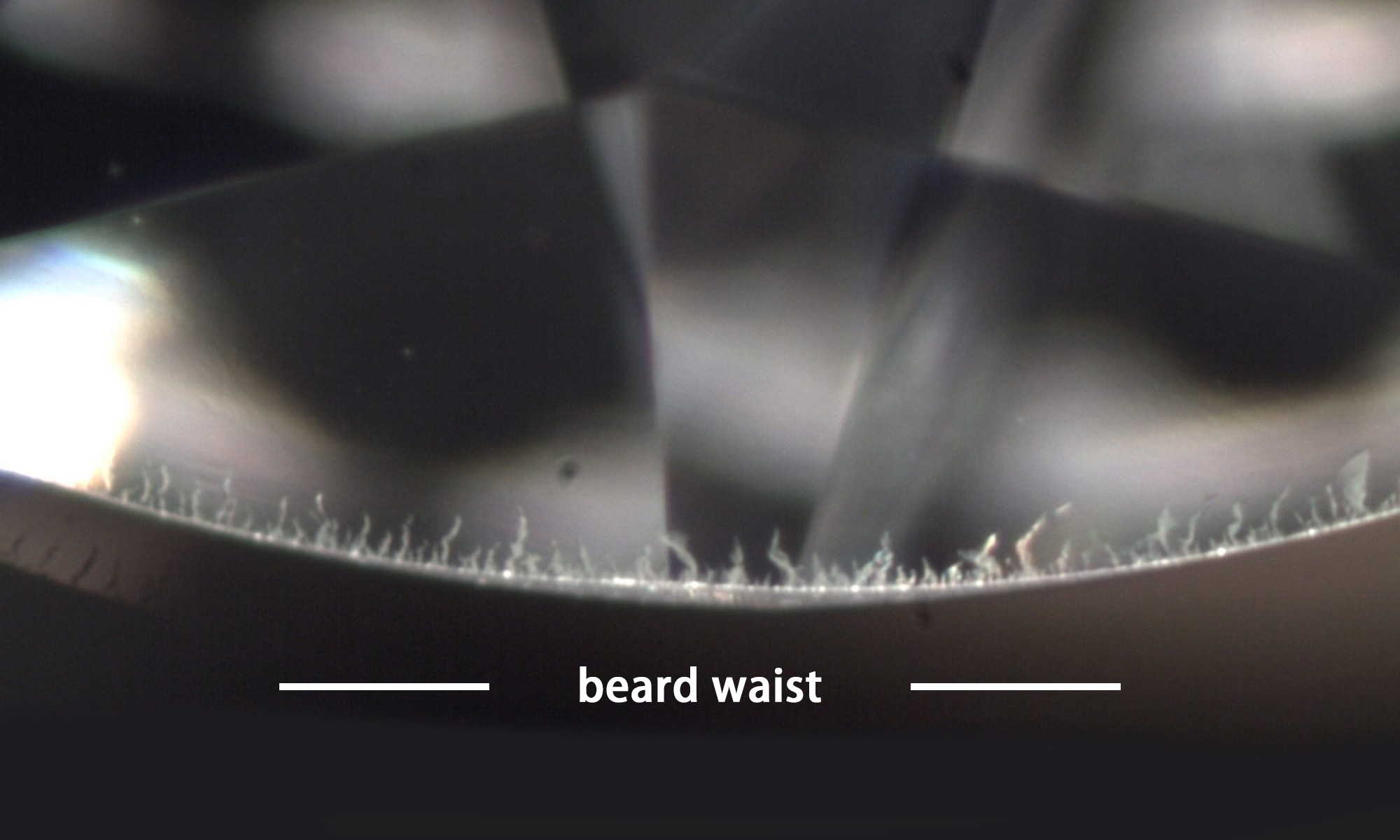
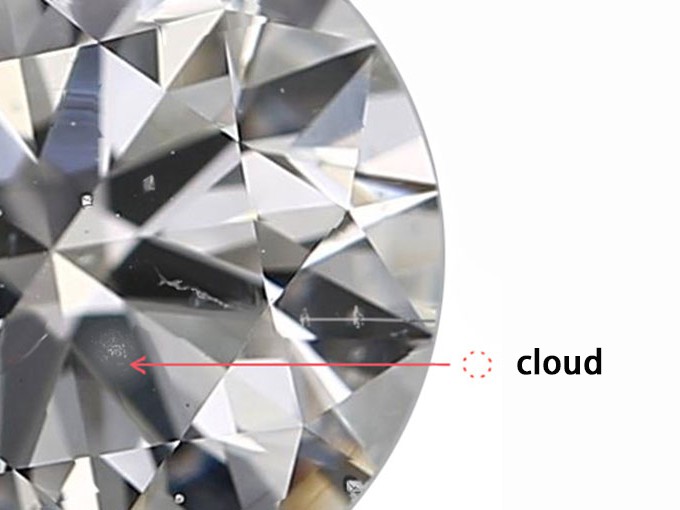
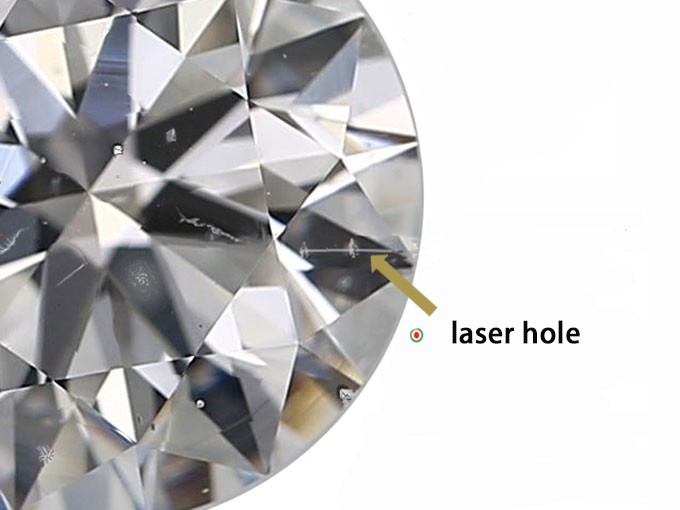
The types of inclusions include: girdle whiskers, bruises, holes, gaps, clouds, feather cracks, crystal inclusions, concave original crystal planes, internal double crystal grains, crystal knots, laser voids, needles body, pin point, twin crystal mesh.
Types of voids include: wear, extra facets, native facets, nicks, white spots, polish marks, scuff marks, rough girdles, scratches, surface twinning.
The impact of gaps on clarity lies in the FL and IF grades, and has little effect on lower grade
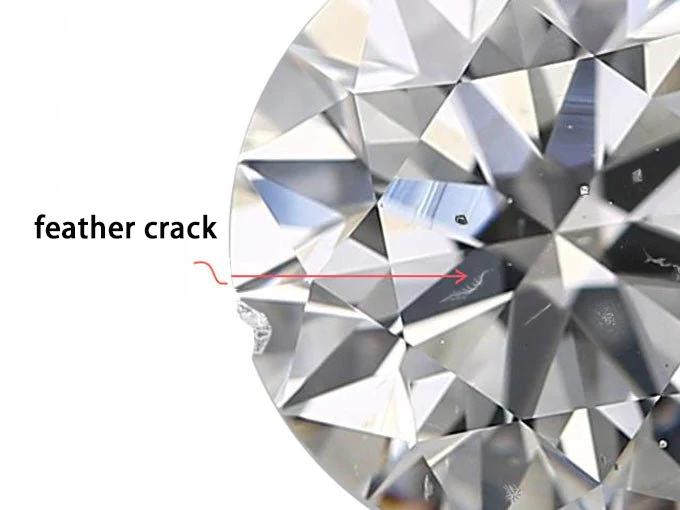
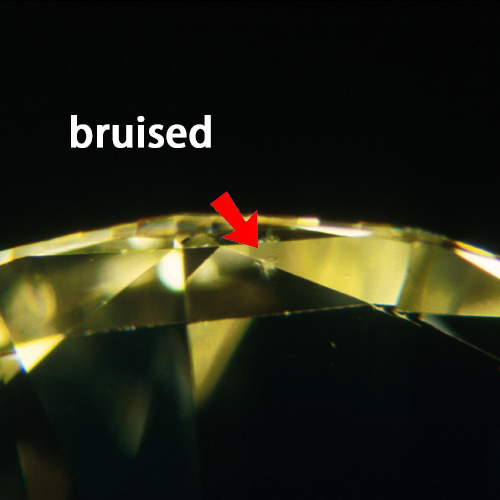
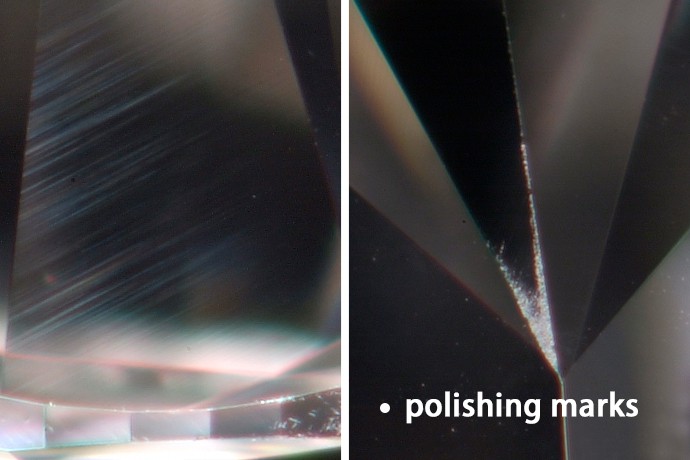
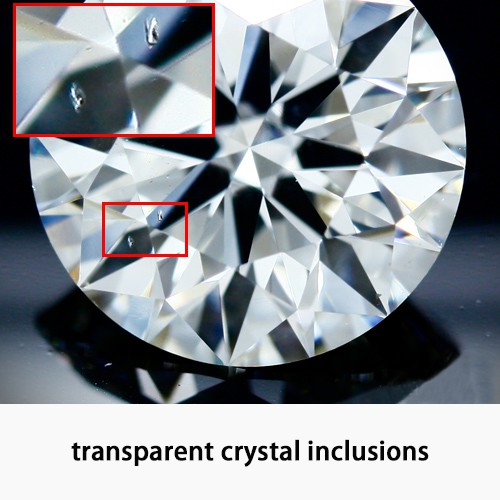









-

Foshan Highlight Intelligent Technology invites you to the 140th Canton Fair—join us at Booth 21.2A23-24 in the Friendship Hall to share in the brilliance.
Foshan Highlight Intelligent Technology invites you to the 140th Canton Fair—join us at Booth 21.2A23-24 in the Friendship Hall to share in the brilliance.
-
CVD Single-Crystal Diamonds: An Analysis of the Complete Processing Workflow from Gas-Phase Deposition to Finished Diamond Chips
MPCVD (Microwave Plasma Chemical Vapor Deposition) technology is currently the core process for producing high-quality single-crystal diamond s. Thanks to its advantages of low defect rates, high purity, and controllable large dimensions, it is widely used in fields such as semiconductor heat dissipation, precision optics, and high-end sensors. The final quality of single-crystal diamond s depends on comprehensive process control throughout the entire workflow—from vapor deposition growth to pos
-
Single-Crystal or Polycrystalline Diamond — Which Has Greater Potential?
As diamond continues to enter industries such as semiconductors, thermal management, optics, high-power electronics, and precision machining, the requirements for diamond materials are also evolving.
-
Diamond Polishing and Grinding Processes: Core Challenges and Industry Hurdles
Diamond is often hailed as the “ultimate material” – ranking 10 on the Mohs hardness scale, boasting an ultra‑high thermal conductivity (~2,200 W/(m·K)), excellent chemical stability, and broad optical transparency. These properties make it irreplaceable in cutting‑edge applications such as semiconductor heat dissipation, high‑end optics, and quantum chips. Yet the paradox of “good materials are hard to process” is nowhere more evident than in diamond. From rough grinding for planarization to at