- 中文
- English
- Español
What determines the fire of a diamond
2023-04-20 16:22:33
Click:
“
Only when the light is irradiated perpendicularly to the table, the fire produced by the small crown facets is the strongest, and the strength of the fire is affected by the relative size of the table and small crown facets, as well as the angle of the crown. Apparently, the intensity of the fire displayed varies with the cut ratio of the diamond.
”
The fire produced by the crown facets is strongest only when the light is irradiated perpendicularly to the table. Apparently, the intensity of the fire displayed varies with the cut ratio of the diamond.
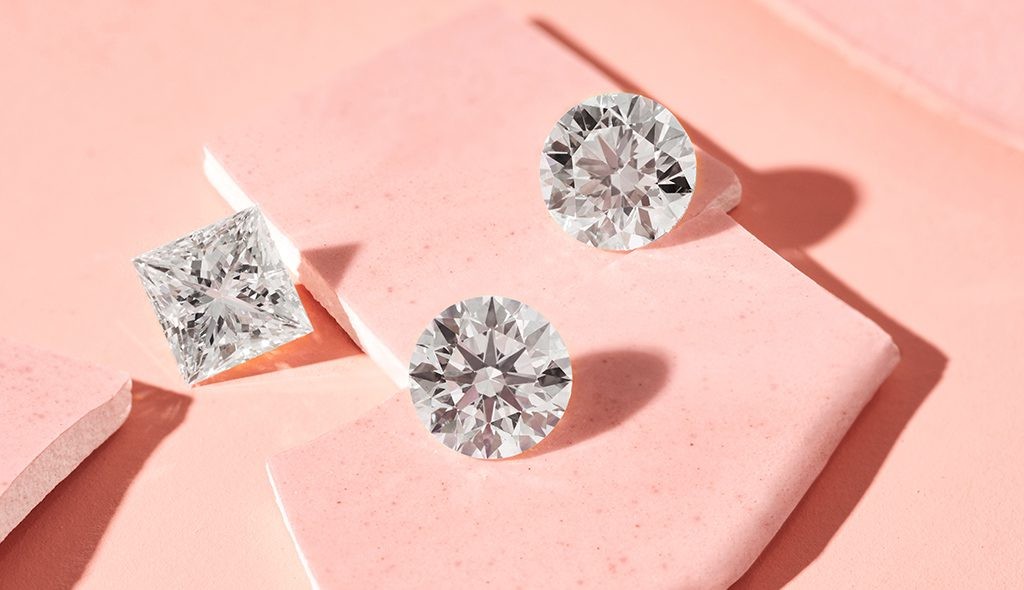
The smaller the proportion of the table surface of a round brilliant cut diamond, the larger the area occupied by the inclined facets, and the stronger the fire. However, if the table is small enough, the fire will no longer be strengthened. , the fire will also be damaged.
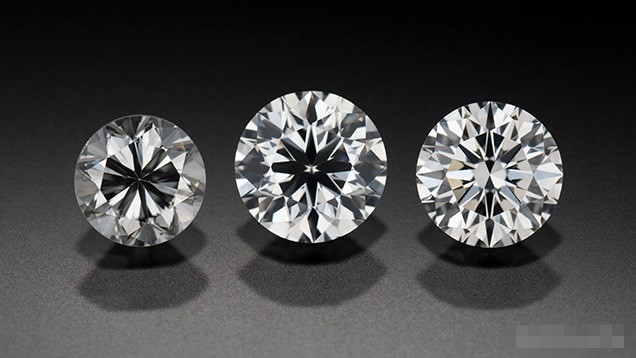
In general, smaller decks produce more fire but lose some brightness; larger decks produce more brightness but lose some fire.
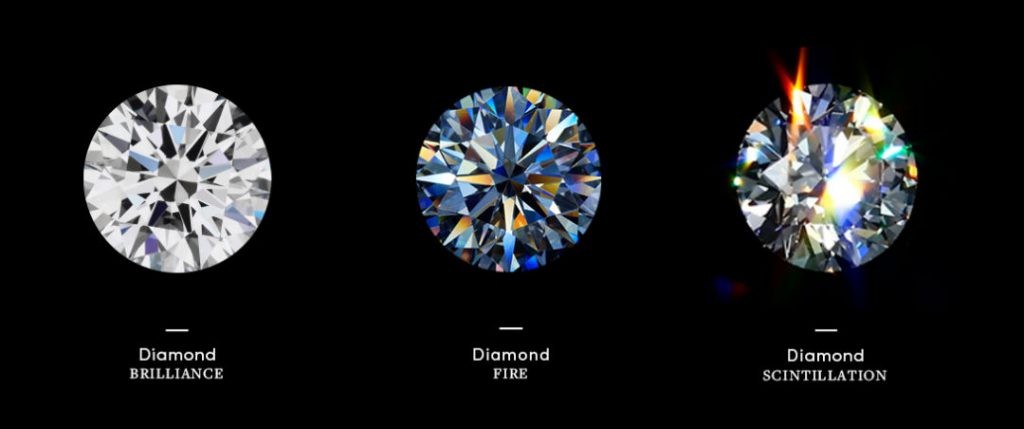
Therefore, fire and brightness are trade-offs, and there is no kind of fire and brightness of any cut diamond that can reach the maximum at the same time.
Therefore, when different countries and regions target diamonds with different cut proportions, they will have their own "ideal proportions" because of their different preferences for fire and brightness. One of the differences in these proportions is the relative size of the table and crown facets, as well as the variation in the size of the crown angles.

The quality of the cut will have a great impact on the color, clarity and weight of the diamond. Good cutting can make the shape, size, proportion of each part, cutting angle, symmetry, color, optical effect, weight and other aspects meet the ideal requirements, so that the light passing through the diamond will undergo total internal reflection, from the diamond The top of the scatter, "fire" is the best.









-

Foshan Highlight Intelligent Technology invites you to the 140th Canton Fair—join us at Booth 21.2A23-24 in the Friendship Hall to share in the brilliance.
Foshan Highlight Intelligent Technology invites you to the 140th Canton Fair—join us at Booth 21.2A23-24 in the Friendship Hall to share in the brilliance.
-
CVD Single-Crystal Diamonds: An Analysis of the Complete Processing Workflow from Gas-Phase Deposition to Finished Diamond Chips
MPCVD (Microwave Plasma Chemical Vapor Deposition) technology is currently the core process for producing high-quality single-crystal diamond s. Thanks to its advantages of low defect rates, high purity, and controllable large dimensions, it is widely used in fields such as semiconductor heat dissipation, precision optics, and high-end sensors. The final quality of single-crystal diamond s depends on comprehensive process control throughout the entire workflow—from vapor deposition growth to pos
-
Single-Crystal or Polycrystalline Diamond — Which Has Greater Potential?
As diamond continues to enter industries such as semiconductors, thermal management, optics, high-power electronics, and precision machining, the requirements for diamond materials are also evolving.
-
Diamond Polishing and Grinding Processes: Core Challenges and Industry Hurdles
Diamond is often hailed as the “ultimate material” – ranking 10 on the Mohs hardness scale, boasting an ultra‑high thermal conductivity (~2,200 W/(m·K)), excellent chemical stability, and broad optical transparency. These properties make it irreplaceable in cutting‑edge applications such as semiconductor heat dissipation, high‑end optics, and quantum chips. Yet the paradox of “good materials are hard to process” is nowhere more evident than in diamond. From rough grinding for planarization to at