- 中文
- English
- Español
The whole process of delivery and acceptance of MPCVD diamond machines for domestic customers
2023-06-26 15:15:20
Click:
“
Lab diamond,diamond equipment,MPCVD diamond machine,delivery and acceptance of MPCVD diamond machines,diamond factory
”
Recently, our company "Foshan High Light" has carried out a series of factory quality inspections on 6 MPCVD diamond machines. The inspection contents include:
1. Equipment name, power supply and appearance inspection;
2. Equipment working condition detection;
3. Substrate base inspection;
4. lifting system Inspection;
5. Index and function testing (water and gas circuit);
6. Vacuum, thermometer detection;
7. Microwave system and software function testing
...
and other strict inspections.
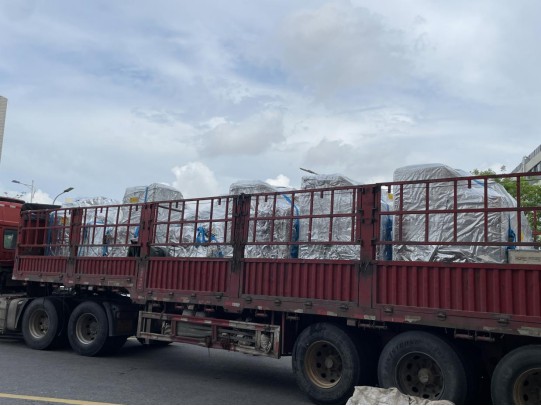
After inspection, the 6 machines all met our strict factory quality inspection requirements, and will be ready to be sent to the customer's factory on June 25, 2023.
During the delivery period, it was the rainy weather. In order to ensure the safety and delivery of the 6 MPCVD diamond machine to the cooperative factory on time according to the contract requirements, our company prepared in advance for rainy days,we used aluminum foil to pack the individual machines separately. The air inside the package is pumped out to achieve a vacuum packaging state, to effectively block water, and gas from entering the machine. Finally, put the awning on the truck.

After more than 3 hours, the equipment arrived at the destination. As expected, there was a rainy period on the road. After the rain stopped, our employees began to move the 6 machines to the designated place in the customer's factory.

After the unloading was completed, High Light’s engineers and other technicians who went to the customer's factory with the truck also began to install and debug for the customer.
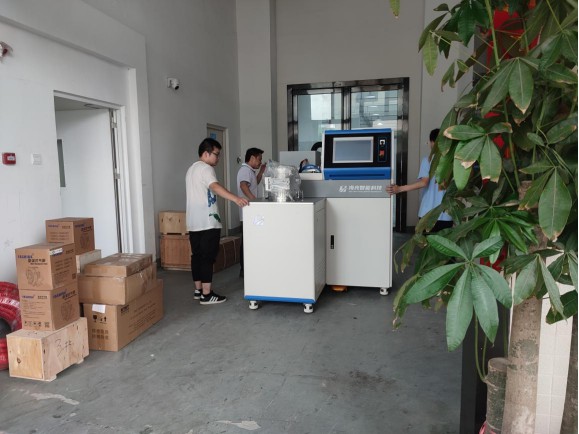
First,install the microwave power supply, microwave generator, microwave guide (three pins, water circulation load, rectangular waveguide), etc.
Secondly, on-site technical guidance for the installation of water and electricity circuit infrastructure.
Last, High Light engineers will debug each device in turn. Debugging includes:
1. The main power supply connection ;
2. Detect whether the circuit link data signal is alright;
3. Check whether the gas pressure of each channel is up to standard, and detect the overall condition of the gas;
4. Check whether there is water leakage in the waterway valve
5. Whether the pressure is up to standard;
6. Whether the temperature is within the required range
...
If all the above points meet the standards, it means that reached ignition conditions , and can start the ignition trial operation .
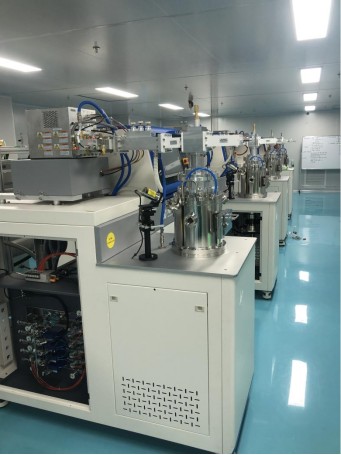
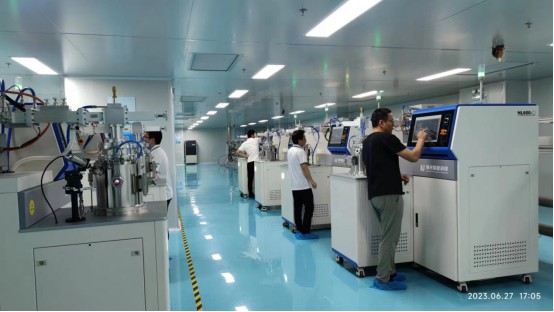
Carry out heating and cooling tests during the ignition trial operation. If the machine responds normally, the machine can be shut down. It means the machine past the test, it can operates normally.And the delivery is completed.
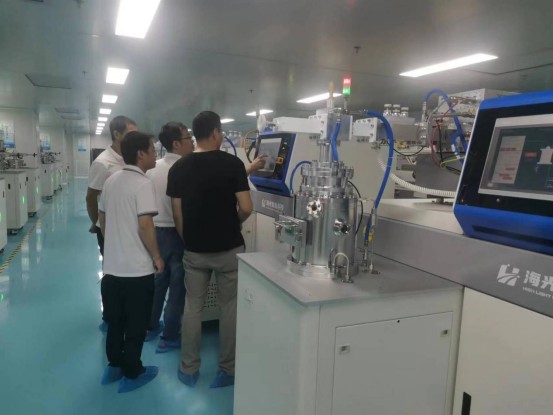
At the end of the article, I would like to thanks our customers for their trust in "Foshan High Light Intelligent Technology Co., Ltd." In line with the concept of "customer satisfaction, people-oriented", our company continues to develop and upgrade products according to market development and needs, and looks forward to cooperating with more customers!









Your liking is the energy that I insist on writing
YouArticle
已有16人推荐
-

Single-Crystal vs Polycrystalline CVD Diamond: Process Difference Lies in Growth Logic, Not Equipment
The process difference between single crystal and polycrystalline CVD diamond lies not in equipment, but in growth logic. Single crystal and polycrystalline CVD diamond are two functional new materials with completely independent growth mechanisms, lattice structures and performance systems. Their process logic, product features and application boundaries diverge fundamentally from the very start of deposition and growth. Comparing or selecting materials without considering their underlying crys
-
From Lab-Grown Diamonds to Industrial Diamonds: Is It Time to Build an MPCVD Factory?
The lab-grown diamond industry is entering a new stage. Over the these few years, lab-grown diamonds have gradually gained wider acceptance in the jewelry market. With the development of production technology, equipment maturity and supply chain improvement, the industry is becoming more standardized and efficient. But beyond jewelry, another opportunity is attracting more attention:Industrial diamond applications.
-
Diamond‑Copper Composite: A Next‑Generation Solution for High‑Power Electronics Thermal Management
Diamond‑copper composite (DC) is an advanced metal‑matrix composite material consisting of diamond particles as the reinforcement phase and copper as the matrix, fabricated through state‑of‑the‑art composite preparation techniques. Diamond has the highest thermal conductivity of any naturally occurring material, with isotropic values ranging from 1200 to 2300 W/m·K. Copper, with a thermal conductivity of 401 W/m·K, ranks second only to silver among common metals. By combining the two, the compo
-
Mosaic Single‑Crystal Diamond: Breaking Size Limits
With an ultra‑wide bandgap of 5.47 eV, ultra‑high thermal conductivity (>2000 W/m·K), high carrier mobility (electron mobility up to 4500 cm²·V⁻¹·s⁻¹), and ultra‑high theoretical breakdown field strength (>10 MV/cm), Single‑Crystal Diamond (SCD) is an ideal candidate for next‑generation high‑power, high‑frequency and extreme‑environment electronic devices. However, both natural diamond and HPHT‑synthesized single‑crystal diamond are limited in lateral size, which greatly hinders large‑scal