- 中文
- English
- Español
Uncovering Diamond: The Mystery of Mechanical Miracles
2024-04-19 09:56:56
Click:
“
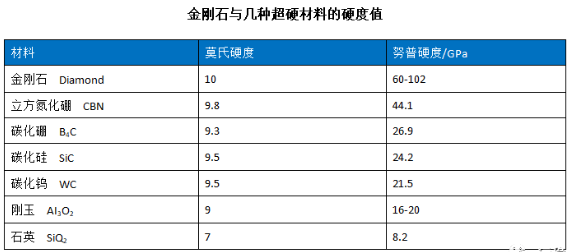
As a super-hard material, diamond is the hardest material currently known among natural substances, with a Mohs hardness of 10 and a Vickers hardness of up to 10,000 kg/mm². Comparing the Knoop hardness value, it can be concluded that the hardness of diamond is 5 times that of aluminum oxide, 12 times that of quartz, 4.7 times that of tungsten carbide, 4 times that of silicon carbide, 3.7 times that of boron carbide, and 2 times that of cubic boron nitride.
”
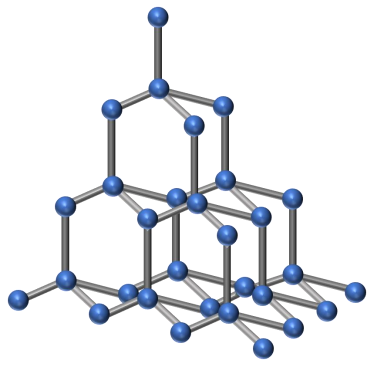
Diamond, the hardest substance naturally occurring in nature, has always attracted people's attention with its excellent mechanical properties. Its high hardness, high strength, excellent wear resistance and low thermal expansion coefficient make diamond widely used in many fields.
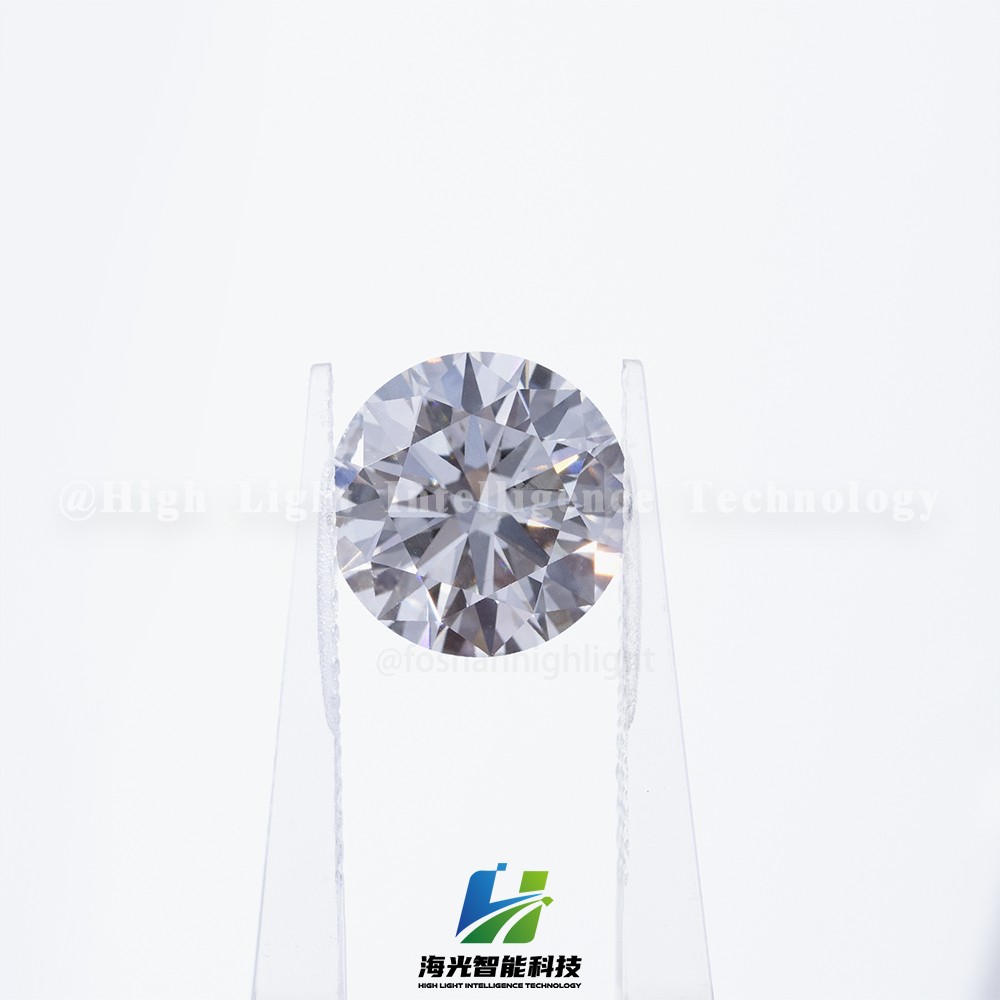
As a super-hard material, diamond is the hardest material currently known among natural substances, with a Mohs hardness of 10 and a Vickers hardness of up to 10,000 kg/mm². Comparing the Knoop hardness value, it can be concluded that the hardness of diamond is 5 times that of aluminum oxide, 12 times that of quartz, 4.7 times that of tungsten carbide, 4 times that of silicon carbide, 3.7 times that of boron carbide, and 2 times that of cubic boron nitride.
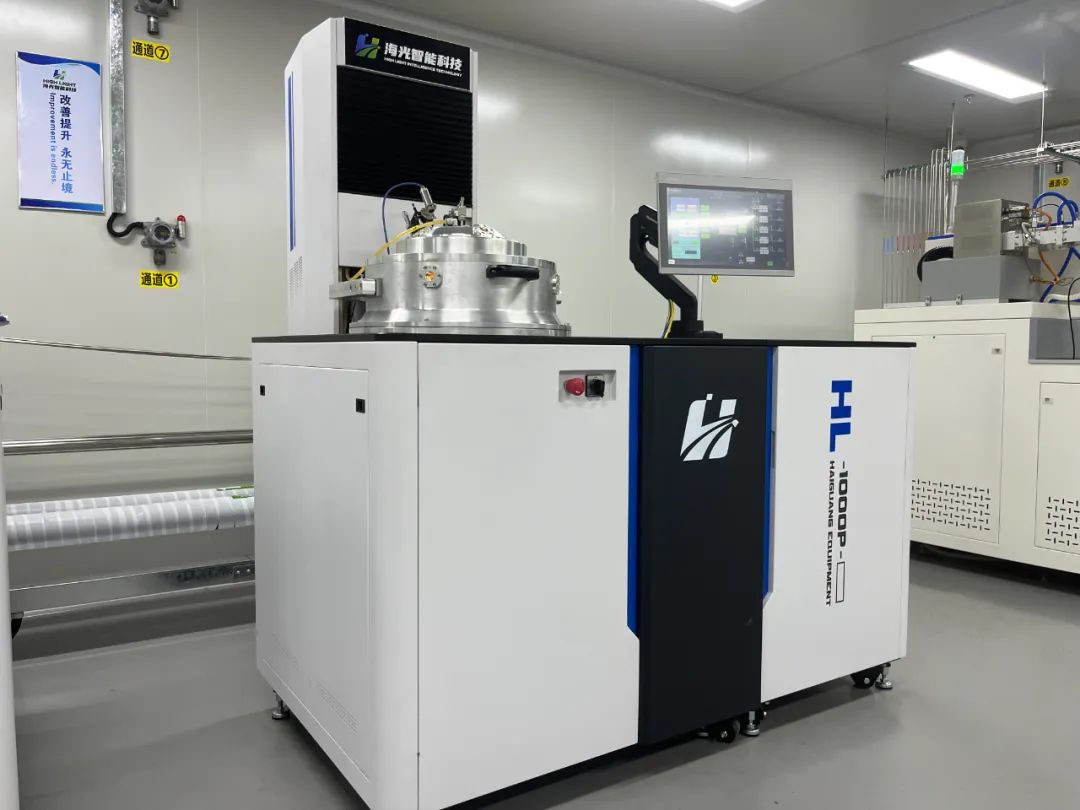
Natural high-quality diamond is scarce and expensive, making it difficult to meet mechanical needs. However, the hardness of CVD single crystal and polycrystalline diamond is comparable to natural products and is widely used in cutting tools and wear-resistant parts. High Light Intelligence Technology specializes in the production of high-quality CVD diamond, monocrystalline and polycrystalline products; Its tensile strength reaches more than 3GPa and its mechanical properties are excellent. Polycrystalline diamond film has small grain size, high fracture strength and high elastic modulus, and plays an important role in the field of materials science. Diamond has anisotropic hardness and significant differences in crystal plane hardness, and can be used for efficient grinding and polishing.
Diamond has anisotropic strength and is prone to cracking in specific directions. In particular, the (111) crystal plane is prone to cleavage due to its large atomic interplanar spacing, high density, and low covalent bond formation energy. Its bulk elastic modulus is as high as 5.42×10⁵N/mm², far exceeding that of tungsten metal and stainless steel. Although diamond has strong compressive resistance, its tensile strength is low and it is hard and brittle. Its shear strength theoretical value is extremely high, reaching 12×10⁵MPa, showing excellent mechanical properties.

The friction coefficient of diamond in air is 0.05-0.1. The wear amount of diamond varies greatly due to different friction methods. The following table shows the relative wear amount of diamond after friction with various common hard materials under roughly the same conditions. It can be seen that the amount of wear of diamond is very small compared to various other materials. Therefore, diamond powder with micron- and nano-sized particles in the industrial field is widely used in surface grinding and fine polishing of various materials. Larger-sized synthetic diamond material sintered bodies can also be used in the field of high-hardness drill bits. The wear ratio range can even reach 1:3×10⁴-1:8×10⁴. The wear ratio range for wire drawing dies is 1: 10⁵-1:3×10⁵.

Diamond, with its unparalleled ultra-high hardness and excellent resistance to pressure and wear, has become an excellent choice for manufacturing various cutting tools, abrasives, drill bits and wear-resistant parts. In addition, diamond polycrystalline coating is also widely used in various types of cutting tools and grinding tools to provide them with excellent wear-resistant coatings. Its excellent elastic modulus and phonon vibration characteristics make diamond an ideal choice for producing high-quality surface pressure sensors and acoustic sensors, demonstrating its excellent application value in many fields.


The mechanical properties of diamond make it a unique material that plays an irreplaceable role in many fields. With the continuous development of science and technology, people will conduct more in-depth research on the properties of diamond, and it is believed that the application fields of diamond will be more extensive in the future. Whether used as cutting tools, abrasives or wear-resistant coatings for precision devices, diamond will continue to contribute to the development of human society with its excellent mechanical properties.
With MPCVD technology as its core, High Light Intelligence Technology has long been committed to the R&D and manufacturing of high-quality diamond materials and related equipment. It has advanced MPCVD equipment, laser processing equipment and precision polishing equipment. High Light Intelligence Technology's MPCVD technology equipment can produce high-quality diamond, thereby helping to improve the performance of integrated circuits. Our products and services are designed to provide customers with the best solutions to meet their needs for high quality diamond and integrated circuit performance.









-

CVD Single-Crystal Diamonds: An Analysis of the Complete Processing Workflow from Gas-Phase Deposition to Finished Diamond Chips
MPCVD (Microwave Plasma Chemical Vapor Deposition) technology is currently the core process for producing high-quality single-crystal diamond s. Thanks to its advantages of low defect rates, high purity, and controllable large dimensions, it is widely used in fields such as semiconductor heat dissipation, precision optics, and high-end sensors. The final quality of single-crystal diamond s depends on comprehensive process control throughout the entire workflow—from vapor deposition growth to pos
-
Single-Crystal or Polycrystalline Diamond — Which Has Greater Potential?
As diamond continues to enter industries such as semiconductors, thermal management, optics, high-power electronics, and precision machining, the requirements for diamond materials are also evolving.
-
Diamond Polishing and Grinding Processes: Core Challenges and Industry Hurdles
Diamond is often hailed as the “ultimate material” – ranking 10 on the Mohs hardness scale, boasting an ultra‑high thermal conductivity (~2,200 W/(m·K)), excellent chemical stability, and broad optical transparency. These properties make it irreplaceable in cutting‑edge applications such as semiconductor heat dissipation, high‑end optics, and quantum chips. Yet the paradox of “good materials are hard to process” is nowhere more evident than in diamond. From rough grinding for planarization to at
-
Single-Crystal vs Polycrystalline CVD Diamond: Process Difference Lies in Growth Logic, Not Equipment
The process difference between single crystal and polycrystalline CVD diamond lies not in equipment, but in growth logic. Single crystal and polycrystalline CVD diamond are two functional new materials with completely independent growth mechanisms, lattice structures and performance systems. Their process logic, product features and application boundaries diverge fundamentally from the very start of deposition and growth. Comparing or selecting materials without considering their underlying crys