- 中文
- English
- Español
Vintage Trend: Champagne & Cognac Diamond Color Guide
2026-08-05 17:29:30
Click:
“
Recently, vintage aesthetics have continued to sweep the global jewelry industry, with Victorian court styles, Edwardian vintage jewelry, and European-style vintage bridal jewelry making a comeback. Champagne-colored diamonds, with their naturally soft luster, have risen in popularity, perfectly complementing the elegant heritage of vintage jewelry. Having broken out of niche collector circles, they have taken the jewelry markets of Europe, the United States, and Southeast Asia by storm. Thanks
”
Recently, vintage aesthetics have continued to sweep the global jewelry industry, with Victorian court styles, Edwardian vintage jewelry, and European-style vintage bridal jewelry making a comeback. Champagne-colored diamonds, with their naturally soft luster, have risen in popularity, perfectly complementing the elegant heritage of vintage jewelry. Having broken out of niche collector circles, they have taken the jewelry markets of Europe, the United States, and Southeast Asia by storm. Thanks to the mature crystal growth technology of CVD lab-grown diamonds, champagne loose diamonds with stable colors and consistent grades are now available in large quantities, making this vintage luxury more accessible than ever. Many people often confuse champagne diamonds with cognac diamonds and struggle to distinguish the differences in color grading. This article provides a comprehensive breakdown of the differences between the two and the logic behind their color classifications.

Champagne-colored diamonds fall under the category of fancy-colored diamonds. They are characterized by a warm yellow or light brown base and possess a soft, creamy luster. Unlike vivid-colored diamonds, which can appear flashy and ostentatious, champagne diamonds are understated and elegant, making them perfect for everyday wear, engagement rings, or collectible jewelry.
Within the industry, the champagne color spectrum is divided into multiple gradients based on color depth, from light to dark: Light Champagne, Medium Champagne, and Dark Champagne are the three basic tiers. Light Champagne has a delicate hue with a subtle warm undertone, resembling the texture of top-grade white diamonds, and is ideal for those who prefer a subtle style; Medium champagne has a moderate warm tone and offers the strongest soft, luminous ambiance, making it the best-selling style on the market; deep champagne leans toward a rich brownish-yellow hue, exuding a vintage, substantial feel that aligns with the design needs of vintage jewelry and large-carat collectible loose diamonds. Color uniformity is a key criterion for evaluating the quality of champagne-colored loose diamonds. High-quality loose diamonds feature a consistently translucent tone throughout, free from color patches, impurities, or color deviations. When exposed to light, they refract a warm, gentle glow, exuding a refined and luxurious texture.
Many consumers often confuse champagne diamonds with cognac diamonds. While both belong to the warm brown diamond family, they have distinct color boundaries and visual styles. Champagne diamonds primarily feature a light yellow or pale cream base color with a very low proportion of brown tones. They have an overall translucent and airy appearance, with a soft, creamy luster. They pair well with 18K yellow gold and rose gold settings and flatter both warm and cool skin tones, making them suitable for a wider range of wearers. They are commonly used in everyday jewelry and wedding engagement rings.


Cognac diamonds have higher color saturation, with rich amber-brown tones that stand out more prominently. Their brown texture is distinct, and the hue is deep and mellow—much like aged Cognac—exuding a strong vintage atmosphere. With their rich, deep tones, Cognac diamonds are better suited for enthusiasts seeking a unique, vintage style and are often used in vintage-style carved jewelry and custom-made, collector-grade large-carat loose diamonds. Simply put: light, warm yellow tones are Champagne diamonds, while rich, amber-brown tones are Cognac diamonds. There is no superiority between the two; they simply cater to different aesthetic preferences.

Compared to natural warm-colored diamonds, whose reserves are becoming increasingly scarce, the Champagne-colored loose diamonds we cultivate using our proprietary MPCVD process offer significant advantages. Leveraging comprehensive technical control across the entire supply chain, High Light Intelligent Technology produces champagne-colored lab diamonds of various grades. These lab diamonds feature lasting, stable color and consistent hue across every batch, making them ideal for both bulk purchases by jewelry retailers for customization and for meeting individual loose diamond customization needs. At the same time, our low-carbon, eco-friendly cultivation model aligns with the current global trend toward sustainable, accessible luxury consumption. We currently maintain ample inventory of champagne- and cognac-colored lab diamonds. If you are interested in partnering with us, please feel free to contact us at any time.
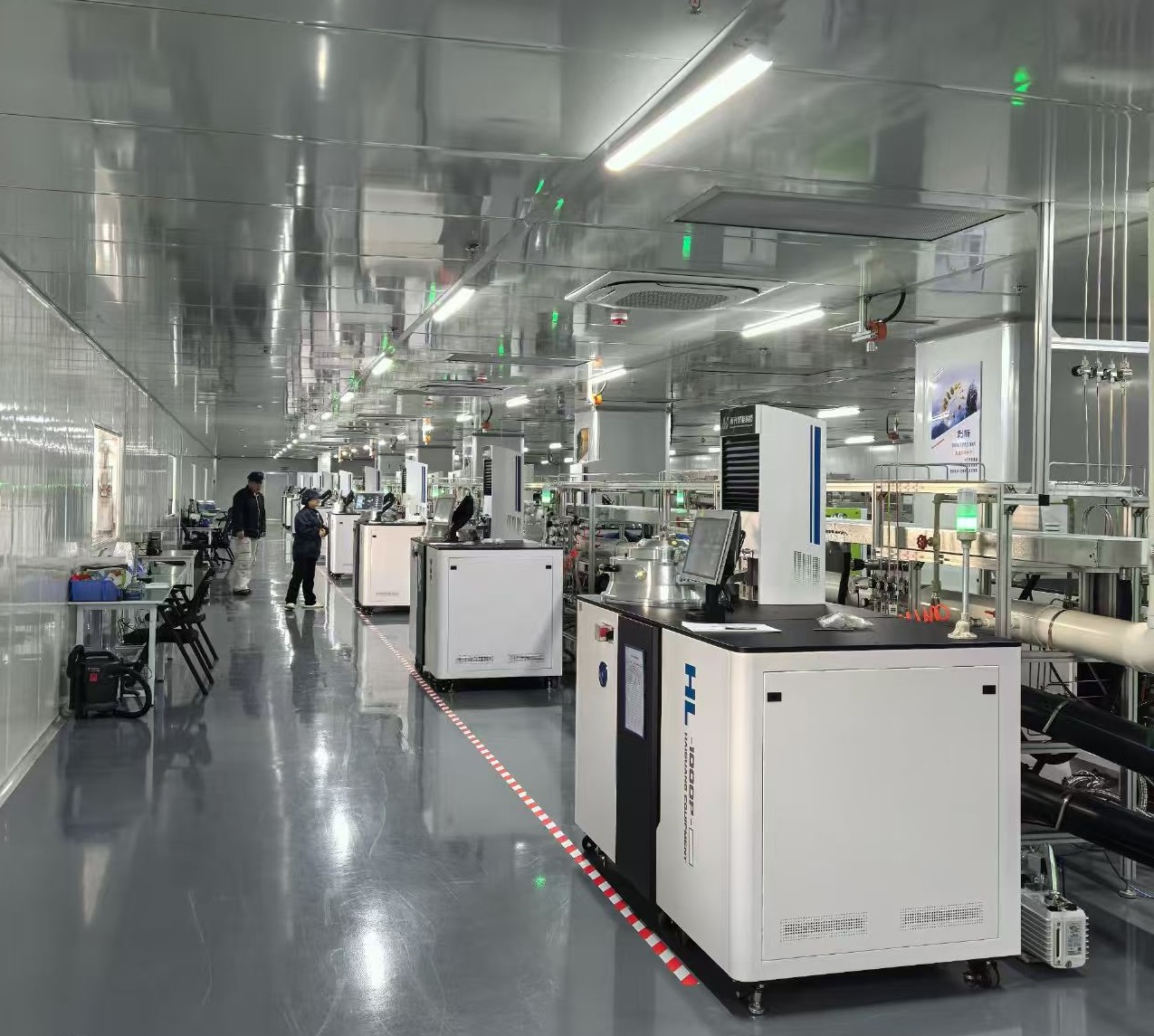
Foshan Highlight Intelligent Technology Co., Ltd. has been deeply involved in the CVD-grown diamond field for many years. Leveraging its mature core technologies and differentiated process layout, it has achieved full-dimensional coverage of white diamond products. All of the company's white diamond products are pure carbon crystals with a hardness of 10. Their physical and chemical properties are completely consistent with natural white diamonds, placing them firmly in the category of genuine diamonds.
Significant core technological advantages: Relying on a stable and controllable cultivation environment, it can produce high-color diamonds ranging from D to F, with clarity generally reaching VS1 or higher standards. They are virtually flawless to the naked eye, and their fire and brilliance rival top-grade natural white diamonds.
Our product highlights: Standardized grading standards, transparent and controllable selection: Strictly adhering to the international diamond grading system, key parameters such as color (D-J), clarity (SI1-VVS1), cut (EX-VG), and carat weight are clearly marked. Products come with authoritative IGI testing certificates, supporting full traceability and verification.
Green and sustainable development, fulfilling social responsibility: The cultivation process requires no extraction of earth's crustal resources, avoiding the environmental damage caused by natural diamond mining from the source. It is a superior choice that combines aesthetic value with environmental protection.
High cost-performance advantage, breaking down market price barriers: Compared to natural white diamonds, our CVD white diamonds are significantly more competitive in price. Within the same budget, consumers can choose larger carat or higher quality products, helping them easily achieve “real diamond freedom.”
*The articles and pictures are only for industry communication and sharing. If there is any infringement, please contact us to delete them.









-

CVD Single-Crystal Diamonds: An Analysis of the Complete Processing Workflow from Gas-Phase Deposition to Finished Diamond Chips
MPCVD (Microwave Plasma Chemical Vapor Deposition) technology is currently the core process for producing high-quality single-crystal diamond s. Thanks to its advantages of low defect rates, high purity, and controllable large dimensions, it is widely used in fields such as semiconductor heat dissipation, precision optics, and high-end sensors. The final quality of single-crystal diamond s depends on comprehensive process control throughout the entire workflow—from vapor deposition growth to pos
-
Single-Crystal or Polycrystalline Diamond — Which Has Greater Potential?
As diamond continues to enter industries such as semiconductors, thermal management, optics, high-power electronics, and precision machining, the requirements for diamond materials are also evolving.
-
Diamond Polishing and Grinding Processes: Core Challenges and Industry Hurdles
Diamond is often hailed as the “ultimate material” – ranking 10 on the Mohs hardness scale, boasting an ultra‑high thermal conductivity (~2,200 W/(m·K)), excellent chemical stability, and broad optical transparency. These properties make it irreplaceable in cutting‑edge applications such as semiconductor heat dissipation, high‑end optics, and quantum chips. Yet the paradox of “good materials are hard to process” is nowhere more evident than in diamond. From rough grinding for planarization to at
-
Single-Crystal vs Polycrystalline CVD Diamond: Process Difference Lies in Growth Logic, Not Equipment
The process difference between single crystal and polycrystalline CVD diamond lies not in equipment, but in growth logic. Single crystal and polycrystalline CVD diamond are two functional new materials with completely independent growth mechanisms, lattice structures and performance systems. Their process logic, product features and application boundaries diverge fundamentally from the very start of deposition and growth. Comparing or selecting materials without considering their underlying crys