- 中文
- English
- Español
Tongji University: A major breakthrough in single diamond!
2024-04-30 16:36:34
Click:
“
Recently, Professor Han Lu's team from the School of Chemical Science and Engineering of Tongji University made a major breakthrough in the field of photonic crystals and successfully realized the self-assembly construction of a single diamond (SD) curved titanium dioxide skeleton. This achievement is known as the "Holy Grail" of photonic crystal structures. . Relevant research papers have been published in the internationally authoritative academic journal "Proceedings of the National Academy o
”
Recently, Professor Han Lu's team from the School of Chemical Science and Engineering of Tongji University made a major breakthrough in the field of photonic crystals and successfully realized the self-assembly construction of a single diamond (SD) curved titanium dioxide skeleton. This achievement is known as the "Holy Grail" of photonic crystal structures. . Relevant research papers have been published in the internationally authoritative academic journal "Proceedings of the National Academy of Sciences" (PNAS).


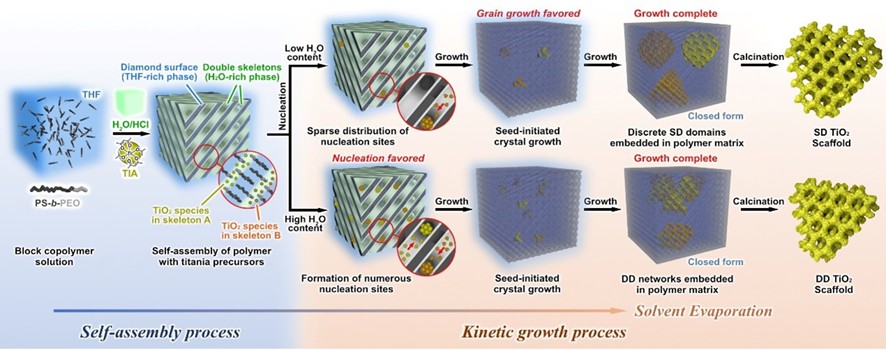
▲ Schematic diagram of SD skeleton synthesis strategy
The research team conducted a detailed characterization of the SD skeleton structure through a series of experimental methods. The results of small-angle X-ray scattering and wide-angle X-ray diffraction showed the high degree of order of the sample; observations with scanning electron microscopy and transmission electron microscopy further confirmed the existence and high degree of order of the SD structure; the electrostatic potential density distribution obtained by three-dimensional reconstruction of electron crystallography This proves the four-connection configuration of the SD structure. In addition, calculation results show that the structure has a complete photonic band gap, providing a theoretical basis for its application in photonic crystals and other fields.

▲ Structural characterization of SD skeleton structure before and after roasting

▲ Transmission electron microscopy analysis and three-dimensional structure analysis of SD skeleton

▲ Photonic band gap diagram of SD skeleton structure
Professor Han Lu said that this research result not only solved the problem of synthesizing non-equilibrium structures that has long been pursued in the field of self-assembly, but also provided new ideas and methods for the preparation of other thermodynamic non-equilibrium structures. This method has broad application prospects and important significance in the fields of self-assembly, bionic materials, and next-generation optical devices.Professor Han Lu said that this research result not only solved the problem of synthesizing non-equilibrium structures that has long been pursued in the field of self-assembly, but also provided new ideas and methods for the preparation of other thermodynamic non-equilibrium structures. This method has broad application prospects and important significance in the fields of self-assembly, bionic materials, and next-generation optical devices.
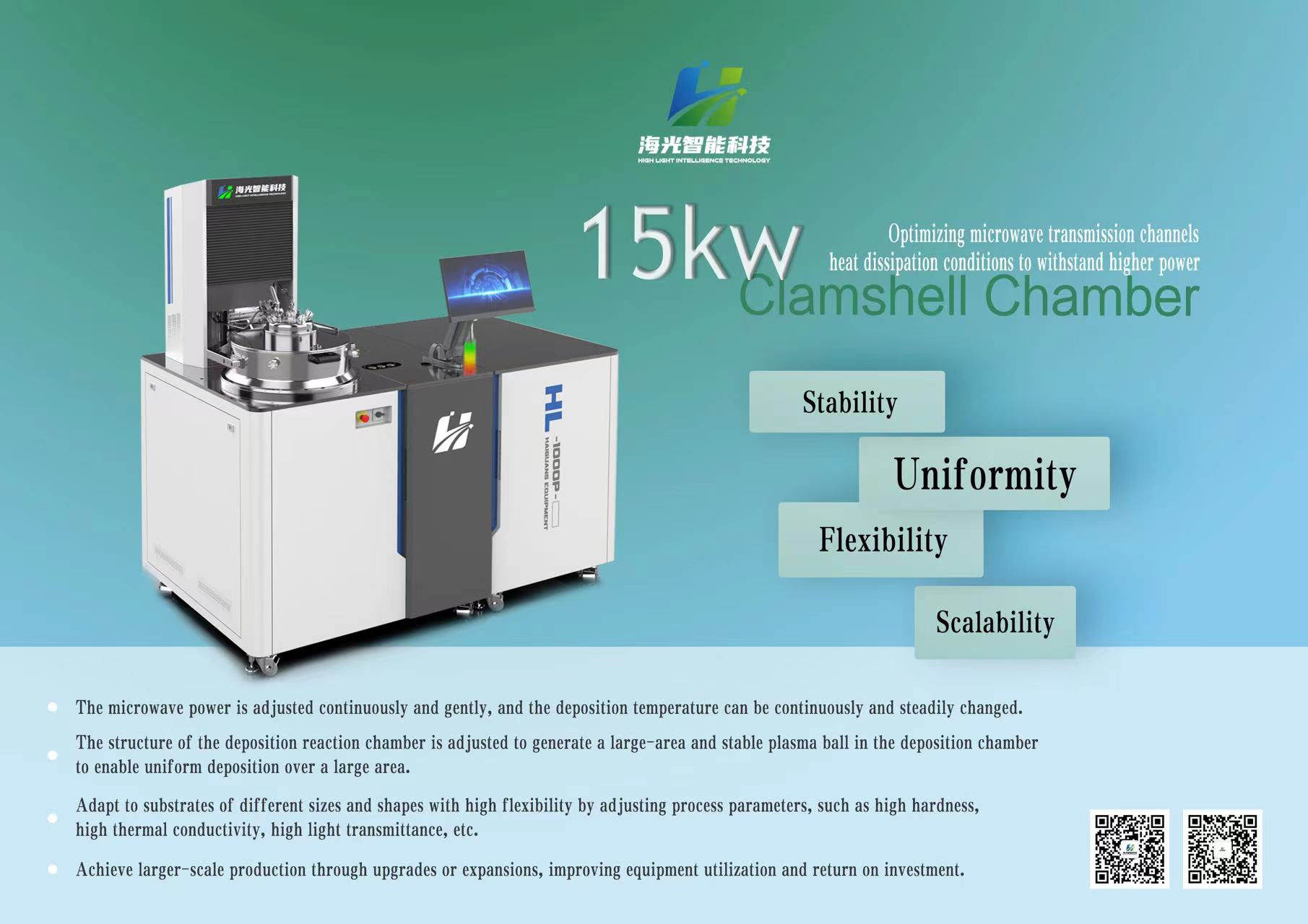
With MPCVD technology as its core, High Light Intelligence Technology has long been committed to the R&D and manufacturing of high-quality diamond materials and related equipment. It has advanced MPCVD equipment, laser processing equipment and precision polishing equipment. High Light Intelligence Technology's MPCVD technology equipment can produce high-quality diamond, thereby helping to improve the performance of integrated circuits. Our products and services are designed to provide customers with the best solutions to meet their needs for high quality diamond and integrated circuit performance.









-

CVD Single-Crystal Diamonds: An Analysis of the Complete Processing Workflow from Gas-Phase Deposition to Finished Diamond Chips
MPCVD (Microwave Plasma Chemical Vapor Deposition) technology is currently the core process for producing high-quality single-crystal diamond s. Thanks to its advantages of low defect rates, high purity, and controllable large dimensions, it is widely used in fields such as semiconductor heat dissipation, precision optics, and high-end sensors. The final quality of single-crystal diamond s depends on comprehensive process control throughout the entire workflow—from vapor deposition growth to pos
-
Single-Crystal or Polycrystalline Diamond — Which Has Greater Potential?
As diamond continues to enter industries such as semiconductors, thermal management, optics, high-power electronics, and precision machining, the requirements for diamond materials are also evolving.
-
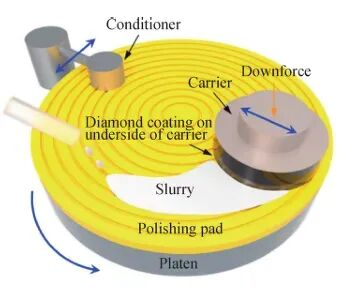
Diamond Polishing and Grinding Processes: Core Challenges and Industry Hurdles
Diamond is often hailed as the “ultimate material” – ranking 10 on the Mohs hardness scale, boasting an ultra‑high thermal conductivity (~2,200 W/(m·K)), excellent chemical stability, and broad optical transparency. These properties make it irreplaceable in cutting‑edge applications such as semiconductor heat dissipation, high‑end optics, and quantum chips. Yet the paradox of “good materials are hard to process” is nowhere more evident than in diamond. From rough grinding for planarization to at
-
Single-Crystal vs Polycrystalline CVD Diamond: Process Difference Lies in Growth Logic, Not Equipment
The process difference between single crystal and polycrystalline CVD diamond lies not in equipment, but in growth logic. Single crystal and polycrystalline CVD diamond are two functional new materials with completely independent growth mechanisms, lattice structures and performance systems. Their process logic, product features and application boundaries diverge fundamentally from the very start of deposition and growth. Comparing or selecting materials without considering their underlying crys