- 中文
- English
- Español
Structural Adjustment of the Diamond Industry: New Challenges and Opportunities
2024-07-03 09:46:20
Click:
“
What the diamond industry is facing now is not a simple fluctuation in supply and demand, but a profound structural adjustment.
”
Recently, the diamond industry is quietly undergoing a structural adjustment while responding to market challenges. Faced with global economic fluctuations, changes in consumer preferences and competition from lab-grown diamonds, some diamond merchants have begun to turn their attention to the semiconductor industry to seek new growth points.
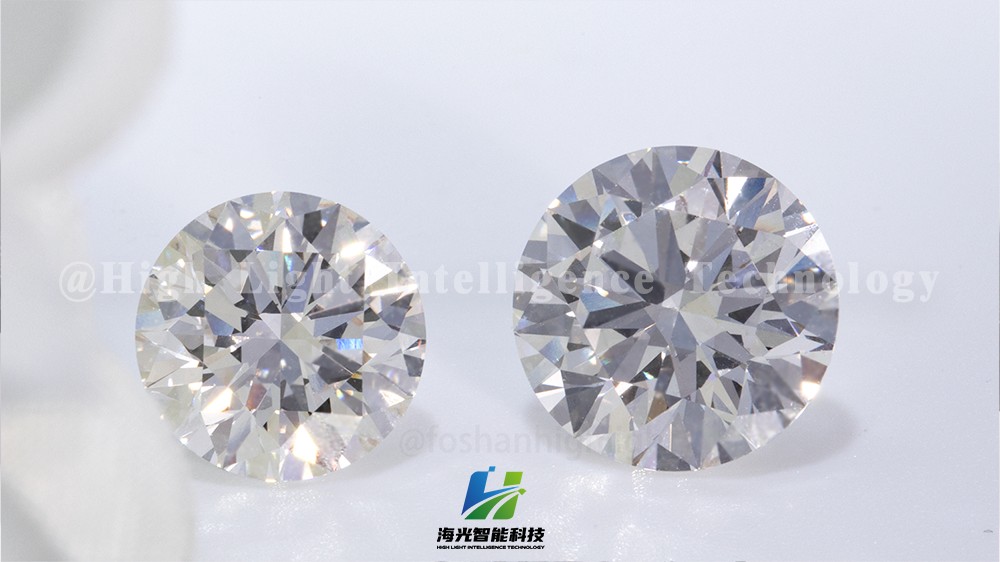
The diamond industry is undergoing profound structural adjustments, rather than simple fluctuations in supply and demand. Its development can be summarized into four stages: the original disorder period (before 1888), the resource power adjustment period (1888-1940s), the rapid growth period (driven by the concept of "eternity", 1940s-early 21st century), and the post-epidemic challenge period (early 21st century-present). After De Beers' marketing transformation, the natural diamond market relied on its existing advantages, encountered economic turmoil and the impact of cultivated diamonds, and social evaluation was disturbed. Each stage is accompanied by fluctuations in supply, demand and prices, and the root cause lies in structural changes.
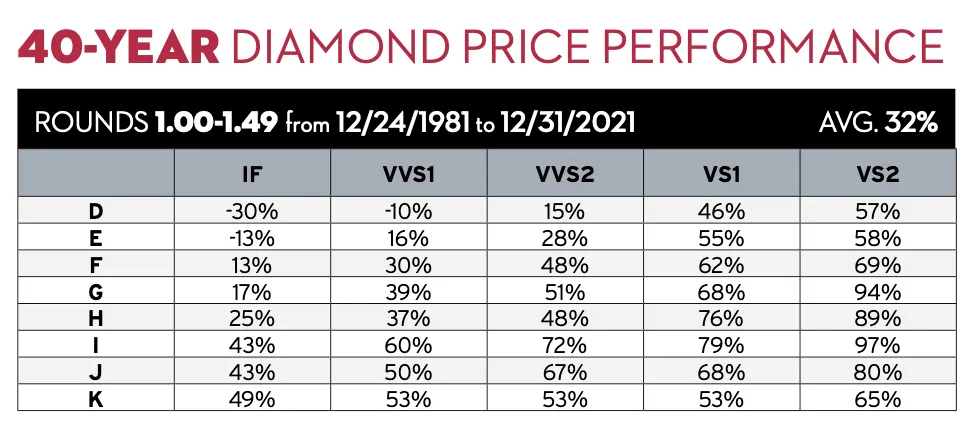
The expected recovery of the Chinese market after the epidemic has not come, but has fallen into recession. There are three reasons: the deteriorating economic environment and the sluggish real estate and stock markets have led to a decline in the purchasing power of the middle class; the rise of lab-grown diamonds has changed consumer perceptions; political tensions between the East and the West have intensified resistance to imported goods, and the worship of diamonds for value preservation has shifted to the pursuit of cost-effectiveness. Although high-net-worth individuals still prefer luxury goods, they also accept affordable options.
The global promotion of lab-grown diamonds, especially in the United States, has shaken the natural diamond market, which accounts for 52%. The United States accounts for more than half of the sales, triggering heated debates in the industry on environmental protection, sustainable development, and industry reform. This trend has caused similar conflicts in many parts of the world, reflecting the clash of values between traditional and emerging forces.











-

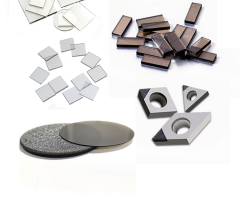
Single-Crystal vs Polycrystalline CVD Diamond: Process Difference Lies in Growth Logic, Not Equipment
The process difference between single crystal and polycrystalline CVD diamond lies not in equipment, but in growth logic. Single crystal and polycrystalline CVD diamond are two functional new materials with completely independent growth mechanisms, lattice structures and performance systems. Their process logic, product features and application boundaries diverge fundamentally from the very start of deposition and growth. Comparing or selecting materials without considering their underlying crys
-
From Lab-Grown Diamonds to Industrial Diamonds: Is It Time to Build an MPCVD Factory?
The lab-grown diamond industry is entering a new stage. Over the these few years, lab-grown diamonds have gradually gained wider acceptance in the jewelry market. With the development of production technology, equipment maturity and supply chain improvement, the industry is becoming more standardized and efficient. But beyond jewelry, another opportunity is attracting more attention:Industrial diamond applications.
-
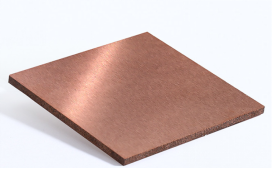
Diamond‑Copper Composite: A Next‑Generation Solution for High‑Power Electronics Thermal Management
Diamond‑copper composite (DC) is an advanced metal‑matrix composite material consisting of diamond particles as the reinforcement phase and copper as the matrix, fabricated through state‑of‑the‑art composite preparation techniques. Diamond has the highest thermal conductivity of any naturally occurring material, with isotropic values ranging from 1200 to 2300 W/m·K. Copper, with a thermal conductivity of 401 W/m·K, ranks second only to silver among common metals. By combining the two, the compo
-
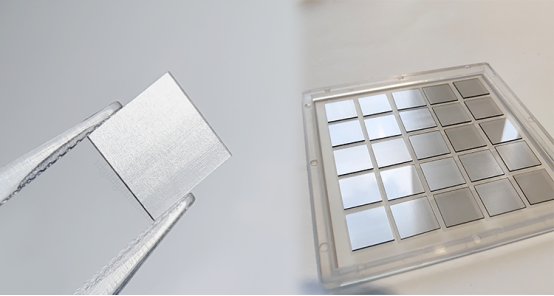
Mosaic Single‑Crystal Diamond: Breaking Size Limits
With an ultra‑wide bandgap of 5.47 eV, ultra‑high thermal conductivity (>2000 W/m·K), high carrier mobility (electron mobility up to 4500 cm²·V⁻¹·s⁻¹), and ultra‑high theoretical breakdown field strength (>10 MV/cm), Single‑Crystal Diamond (SCD) is an ideal candidate for next‑generation high‑power, high‑frequency and extreme‑environment electronic devices. However, both natural diamond and HPHT‑synthesized single‑crystal diamond are limited in lateral size, which greatly hinders large‑scal