- 中文
- English
- Español
Why did diamond come from behind in the competition of thermal conductive materials?
2025-04-18 08:52:38
Click:
“
Under the development of technology, thermal conductive materials are crucial in multiple fields, as they can enhance system performance and stability. Diamond, as an emerging thermal conductive material, is catching up from behind.
”

Diamond is a tetrahedral crystal in which carbon atoms are covalently bonded, forming strong covalent bonds with the surrounding four carbon atoms, endowing it with high stability and unique physical properties. Its thermal conductivity is based on phonon conduction, where carbon atoms vibrate and transfer heat in the form of phonons. Due to strong covalent bonds and regular crystal structure, phonon scattering is reduced and heat transfer is fast. Unlike metals that rely on free electrons for thermal conductivity, diamond phononic thermal conductivity provides excellent thermal conductivity at high temperatures and is less prone to a decrease in thermal conductivity due to electron scattering.

- Ultra high thermal conductivity: The thermal conductivity is about 2000W/(m · K), far exceeding common metal and non-metal materials. It can quickly conduct heat in electronic devices, improve heat dissipation efficiency, and extend device lifespan.

- Excellent thermal stability: extremely high melting and boiling points, stable performance at high temperatures, and can operate at extreme temperatures. In aerospace thermal management systems, it can cope with severe temperature changes and ensure the normal operation of equipment.

- Low thermal expansion coefficient: When combined with other materials, the thermal stress generated by temperature changes is small, which is conducive to improving material stability and reliability, and reducing damage caused by thermal expansion and contraction. In electronic packaging, it has good compatibility with the thermal expansion coefficient of materials such as chips, ensuring packaging sealing and chip performance.

- Good chemical stability: resistant to most acids, alkalis, and organic solvents at room temperature, able to maintain stable thermal conductivity in various chemical environments. High precision temperature control equipment can work stably for a long time in harsh chemical environments or special industrial applications such as chemical and food processing.
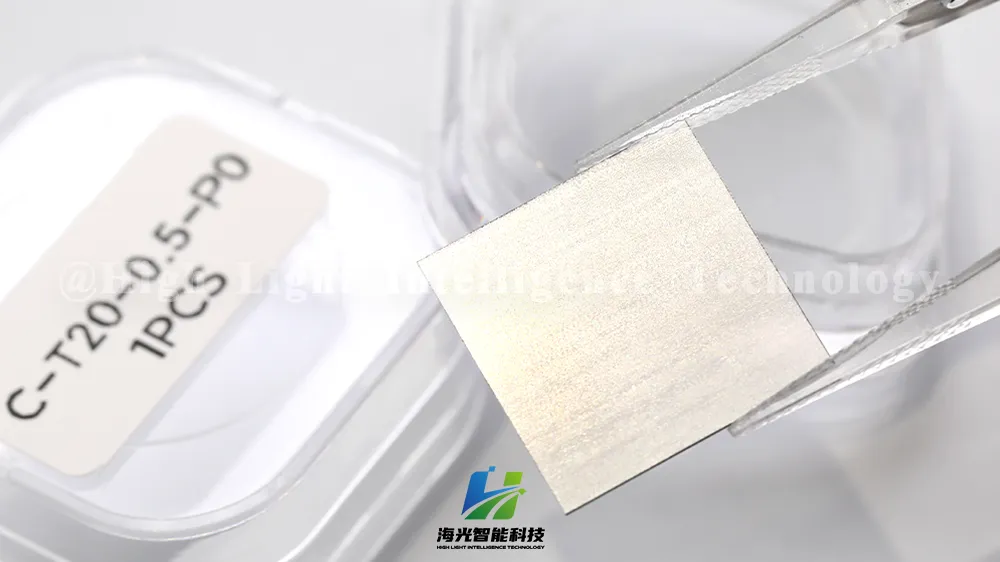
- High hardness and strength: As a thermal conductive material, it can enhance the mechanical strength and wear resistance of composite materials, improve overall performance and lifespan. In the manufacturing of high-end cutting tools and grinding equipment, heat dissipation can be ensured and tool durability can be improved.

- Strong customizability: By changing the synthesis conditions and doping process, the performance can be customized to meet the needs of different application scenarios. In the semiconductor field, doping can adjust the electrical properties and, combined with high thermal conductivity, can be used to manufacture high-performance power semiconductor devices.
Diamond has significant advantages: excellent thermal conductivity, stable at high temperatures and high thermal conductivity, which can meet the heat dissipation needs of emerging high-tech fields, such as effectively solving the heat dissipation problem of 5G base stations. With the advancement of preparation technology, cost reduction, and wider application, CVD technology enables large-area thin films to be used for integrated circuit heat dissipation. The urgent demand in emerging fields such as new energy and quantum computing provides a broad space for diamond to win in competition.

In the high-end electronics field, it is used for chip packaging to enhance device stability;
In laser equipment, as a key heat dissipation component, it improves output power and stability;
In the aerospace field, ensuring the stable operation of thermal management systems;
Improving heat dissipation efficiency and safety in high-speed train braking systems;
Extend product lifespan in the field of LED lighting display;
Improving battery performance and safety in new energy vehicles;
As a lining material in industrial high-temperature furnaces, it can improve thermal efficiency and reduce energy consumption.

High Light Intelligence Technology, a pioneer in the CVD diamond industry, has advanced MPCVD technology and CVD diamond production workshops. We focus on producing high-purity lab-grown diamonds for the jewelry industry, and at the same time create industrial-grade CVD diamond products, covering single crystals, polycrystalline, films and diamond surface metallization. We also provide 6kw/10kw/15kw MPCVD equipment to help customers in all aspects, from equipment to products, and then to all-round services, to create brilliance together.
*The articles and pictures are only for industry communication and sharing. If there is any infringement, please contact us to delete them.









-

Single-Crystal vs Polycrystalline CVD Diamond: Process Difference Lies in Growth Logic, Not Equipment
The process difference between single crystal and polycrystalline CVD diamond lies not in equipment, but in growth logic. Single crystal and polycrystalline CVD diamond are two functional new materials with completely independent growth mechanisms, lattice structures and performance systems. Their process logic, product features and application boundaries diverge fundamentally from the very start of deposition and growth. Comparing or selecting materials without considering their underlying crys
-
From Lab-Grown Diamonds to Industrial Diamonds: Is It Time to Build an MPCVD Factory?
The lab-grown diamond industry is entering a new stage. Over the these few years, lab-grown diamonds have gradually gained wider acceptance in the jewelry market. With the development of production technology, equipment maturity and supply chain improvement, the industry is becoming more standardized and efficient. But beyond jewelry, another opportunity is attracting more attention:Industrial diamond applications.
-
Diamond‑Copper Composite: A Next‑Generation Solution for High‑Power Electronics Thermal Management
Diamond‑copper composite (DC) is an advanced metal‑matrix composite material consisting of diamond particles as the reinforcement phase and copper as the matrix, fabricated through state‑of‑the‑art composite preparation techniques. Diamond has the highest thermal conductivity of any naturally occurring material, with isotropic values ranging from 1200 to 2300 W/m·K. Copper, with a thermal conductivity of 401 W/m·K, ranks second only to silver among common metals. By combining the two, the compo
-
Mosaic Single‑Crystal Diamond: Breaking Size Limits
With an ultra‑wide bandgap of 5.47 eV, ultra‑high thermal conductivity (>2000 W/m·K), high carrier mobility (electron mobility up to 4500 cm²·V⁻¹·s⁻¹), and ultra‑high theoretical breakdown field strength (>10 MV/cm), Single‑Crystal Diamond (SCD) is an ideal candidate for next‑generation high‑power, high‑frequency and extreme‑environment electronic devices. However, both natural diamond and HPHT‑synthesized single‑crystal diamond are limited in lateral size, which greatly hinders large‑scal