- 中文
- English
- Español
How We Ensure the Quality of Every MPCVD Machine We Deliver
2026-01-28 13:58:44
Click:
“
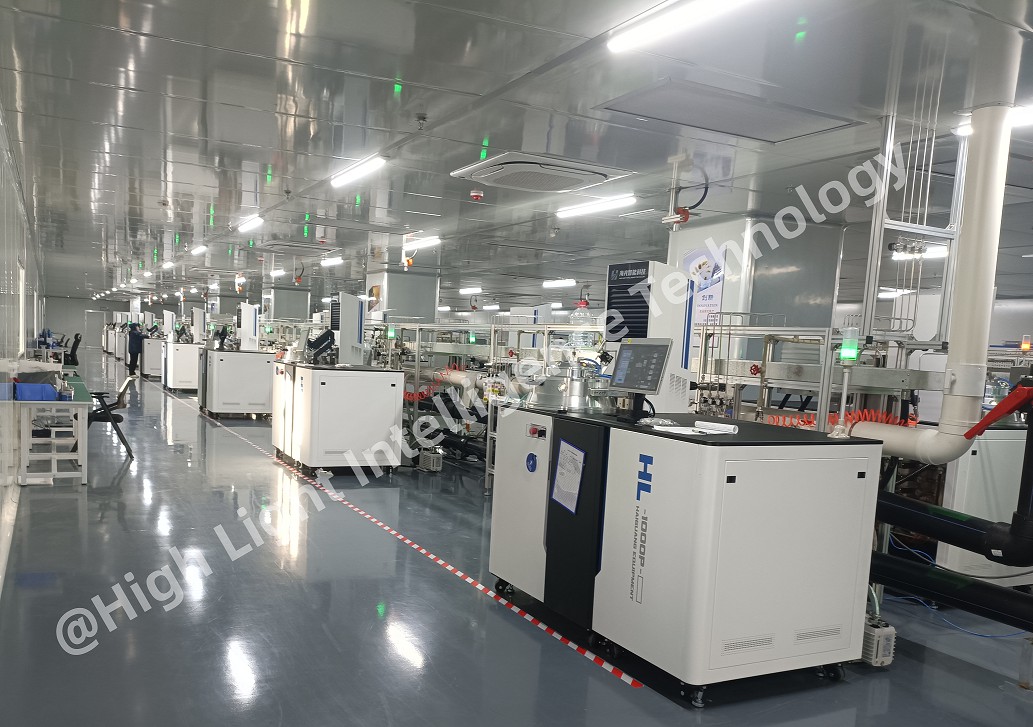
At High Light, machine quality is not an afterthought — it is built into every stage of our process. From design and assembly to testing and final delivery, we apply strict quality control standards to ensure each machine performs reliably in long-term operation.
”
At High Light, machine quality is not an afterthought — it is built into every stage of our process. From design and assembly to testing and final delivery, we apply strict quality control standards to ensure each machine performs reliably in long-term operation.
1. Precision Design and Component Selection
Every machine begins with a carefully engineered design. Key components are selected based on performance, stability, and durability, ensuring the system can operate continuously under demanding conditions.

2. Standardized Assembly Process
Our machines are assembled following standardized procedures by experienced technicians. Each step is documented and inspected to ensure consistency and eliminate potential assembly risks.

3. Multi-Stage Quality Inspection
Before delivery, every machine undergoes multiple rounds of inspection, including mechanical checks, electrical testing, water circuit test and system integration verification. This ensures all parameters meet our technical specifications.

4. Performance and Stability Testing
Each machine is tested under real operating conditions to verify performance stability, repeatability, and safety. Only machines that pass all performance benchmarks are approved for shipment.

5. Pre-Delivery Final Inspection
Prior to delivery, a final quality check is test growth of 3-7 days conducted to confirm overall system integrity, appearance, and documentation completeness. This guarantees the machine is ready for immediate installation and operation upon arrival.
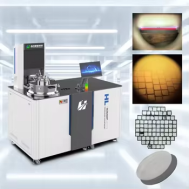
So how do we perform quality inspection on MPCVD machines?
(1) Pressure maintenance of vacuum chamber
Firstly,we need to check Pressure maintenance of vacuum chamber
Ultimate vacuum < 5 × 10⁻¹ Pa and can keep 30 minutes
Ultimate pressure less than 0.5 Pa
Leak rate < 5 × 10⁻⁹ Pa·m³/s
System leak rate is less than 5 × 10⁻⁹ pascal cubic meters per second.
(2) How stable is the microwave output? What is the reflected power value?
Secondly,How stable is the microwave output? What is the reflected power value?
Check the PLC screen of the microwave output, set the figure and check actual figure.Ideally, the reflected power should be as close to 0 watts as better.
(3) Microwave coverage is uniform and large
Thirdly, check microwave coverage is uniform and large
Check through the window, the plasma ball is stable and uniform distribution, above and over cover the growing base.
(4) Is the cooling system leaking?
Again, is the cooling system leaking?
Once you turn on the machine will know Cooling system is it leak or not.
(5) Diamond Growth Process
Last but not least, it is important to know the diamond growth process.
When we need to check the quality of the diamond growing, it takes time to check the process during it. For example if growing diamond seed, it takes 3 days to grow one round, if rough diamond it takes around 15 days for one round, so we can check the quality after growing.
Through rigorous inspection standards and a commitment to engineering excellence, we ensure that every machine delivered to our customers meets the highest quality expectations — today and in the long run.
If you are interested in learning more about our MPCVD machines or would like to discuss a tailored solution for your needs, please feel free to contact us anytime. Our team is ready to provide professional guidance and support to ensure you get the best performance from every machine.
High Light Intelligence Technology, a pioneer in the CVD diamond industry, has advanced MPCVD technology and CVD diamond production workshops. We focus on producing high-purity lab-grown diamonds for the jewelry industry, and at the same time create industrial-grade CVD diamond products, covering single crystals, polycrystalline, films and diamond surface metallization. We also provide 6kw/10kw/15kw MPCVD equipment to help customers in all aspects, from equipment to products, and then to all-round services, to create brilliance together.









-

Single-Crystal vs Polycrystalline CVD Diamond: Process Difference Lies in Growth Logic, Not Equipment
The process difference between single crystal and polycrystalline CVD diamond lies not in equipment, but in growth logic. Single crystal and polycrystalline CVD diamond are two functional new materials with completely independent growth mechanisms, lattice structures and performance systems. Their process logic, product features and application boundaries diverge fundamentally from the very start of deposition and growth. Comparing or selecting materials without considering their underlying crys
-
From Lab-Grown Diamonds to Industrial Diamonds: Is It Time to Build an MPCVD Factory?
The lab-grown diamond industry is entering a new stage. Over the these few years, lab-grown diamonds have gradually gained wider acceptance in the jewelry market. With the development of production technology, equipment maturity and supply chain improvement, the industry is becoming more standardized and efficient. But beyond jewelry, another opportunity is attracting more attention:Industrial diamond applications.
-
Diamond‑Copper Composite: A Next‑Generation Solution for High‑Power Electronics Thermal Management
Diamond‑copper composite (DC) is an advanced metal‑matrix composite material consisting of diamond particles as the reinforcement phase and copper as the matrix, fabricated through state‑of‑the‑art composite preparation techniques. Diamond has the highest thermal conductivity of any naturally occurring material, with isotropic values ranging from 1200 to 2300 W/m·K. Copper, with a thermal conductivity of 401 W/m·K, ranks second only to silver among common metals. By combining the two, the compo
-
Mosaic Single‑Crystal Diamond: Breaking Size Limits
With an ultra‑wide bandgap of 5.47 eV, ultra‑high thermal conductivity (>2000 W/m·K), high carrier mobility (electron mobility up to 4500 cm²·V⁻¹·s⁻¹), and ultra‑high theoretical breakdown field strength (>10 MV/cm), Single‑Crystal Diamond (SCD) is an ideal candidate for next‑generation high‑power, high‑frequency and extreme‑environment electronic devices. However, both natural diamond and HPHT‑synthesized single‑crystal diamond are limited in lateral size, which greatly hinders large‑scal