- 中文
- English
- Español
Lab-grown the diamond industry will enter the 'rule era'
2025-03-05 09:28:56
Click:
“
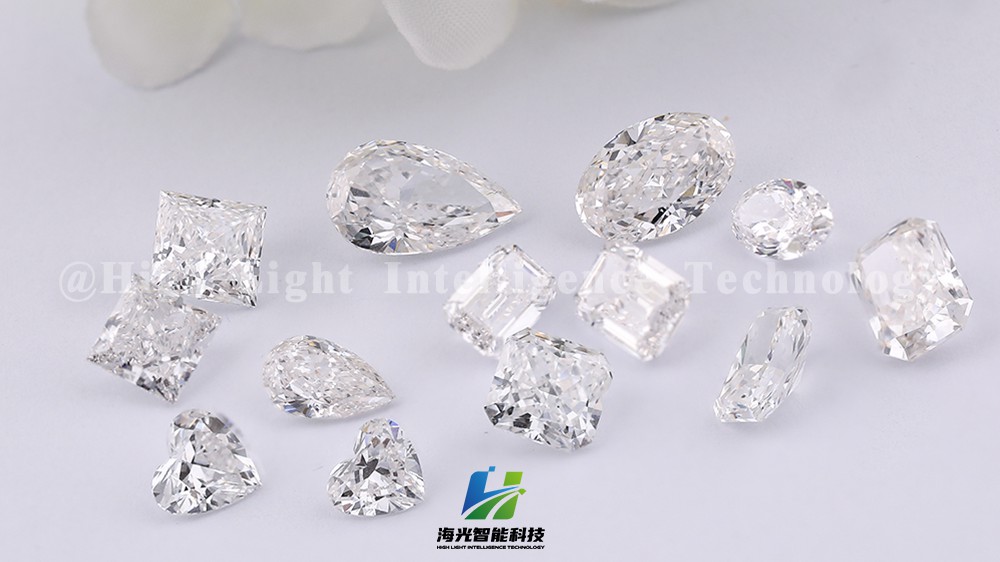
Recently, RJC (Responsible Jewellery Council) launched the Laboratory Grown Materials Standard (LGMS), which clarifies industry ethical standards for lab-grown diamonds and gemstones, marking the entry of the lab-grown diamond industry into the 'era of rules'.
”
Recently, RJC (Responsible Jewellery Council) launched the Laboratory Grown Materials Standard (LGMS), which clarifies industry ethical standards for lab-grown diamonds and gemstones, marking the entry of the lab-grown diamond industry into the 'era of rules'.

LGMS provides guidelines for RJC members to handle synthetic materials, covering regulatory compliance, management systems, due diligence, human rights, labor rights and working conditions. RJC Chairman Dave Meleski emphasized the promotion of responsible business practices throughout the entire chain. In the past decade, lab-grown diamond technology has developed rapidly, but there are problems such as low transparency and labor rights disputes, such as concealment of technical details, child labor and overtime work. After the implementation of LGMS, RJC members need to record and implement the technical requirements of each production step to ensure responsible and transparent operations and clear communication of practices and products. This move is crucial to building market trust and providing consumer decision-making information.

RJC promotes the establishment of a traceable supply chain for lab-grown diamond companies through legal compliance and labor rights review, which is of great significance to the global market order. In the first year of the new rules, RJC members can voluntarily comply with them; after that, it will become a mandatory requirement. RJC provides training and simplifies the audit process. Interim Executive Director John Hall said that the goal is to create a credible environment and ensure best practices throughout the process. RJC's laboratory-grown material standards are crucial to the development of the industry, and unified standards will help regulate the industry.










-

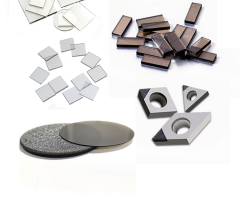
Single-Crystal vs Polycrystalline CVD Diamond: Process Difference Lies in Growth Logic, Not Equipment
The process difference between single crystal and polycrystalline CVD diamond lies not in equipment, but in growth logic. Single crystal and polycrystalline CVD diamond are two functional new materials with completely independent growth mechanisms, lattice structures and performance systems. Their process logic, product features and application boundaries diverge fundamentally from the very start of deposition and growth. Comparing or selecting materials without considering their underlying crys
-
From Lab-Grown Diamonds to Industrial Diamonds: Is It Time to Build an MPCVD Factory?
The lab-grown diamond industry is entering a new stage. Over the these few years, lab-grown diamonds have gradually gained wider acceptance in the jewelry market. With the development of production technology, equipment maturity and supply chain improvement, the industry is becoming more standardized and efficient. But beyond jewelry, another opportunity is attracting more attention:Industrial diamond applications.
-
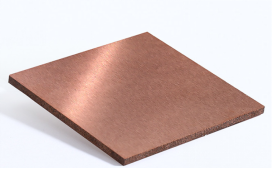
Diamond‑Copper Composite: A Next‑Generation Solution for High‑Power Electronics Thermal Management
Diamond‑copper composite (DC) is an advanced metal‑matrix composite material consisting of diamond particles as the reinforcement phase and copper as the matrix, fabricated through state‑of‑the‑art composite preparation techniques. Diamond has the highest thermal conductivity of any naturally occurring material, with isotropic values ranging from 1200 to 2300 W/m·K. Copper, with a thermal conductivity of 401 W/m·K, ranks second only to silver among common metals. By combining the two, the compo
-
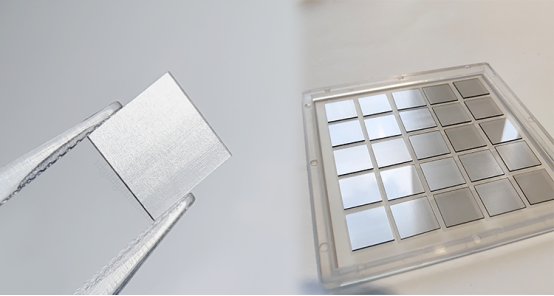
Mosaic Single‑Crystal Diamond: Breaking Size Limits
With an ultra‑wide bandgap of 5.47 eV, ultra‑high thermal conductivity (>2000 W/m·K), high carrier mobility (electron mobility up to 4500 cm²·V⁻¹·s⁻¹), and ultra‑high theoretical breakdown field strength (>10 MV/cm), Single‑Crystal Diamond (SCD) is an ideal candidate for next‑generation high‑power, high‑frequency and extreme‑environment electronic devices. However, both natural diamond and HPHT‑synthesized single‑crystal diamond are limited in lateral size, which greatly hinders large‑scal