- 中文
- English
- Español
Living Diamonds: A Deeper Look at Their Viability and Authenticity
2025-03-14 11:16:50
Click:
“
In recent years, the market for "life diamonds" has heated up, claiming that they can transform human hair, nails, ashes, etc. into diamonds. However, after further investigation, it was found that this is actually a scam with low feasibility. The following revelations will help consumers recognize the truth.
”
Living Diamonds:
A Deeper Look at Their Viability and Authenticity
In recent years, the market for "life diamonds" has heated up, claiming that they can transform human hair, nails, ashes, etc. into diamonds. However, after further investigation, it was found that this is actually a scam with low feasibility. The following revelations will help consumers recognize the truth.

1. The carbon content of ashes and hair after burning is very low, and unscrupulous merchants may add carbon powder
Although the concept of "ashes diamond" promoted by merchants is attractive, it has scientific limitations. After the human body is burned, the carbon content in the ashes is only 1% to 2%, mainly composed of inorganic salts (such as calcium phosphate), which is far lower than the amount of carbon required to make diamonds. After the hair is burned, its organic components (including DNA) will be destroyed, and the remaining carbon is inorganic carbon and cannot provide biological information. In order to make up for the lack of carbon, some merchants may add carbon powder, which not only violates the original intention of commemorating the deceased, but may also cause product quality problems. Therefore, consumers need to carefully identify and understand its scientific feasibility and the integrity of the merchant.

2. The scientific principle of life diamonds is questionable and difficult to produce
Although merchants claim to use high-tech means to make life diamonds, the scientific principles of this process are still controversial. It is not easy to extract pure carbon from human biomass materials, and the extreme temperature and pressure conditions required to convert it into diamonds are also extremely harsh. More importantly, since the carbon content of raw materials such as ashes is extremely low, this undoubtedly increases the difficulty and uncertainty of making life diamonds. Consumers should look at the merchants' propaganda rationally when purchasing to avoid being misled by false information.

3. The production process is not transparent and the quality is difficult to guarantee
The production process of life diamonds often lacks transparency, and it is difficult for consumers to understand what technologies and equipment are used by merchants behind the scenes. This opacity gives merchants the opportunity to pass off inferior products as good ones, or even use inferior materials to make so-called "life diamonds." Consumers are often unable to effectively identify and evaluate the quality of the final product when purchasing, and are easily deceived.
4. Marketing propaganda is exaggerated and misleading to consumers
In order to attract consumers, merchants often exaggerate the promotion of life diamonds. They claim that life diamonds not only have unique commemorative significance, but also have extremely high potential for value preservation and appreciation. However, these promotions often lack scientific basis and empirical data support, and are just lies fabricated to cater to the psychological needs of consumers. Consumers should keep a clear mind when purchasing and not be deceived by the false propaganda of merchants.
5. The price is high and the cost performance is extremely low. Illegal merchants may pass off inferior products as good ones.
The price of life diamonds is often staggeringly high, far beyond the affordability of ordinary consumers. However, compared with its high price, the cost performance of life diamonds is extremely low. Some unscrupulous merchants may even pass off ordinary diamonds or fake diamonds as life diamonds and then sell them to consumers at high prices. This practice not only harms the rights and interests of consumers, but also disrupts the market order. Consumers should think rationally when purchasing and should not blindly pursue the so-called "high technology" and "uniqueness" and pay a high price.

Therefore , "Life Diamond" is a consumer trap with many suspicious points . Consumers should be vigilant when purchasing to avoid being misled . At the same time, we also call on relevant departments to strengthen supervision, crack down on fraud and protect consumers.









-

Single-Crystal vs Polycrystalline CVD Diamond: Process Difference Lies in Growth Logic, Not Equipment
The process difference between single crystal and polycrystalline CVD diamond lies not in equipment, but in growth logic. Single crystal and polycrystalline CVD diamond are two functional new materials with completely independent growth mechanisms, lattice structures and performance systems. Their process logic, product features and application boundaries diverge fundamentally from the very start of deposition and growth. Comparing or selecting materials without considering their underlying crys
-
From Lab-Grown Diamonds to Industrial Diamonds: Is It Time to Build an MPCVD Factory?
The lab-grown diamond industry is entering a new stage. Over the these few years, lab-grown diamonds have gradually gained wider acceptance in the jewelry market. With the development of production technology, equipment maturity and supply chain improvement, the industry is becoming more standardized and efficient. But beyond jewelry, another opportunity is attracting more attention:Industrial diamond applications.
-
Diamond‑Copper Composite: A Next‑Generation Solution for High‑Power Electronics Thermal Management
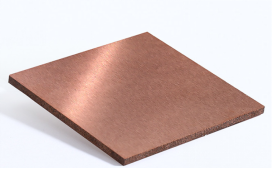
Diamond‑copper composite (DC) is an advanced metal‑matrix composite material consisting of diamond particles as the reinforcement phase and copper as the matrix, fabricated through state‑of‑the‑art composite preparation techniques. Diamond has the highest thermal conductivity of any naturally occurring material, with isotropic values ranging from 1200 to 2300 W/m·K. Copper, with a thermal conductivity of 401 W/m·K, ranks second only to silver among common metals. By combining the two, the compo
-
Mosaic Single‑Crystal Diamond: Breaking Size Limits
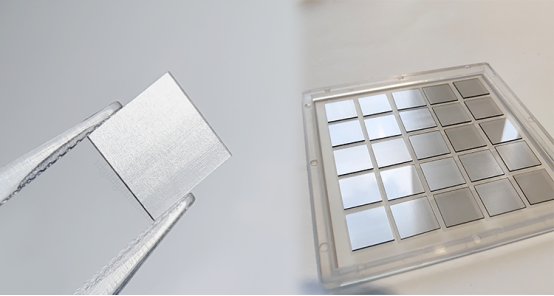
With an ultra‑wide bandgap of 5.47 eV, ultra‑high thermal conductivity (>2000 W/m·K), high carrier mobility (electron mobility up to 4500 cm²·V⁻¹·s⁻¹), and ultra‑high theoretical breakdown field strength (>10 MV/cm), Single‑Crystal Diamond (SCD) is an ideal candidate for next‑generation high‑power, high‑frequency and extreme‑environment electronic devices. However, both natural diamond and HPHT‑synthesized single‑crystal diamond are limited in lateral size, which greatly hinders large‑scal