- 中文
- English
- Español
Why Some Diamonds Sparkle More: A Simple Guide to "Fire" & Smart Buying
2026-02-08 14:00:43
Click:
“
In the world of diamonds, weight (carats) decides the price, but Fire decides the beauty. We’ve all seen it: two diamonds that look the same on paper, but one dazzles while the other looks like a dull piece of glass.
”
In the world of diamonds, weight (carats) decides the price, but Fire decides the beauty. We’ve all seen it: two diamonds that look the same on paper, but one dazzles while the other looks like a dull piece of glass.
If you want a diamond that truly 'pops' without falling for sales talk, you need to understand Fire. Here is the lowdown on what makes a diamond sparkle and how to pick a winner.
1. What Exactly is 'Fire'?
Think of fire as the diamond’s 'internal rainbow.' When white light enters a diamond, it shouldn't just bounce back; it should break apart into flashes of red, orange, blue, and green.
Brilliance: This is the white light (the 'brightness').
Fire: This is the 'rainbow' effect (the 'color').
Scintillation: The rhythmic flashes of light you see when the diamond moves.
Pro Tip: A diamond with great fire doesn’t just sit there; it reacts to every tiny movement with a splash of color.

2. The Three Things That Kill the Sparkle
A. Bad Cutting (The #1 Culprit)
Cutting is like the diamond’s engine. If it’s cut too deep or too shallow, the light 'leaks' out the bottom instead of reflecting to your eye.
The Gold Standard: Look for a 3EX (Triple Excellent) rating.
Don't Be Fooled: 'Hearts and Arrows' is just about symmetry—it’s a nice bonus, but it doesn't guarantee the best fire. Stick to the cut proportions first.
B. The 'Filter' Effect (Clarity & Color)
If a diamond has too many 'birthmarks' (inclusions) inside, they act like tiny walls blocking the light.
Buying Tip: Aim for VS2 or higher. Anything lower (like SI grades) might look a bit hazy because the light can't get through cleanly.
C. The Invisible Killers: 'Milky, Brown, or Green'
Some diamonds have hidden flaws not always listed clearly on the front of a certificate.
Milky (Cloudy): Makes the diamond look oily or foggy.
Brown/Green Tint: Gives the diamond a 'muddy' look that eats up the rainbow colors.
Strong Fluorescence: Can make a diamond look blurry in daylight.

3. How to Test It Yourself (The DIY Method)
You don’t need a lab to spot a good diamond. Try these three tricks:
Get Out of the Spotlight: Jewelry stores use special LED lights to make everything look good. Move into natural daylight or a slightly shaded area. If it still flashes colors, it’s a high-quality stone.
The Paper Test: Place the diamond on a piece of plain white paper. A stone with great fire will throw clear, colorful light spots onto the paper.
The Comparison: Always ask to see two diamonds together. Your eyes will immediately tell you which one 'jumps' out more.

4.Foshan High Light Intelligent: Your Source for High-Fire Diamonds
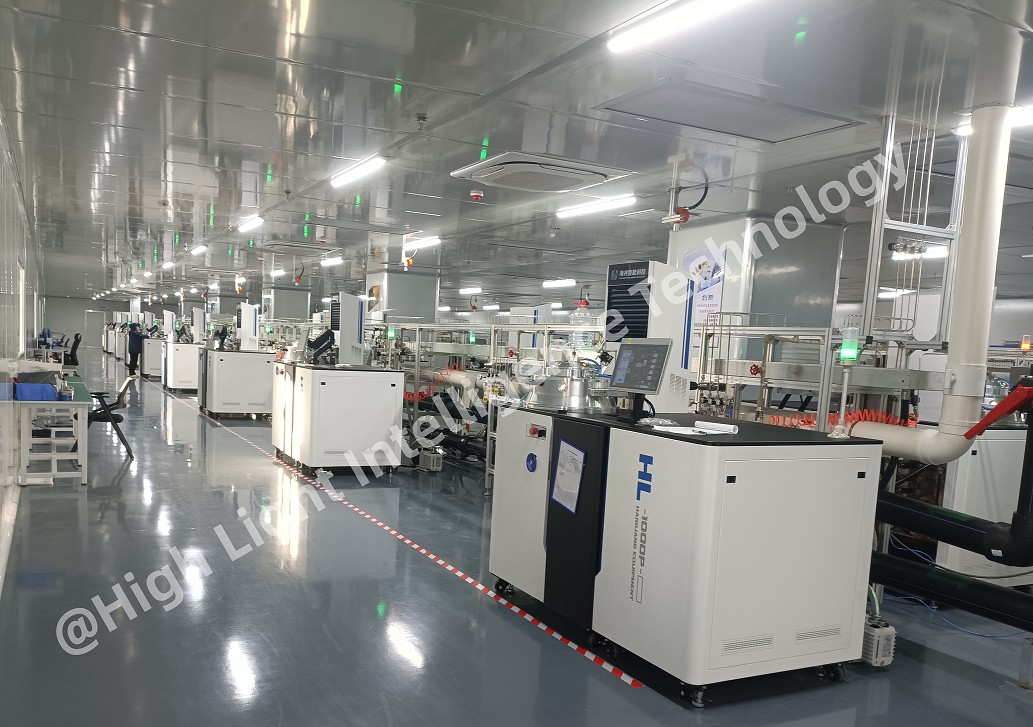
Foshan High Light Intelligence boasts a vast inventory of premium white diamonds, ranging from 0.003 to 25 carats. We offer wholesale pricing, custom loose diamond services and bulk supply of loose diamonds. For diamond certifications, IGI, GIA and NGTC are all available upon request. Feel free to contact us anytime for your requirements!

High Light Intelligence Technology, a pioneer in the CVD diamond industry, has advanced MPCVD technology and CVD diamond production workshops. We focus on producing high-purity lab-grown diamonds for the jewelry industry, and at the same time create industrial-grade CVD diamond products, covering single crystals, polycrystalline, films and diamond surface metallization. We also provide 6kw/10kw/15kw MPCVD equipment to help customers in all aspects, from equipment to products, and then to all-round services, to create brilliance together.
*The articles and pictures are only for industry communication and sharing. If there is any infringement, please contact us to delete them.









-

CVD Single-Crystal Diamonds: An Analysis of the Complete Processing Workflow from Gas-Phase Deposition to Finished Diamond Chips
MPCVD (Microwave Plasma Chemical Vapor Deposition) technology is currently the core process for producing high-quality single-crystal diamond s. Thanks to its advantages of low defect rates, high purity, and controllable large dimensions, it is widely used in fields such as semiconductor heat dissipation, precision optics, and high-end sensors. The final quality of single-crystal diamond s depends on comprehensive process control throughout the entire workflow—from vapor deposition growth to pos
-
Single-Crystal or Polycrystalline Diamond — Which Has Greater Potential?
As diamond continues to enter industries such as semiconductors, thermal management, optics, high-power electronics, and precision machining, the requirements for diamond materials are also evolving.
-
Diamond Polishing and Grinding Processes: Core Challenges and Industry Hurdles
Diamond is often hailed as the “ultimate material” – ranking 10 on the Mohs hardness scale, boasting an ultra‑high thermal conductivity (~2,200 W/(m·K)), excellent chemical stability, and broad optical transparency. These properties make it irreplaceable in cutting‑edge applications such as semiconductor heat dissipation, high‑end optics, and quantum chips. Yet the paradox of “good materials are hard to process” is nowhere more evident than in diamond. From rough grinding for planarization to at
-
Single-Crystal vs Polycrystalline CVD Diamond: Process Difference Lies in Growth Logic, Not Equipment
The process difference between single crystal and polycrystalline CVD diamond lies not in equipment, but in growth logic. Single crystal and polycrystalline CVD diamond are two functional new materials with completely independent growth mechanisms, lattice structures and performance systems. Their process logic, product features and application boundaries diverge fundamentally from the very start of deposition and growth. Comparing or selecting materials without considering their underlying crys