- 中文
- English
- Español
Does Diamond Have a "Shelf Life"? Follow These Tips to Keep It with You for a Lifetime
2026-02-08 14:12:17
Click:
“
When it comes to diamonds, people’s first impression is always "hard and eternal"—the slogan "A diamond is forever" has deeply rooted in everyone’s mind. However, many people don’t know that although diamonds are hard, they are not indestructible. They also have an "invisible shelf life"—not that they will deteriorate or expire, but that if neglected in maintenance, they will gradually lose luster, develop scratches, or even loosen and fall off. No matter how brilliant a diamond is, it will beco
”
When it comes to diamonds, people’s first impression is always 'hard and eternal'—the slogan 'A diamond is forever' has deeply rooted in everyone’s mind. However, many people don’t know that although diamonds are hard, they are not indestructible. They also have an 'invisible shelf life'—not that they will deteriorate or expire, but that if neglected in maintenance, they will gradually lose luster, develop scratches, or even loosen and fall off. No matter how brilliant a diamond is, it will become dull. In fact, as long as you master a few super simple diamond care tips, you can keep your diamond (whether lab-grown or natural) shining brightly and truly accompany you for a lifetime.
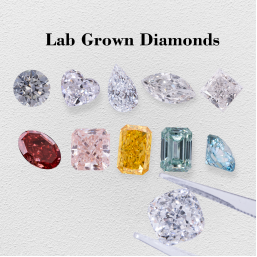
First, let’s correct a common misunderstanding: a diamond’s 'hardness' is not equal to 'toughness'. Diamonds are the hardest substance in nature and can scratch all other gemstones, but their toughness is moderate. They may still develop cracks or even break if subjected to severe impact or falling. Especially for inlaid diamond jewelry such as rings and necklaces, it is easy to be ignored in daily wear. Inadvertent collisions may damage the diamond or loosen the setting claws, which is also the main reason why many diamonds 'lose their luster in advance'.

Diamond Care Tip 1: Avoid 'Pitfalls' in Daily Wear—Long-lasting Luster Lies in Details. When wearing diamonds daily, try to avoid contact with oil, cosmetics, and chemical cleaning agents. Oil will adhere to the diamond’s surface, blocking its luster channels and making the diamond look dull. Chemical components in perfume, skin care products, and laundry detergent can corrode the inlaid metal, indirectly causing the diamond to loosen. It is recommended that you take off your diamond jewelry and put it in a special jewelry box before applying makeup, spraying perfume, or doing housework. Avoid mixing it with other jewelry to prevent the diamond from being scratched by other gemstones or metals.

Diamond Care Tip 2: Regular Inspection and 'Reinforcement'—Timely Avoid Loosening Risks. For inlaid diamond jewelry, the setting claws may wear out or loosen after long-term wear, and the diamond is likely to fall off at this time, causing unnecessary losses. It is recommended to check the setting of the diamond every 3-6 months. Gently shake the diamond with your hand to see if there are any signs of loosening. If you find that the setting claws are loose or deformed, send them to a jewelry store for reinforcement in time to avoid the diamond falling off. In addition, the inlaid metal of diamond jewelry worn for a long time will oxidize and turn black. Regular polishing and maintenance can also make the diamond and the jewelry as a whole more exquisite.

In fact, the 'shelf life' of a diamond is never fixed. Its long-lasting brilliance depends entirely on careful daily care. Whether it is a loose diamond for collection or inlaid jewelry for daily wear, good maintenance can not only maintain the quality and luster of the diamond but also enhance its value retention.
About Us:
Backed by more than 10 years of diamond R&D experience and a complete industrial chain, Foshan High Light Intelligence Technology Co., Ltd. creates high-quality loose diamond and jewelry series. The loose diamonds include white diamonds and fancy color diamonds. The white diamonds have a stock of 0.003-25 carats, and the fancy color diamonds come in multiple shades such as red, yellow, blue, and green, with grades ranging from Light to Fancy Vivid and clarity up to VVS-SI. We support loose diamond customization and provide authoritative certificates such as IGI.

Our jewelry brand KF Deer adheres to the concept of 'Beauty needs to be sculpted, and we are all creators'. We offer customization services for rings, necklaces, earrings, and bracelets, supporting custom designs based on provided images, as well as three K-gold colors (white, yellow, and rose gold) and setting options with different K-gold contents. We bring customers diversified and high-quality brilliant choices.
Foshan Highlight Intelligent Technology Co., Ltd. has been deeply involved in the CVD-grown diamond field for many years. Leveraging its mature core technologies and differentiated process layout, it has achieved full-dimensional coverage of white diamond products. All of the company's white diamond products are pure carbon crystals with a hardness of 10. Their physical and chemical properties are completely consistent with natural white diamonds, placing them firmly in the category of genuine diamonds.
Significant core technological advantages: Relying on a stable and controllable cultivation environment, it can produce high-color diamonds ranging from D to F, with clarity generally reaching VS1 or higher standards. They are virtually flawless to the naked eye, and their fire and brilliance rival top-grade natural white diamonds.
Our product highlights: Standardized grading standards, transparent and controllable selection: Strictly adhering to the international diamond grading system, key parameters such as color (D-J), clarity (SI1-VVS1), cut (EX-VG), and carat weight are clearly marked. Products come with authoritative IGI testing certificates, supporting full traceability and verification.
Green and sustainable development, fulfilling social responsibility: The cultivation process requires no extraction of earth's crustal resources, avoiding the environmental damage caused by natural diamond mining from the source. It is a superior choice that combines aesthetic value with environmental protection.
High cost-performance advantage, breaking down market price barriers: Compared to natural white diamonds, our CVD white diamonds are significantly more competitive in price. Within the same budget, consumers can choose larger carat or higher quality products, helping them easily achieve “real diamond freedom.”
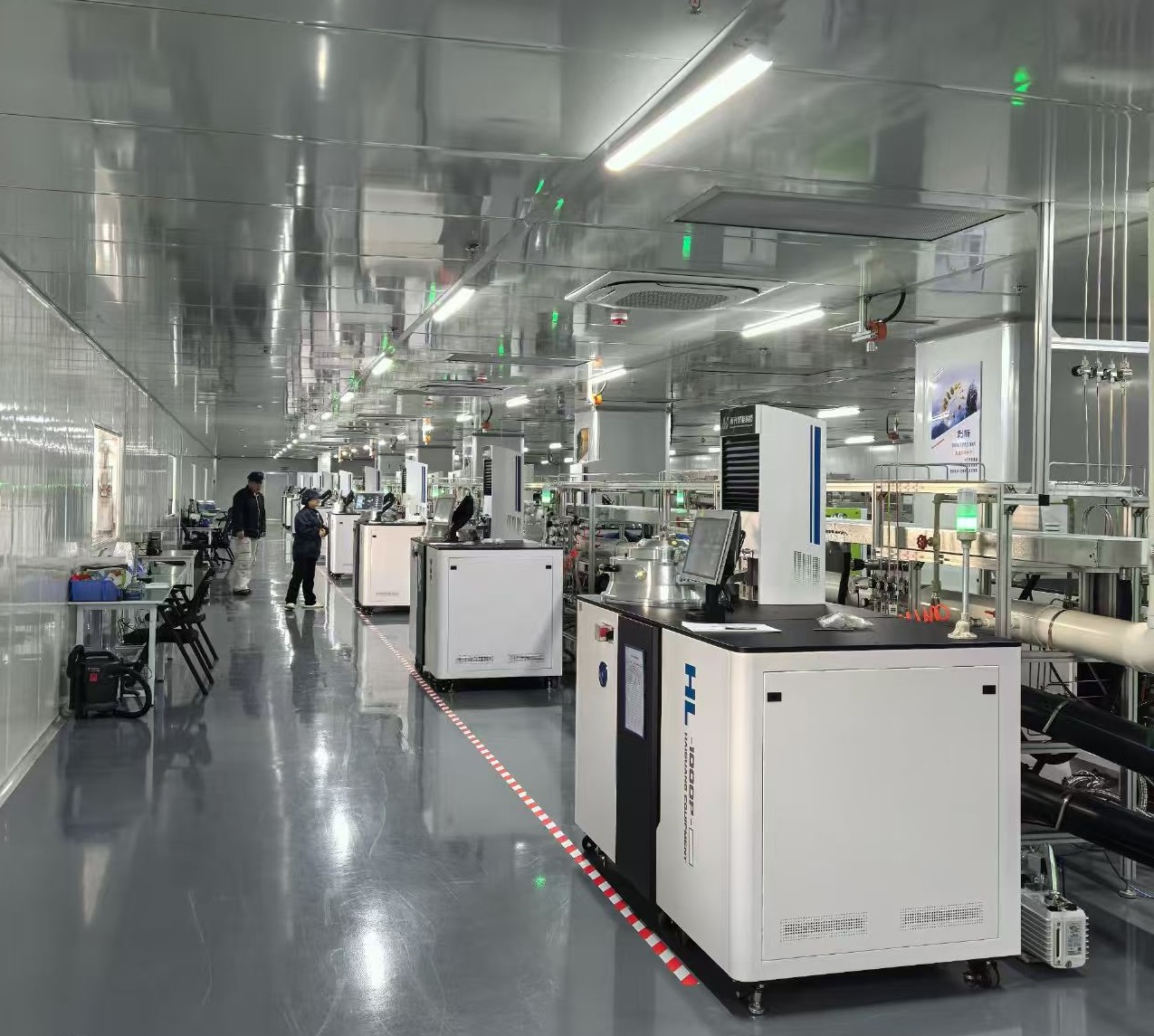
*The articles and pictures are only for industry communication and sharing. If there is any infringement, please contact us to delete them.









-

CVD Single-Crystal Diamonds: An Analysis of the Complete Processing Workflow from Gas-Phase Deposition to Finished Diamond Chips
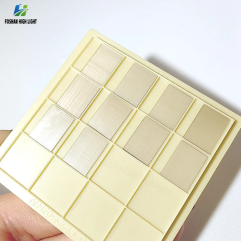
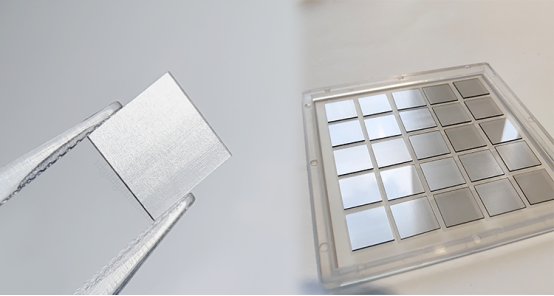
MPCVD (Microwave Plasma Chemical Vapor Deposition) technology is currently the core process for producing high-quality single-crystal diamond s. Thanks to its advantages of low defect rates, high purity, and controllable large dimensions, it is widely used in fields such as semiconductor heat dissipation, precision optics, and high-end sensors. The final quality of single-crystal diamond s depends on comprehensive process control throughout the entire workflow—from vapor deposition growth to pos
-
Single-Crystal or Polycrystalline Diamond — Which Has Greater Potential?
As diamond continues to enter industries such as semiconductors, thermal management, optics, high-power electronics, and precision machining, the requirements for diamond materials are also evolving.
-
Diamond Polishing and Grinding Processes: Core Challenges and Industry Hurdles
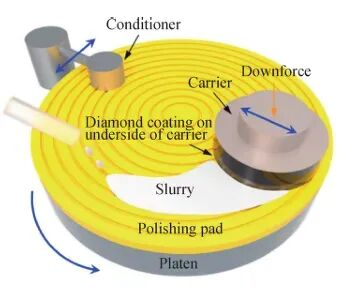
Diamond is often hailed as the “ultimate material” – ranking 10 on the Mohs hardness scale, boasting an ultra‑high thermal conductivity (~2,200 W/(m·K)), excellent chemical stability, and broad optical transparency. These properties make it irreplaceable in cutting‑edge applications such as semiconductor heat dissipation, high‑end optics, and quantum chips. Yet the paradox of “good materials are hard to process” is nowhere more evident than in diamond. From rough grinding for planarization to at
-
Single-Crystal vs Polycrystalline CVD Diamond: Process Difference Lies in Growth Logic, Not Equipment
The process difference between single crystal and polycrystalline CVD diamond lies not in equipment, but in growth logic. Single crystal and polycrystalline CVD diamond are two functional new materials with completely independent growth mechanisms, lattice structures and performance systems. Their process logic, product features and application boundaries diverge fundamentally from the very start of deposition and growth. Comparing or selecting materials without considering their underlying crys