- 中文
- English
- Español
Diamond: A New Solution for More Efficient Smartphone Cooling
2025-12-31 16:00:25
Click:
“
As 5G, AI, and high-performance chips continue to evolve, smartphone performance has become increasingly powerful, but so has the issue of heat generation. When a phone overheats, it can cause lag, throttling, and seriously affect the user experience. Traditional cooling materials like copper and aluminum are no longer sufficient to meet the high demands of modern smartphones. Against this backdrop, diamond, with its exceptional thermal conductivity, is gradually entering the consumer electronic
”
As 5G, AI, and high-performance chips continue to evolve, smartphone performance has become increasingly powerful, but so has the issue of heat generation. When a phone overheats, it can cause lag, throttling, and seriously affect the user experience. Traditional cooling materials like copper and aluminum are no longer sufficient to meet the high demands of modern smartphones. Against this backdrop, diamond, with its exceptional thermal conductivity, is gradually entering the consumer electronics industry as a new solution for smartphone cooling.
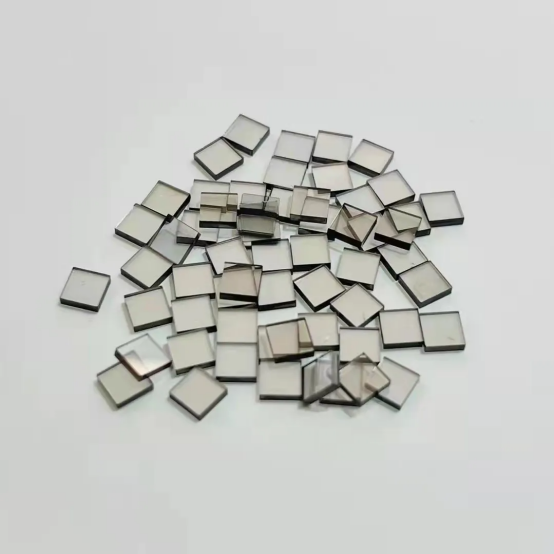
Diamond is gaining attention mainly because it offers several outstanding advantages for thermal management:
• Exceptional Thermal Conductivity: At room temperature, diamond’s thermal conductivity reaches 2000-2200 W/(m·K), far surpassing copper and silicon, allowing it to quickly dissipate heat generated by chips.
• Electrical Insulation, More Safety: Unlike metals, diamond is an insulator, which means it can directly contact chips and circuits without the risk of short circuits, making it ideal for smartphones' compact internal structure.
• Thermal Stability: Diamond’s coefficient of thermal expansion is similar to that of chip materials, meaning it doesn’t experience significant stress from temperature changes, helping to improve the overall reliability of the device.
These properties allow diamond to meet the core requirements of smartphones: 'quick cooling, long-term stability, and safety.
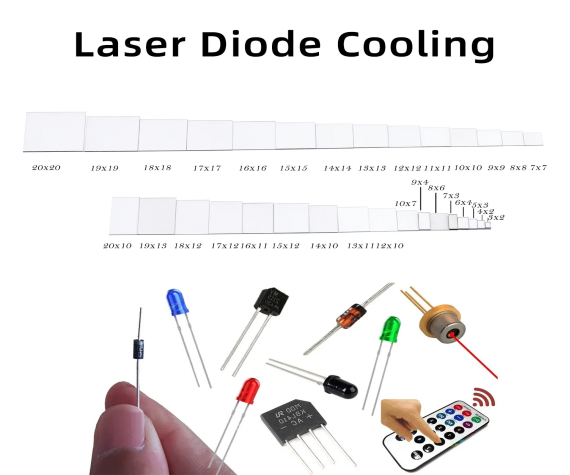
- Diamond is no longer just a laboratory material; it is now being applied in various forms within smartphone cooling systems:
- • Diamond Powder Thermal Gel: By adding diamond particles (40-50μm) to thermal gel, this material fills the tiny gaps between chips and heat sinks. This method improves thermal conductivity by around 50%-60% compared to regular thermal gel, and is one of the most commonly used solutions.
- • Polycrystalline Diamond Heat Sinks: Polycrystalline diamond, which is more cost-effective, is used as a heat dissipation base on the back of chips, rapidly transferring heat to VC (Vapor Chamber) heat plates or liquid cooling systems.
- • Diamond Thin Film Coatings: Using CVD (Chemical Vapor Deposition) technology, a very thin layer of diamond film is deposited on the surface of heat dissipation components, reducing thermal resistance and enhancing overall cooling efficiency. This is mainly used in high-end flagship smartphones.
- These solutions leverage diamond’s high thermal conductivity while also using composite materials and innovative processes to reduce costs and processing difficulty, making it more feasible for mass production.
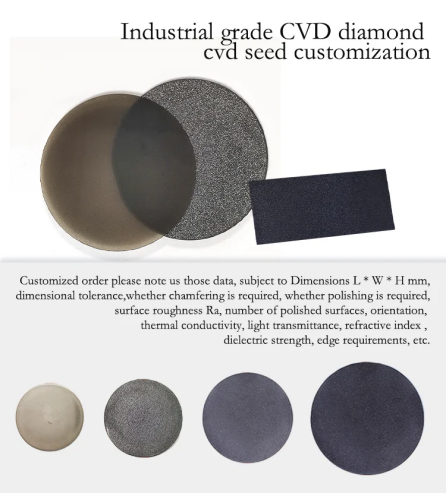
Of course, for diamond-based cooling to be widely adopted, several challenges remain, such as the high cost of high-quality diamonds, the need to optimize bonding techniques with other materials, and the processing difficulty due to the hardness of diamond.
However, these issues are gradually being addressed. For example, MPCVD (Microwave Plasma Chemical Vapor Deposition) technology has significantly improved the growth efficiency of diamonds, reducing costs. New interface treatments and low-temperature sintering processes have also made it easier to bond diamonds with other thermal materials. In the future, flexible diamond films and more intelligent cooling structures are expected to be applied to foldable smartphones and wearable devices.
As technology matures and costs continue to drop, diamond-based cooling may move from high-end models to more mainstream smartphones. This would allow devices to maintain high performance while better managing temperature, ensuring a smoother user experience in the 5G and AI era.
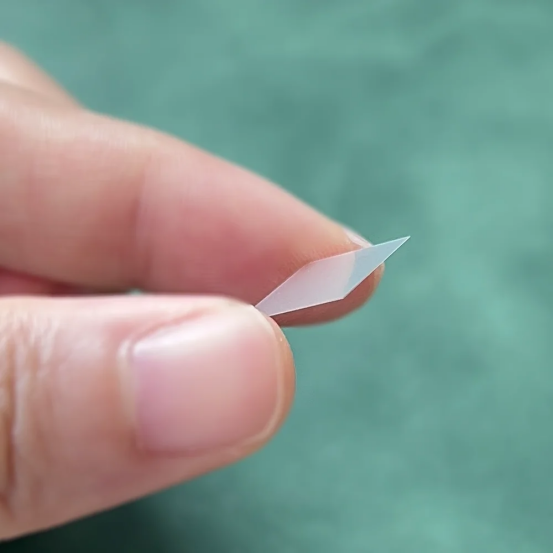
With the continuous maturation of technology and the declining cost of diamond materials, the trend of diamond cooling moving from high-end models to mainstream smartphones is becoming more apparent. Foshan Highlight Intelligent Technology Co., Ltd.'s technological advancements and industrial empowerment are accelerating this process. As a professional company focused on CVD diamond technology, we has achieved stable mass production of high-quality single crystal diamonds with thermal conductivities of 1800-2200 W/(m·K), meeting the core needs of the consumer electronics industry for efficient cooling.
In the future, with our technological and industrial collaboration, diamond cooling technology will be rapidly deployed, ensuring that more mainstream smartphones can achieve precise temperature control in 5G and AI-driven high-performance scenarios. This will effectively eliminate overheating and lag, providing a solid foundation for upgrading thermal management in consumer electronics and pushing the smartphone cooling industry into a new era of high efficiency and reliability.
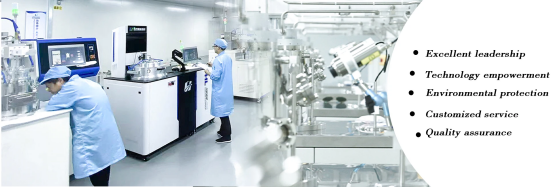
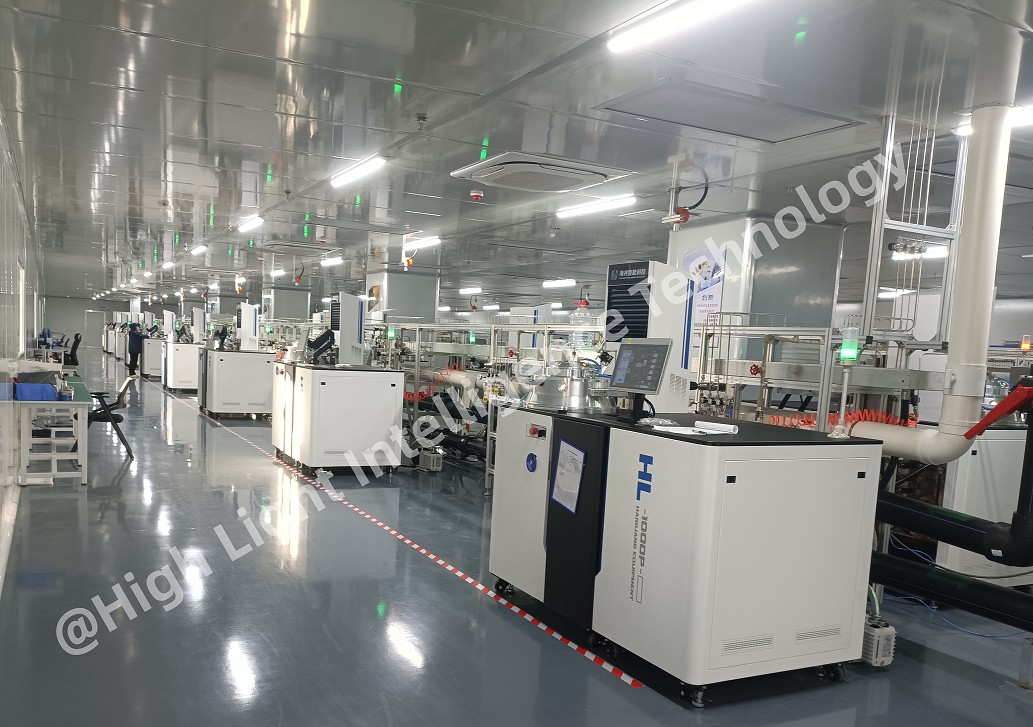
High Light Intelligence Technology, a pioneer in the CVD diamond industry, has advanced MPCVD technology and CVD diamond production workshops. We focus on producing high-purity lab-grown diamonds for the jewelry industry, and at the same time create industrial-grade CVD diamond products, covering single crystals, polycrystalline, films and diamond surface metallization. We also provide 6kw/10kw/15kw MPCVD equipment to help customers in all aspects, from equipment to products, and then to all-round services, to create brilliance together.
*The articles and pictures are only for industry communication and sharing. If there is any infringement, please contact us to delete them.









-

CVD Single-Crystal Diamonds: An Analysis of the Complete Processing Workflow from Gas-Phase Deposition to Finished Diamond Chips
MPCVD (Microwave Plasma Chemical Vapor Deposition) technology is currently the core process for producing high-quality single-crystal diamond s. Thanks to its advantages of low defect rates, high purity, and controllable large dimensions, it is widely used in fields such as semiconductor heat dissipation, precision optics, and high-end sensors. The final quality of single-crystal diamond s depends on comprehensive process control throughout the entire workflow—from vapor deposition growth to pos
-
Single-Crystal or Polycrystalline Diamond — Which Has Greater Potential?
As diamond continues to enter industries such as semiconductors, thermal management, optics, high-power electronics, and precision machining, the requirements for diamond materials are also evolving.
-
Diamond Polishing and Grinding Processes: Core Challenges and Industry Hurdles
Diamond is often hailed as the “ultimate material” – ranking 10 on the Mohs hardness scale, boasting an ultra‑high thermal conductivity (~2,200 W/(m·K)), excellent chemical stability, and broad optical transparency. These properties make it irreplaceable in cutting‑edge applications such as semiconductor heat dissipation, high‑end optics, and quantum chips. Yet the paradox of “good materials are hard to process” is nowhere more evident than in diamond. From rough grinding for planarization to at
-
Single-Crystal vs Polycrystalline CVD Diamond: Process Difference Lies in Growth Logic, Not Equipment
The process difference between single crystal and polycrystalline CVD diamond lies not in equipment, but in growth logic. Single crystal and polycrystalline CVD diamond are two functional new materials with completely independent growth mechanisms, lattice structures and performance systems. Their process logic, product features and application boundaries diverge fundamentally from the very start of deposition and growth. Comparing or selecting materials without considering their underlying crys