- 中文
- English
- Español
Master the 4Cs to Easily Select Your Ideal Lab-Created Diamond
2026-01-06 14:58:58
Click:
“
In the jewelry market, lab-created diamonds are gaining popularity for their eco-friendly credentials and exceptional value. Yet, faced with a dazzling array of options, many consumers feel overwhelmed. In reality, selecting a lab-grown diamond is much like choosing a natural diamond—the key lies in mastering the “4C standards”: Color, Clarity, Cut, and Carat Weight. By thoroughly understanding these four critical factors, you can precisely find a high-quality lab-grown diamond that meets your n
”
In the jewelry market, lab-created diamonds are gaining popularity for their eco-friendly credentials and exceptional value. Yet, faced with a dazzling array of options, many consumers feel overwhelmed. In reality, selecting a lab-grown diamond is much like choosing a natural diamond—the key lies in mastering the “4C standards”: Color, Clarity, Cut, and Carat Weight. By thoroughly understanding these four critical factors, you can precisely find a high-quality lab-grown diamond that meets your needs and budget.
I. Color: From Colorless to Light Yellow—Choose a Tone That Suits Your Style
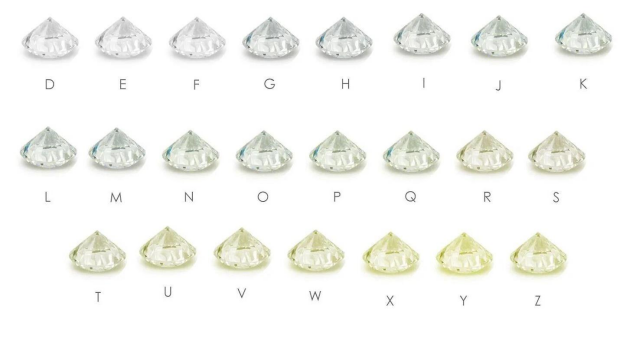
The color grading of lab-grown diamonds aligns closely with natural diamonds, primarily based on the degree of colorlessness. Common color ranges extend from D (completely colorless) to Z (light yellow or light brown). Colorless diamonds maximize the display of brilliant fire and sparkle, while diamonds with light yellow or other tints offer a unique style, appealing to consumers seeking individuality.
Selection Recommendations:
1. Prioritize high color grades for classic jewelry: For classic jewelry pieces like engagement rings or necklaces, where a clean, elegant aesthetic is desired, opt for colorless diamonds in the D-F range. These diamonds exhibit pure, transparent clarity under light, with exceptionally brilliant fire. They radiate sophistication whether worn daily or for special occasions.
2. Value-conscious choice balancing aesthetics and budget: For consumers with limited budgets or seeking unique jewelry styles, G-J grade diamonds offer an excellent option. Though these diamonds carry a very slight yellow tint, it remains virtually imperceptible under everyday lighting. Their more affordable price point compared to D-F grades allows for effective cost control while maintaining visual appeal.
II. Clarity: Balancing Internal Imperfections, Quality, and Budget
Clarity in lab-grown diamonds refers to the presence of internal inclusions (such as bubbles or inclusions) and external blemishes (like scratches or chips). Clarity grades range from FL (Flawless) to I3 (Included). Higher grades indicate purer interiors with superior fire and transparency, though prices increase accordingly.
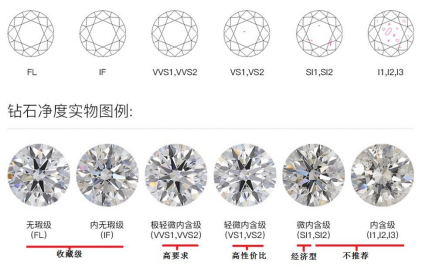
Selection Recommendations:
1. Top Choice for Daily Wear: SI Grade (Slightly Included): For most lab-grown diamond jewelry intended for everyday wear (e.g., engagement rings, stud earrings), SI grade offers exceptional value. Under normal visual inspection, internal flaws in SI diamonds are virtually invisible and can only be faintly detected with a 10x loupe. Their appearance is comparable to higher-clarity diamonds, yet they offer significant cost savings—ideal for consumers prioritizing practicality and budget.
2. Opt for Higher Clarity for Special Needs: VS and Above: For collectible pieces or those demanding exceptional diamond quality (like large-carat jewelry), consider VS (Very Slightly Included) clarity or higher. VS-grade diamonds exhibit minimal internal flaws, often undetectable even under 10x magnification. They maximize the diamond's pure texture and brilliant fire, appealing to consumers pursuing ultimate quality. Note that FL (Flawless) and IF (Internally Flawless) lab-grown diamonds are extremely rare and costly. Unless driven by specific collection needs, these grades are unnecessary for everyday wear.
3. Avoid Low Clarity Grades: I2 and I3: Cultured diamonds graded I2 (slightly included) and I3 exhibit noticeable internal flaws that not only diminish transparency and fire but may also reduce durability. Therefore, these grades are not recommended unless intended for specific decorative purposes.
III. Cut: The Key to Fire and Brilliance—Prioritize High Cut Grades
Cut is the only 4C factor determined by human craftsmanship, directly influencing a diamond's fire, brilliance, and overall aesthetic appeal. Superior cutting allows diamonds to perfectly reflect light, showcasing dazzling fire and brilliance; poor cutting causes light leakage, resulting in a dull, lifeless appearance. Lab-grown diamond cuts are typically graded into five levels: Excellent, Very Good, Good, Fair, and Poor.
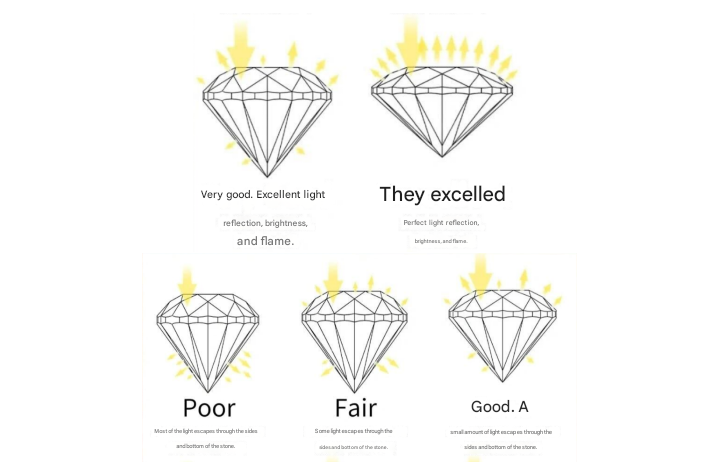
Selection Recommendations:
1. Prioritize Excellent or Very Good Cut Grades: Regardless of carat weight, color, or clarity, always prioritize diamonds with Excellent or Very Good cut grades. These grades maximize light reflection, ensuring dazzling fire and brilliance under any lighting conditions. Even diamonds with slightly lower color or clarity grades can be enhanced by superior cutting, partially compensating for imperfections and boosting overall visual appeal. For example, a lab-grown diamond graded G color and SI clarity with Excellent cut may appear more visually appealing than one graded F color and VS clarity with only Good cut.
2. Focus on Cut Details: Proportions, Symmetry, and Polish: Beyond the overall cut grade, examine detailed cut parameters including table percentage, pavilion percentage, symmetry, and polish. A superior cut should feature balanced table and pavilion percentages, with symmetry and polish achieving Excellent ratings. These details directly influence fire distribution and surface brilliance. Request a detailed cut report from the seller during purchase.
3. Avoid Fair and Poor Cut Grades: Fair and Poor cut grades suffer from improper proportions, causing significant light leakage from the diamond's bottom or sides. This prevents the formation of good fire and brilliance. Even diamonds with higher color and clarity grades will appear dull and lifeless with these cuts, making them inadvisable choices.
IV. Carat Weight: Choose Size Wisely Based on Purpose and Budget
Carat is the unit of measurement for diamond weight (1 carat = 0.2 grams) and a key factor influencing price. Generally, larger carat weights command higher prices, with increases occurring in “step-like” increments. When selecting lab-grown diamonds, consider carat weight in conjunction with intended use, budget, and jewelry design.
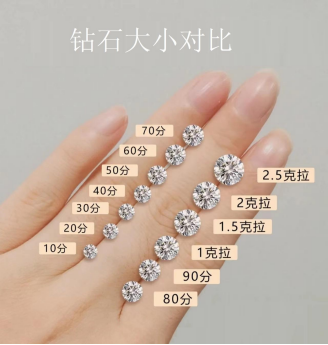
Selection Recommendations:
1. Everyday Wear: 0.3-1 carats is ideal: For daily jewelry like diamond rings or necklaces, 0.3-1 carat lab-grown diamonds are a suitable choice. 0.3-0.5 carat diamonds are petite and elegant, perfect for daily commutes and casual occasions without appearing overly flashy. 0.5-1 carat diamonds strike a balance between beauty and presence, showcasing the diamond's brilliance without hindering daily activities, while remaining within most consumers' budgets.
2. Special Occasions / Collectibles: 1 carat and above: For engagement rings, wedding rings, or other special occasions, or for those with collecting interests, consider lab-grown diamonds over 1 carat. Larger carat diamonds (e.g., 1-2 carats) deliver more visually striking effects, carrying greater commemorative significance and collectible value. However, note that diamond prices increase significantly with carat weight. When selecting larger diamonds, balance budget and quality appropriately.
3. Avoid Low Clarity Grades: I2 and I3: Cultured diamonds graded I2 (slightly included) and I3 exhibit noticeable internal flaws that not only diminish transparency and fire but may also reduce durability. Therefore, these grades are not recommended unless intended for specific decorative purpose
V. Additional Considerations for Purchasing Lab-Grown Diamonds
Beyond understanding the 4Cs, pay attention to these two points when selecting lab-grown diamonds to avoid pitfalls:
1. Verify Authoritative Certificates for Quality Transparency: Legitimate lab-grown diamonds should be accompanied by authoritative grading certificates from institutions like GIA (Gemological Institute of America), IGI (International Gemological Institute), or NGTC (National Gemstone Testing Center). These certificates detail the diamond's 4C parameters and growth method (CVD chemical vapor deposition or HPHT high-pressure high-temperature), serving as crucial references for quality assessment. When purchasing, carefully verify that the certificate details match the physical diamond to avoid counterfeit products where “certificate and item do not match.”
2. Choose Authorized Channels to Secure After-Sales Rights: Cultured diamonds are primarily available through brand jewelry stores, official online flagship stores, and professional diamond customization agencies. Opt for reputable, well-established channels that guarantee authenticity and provide comprehensive after-sales service. Avoid purchasing from unlicensed individual sellers or niche platforms to prevent counterfeit products and inadequate after-sales support.
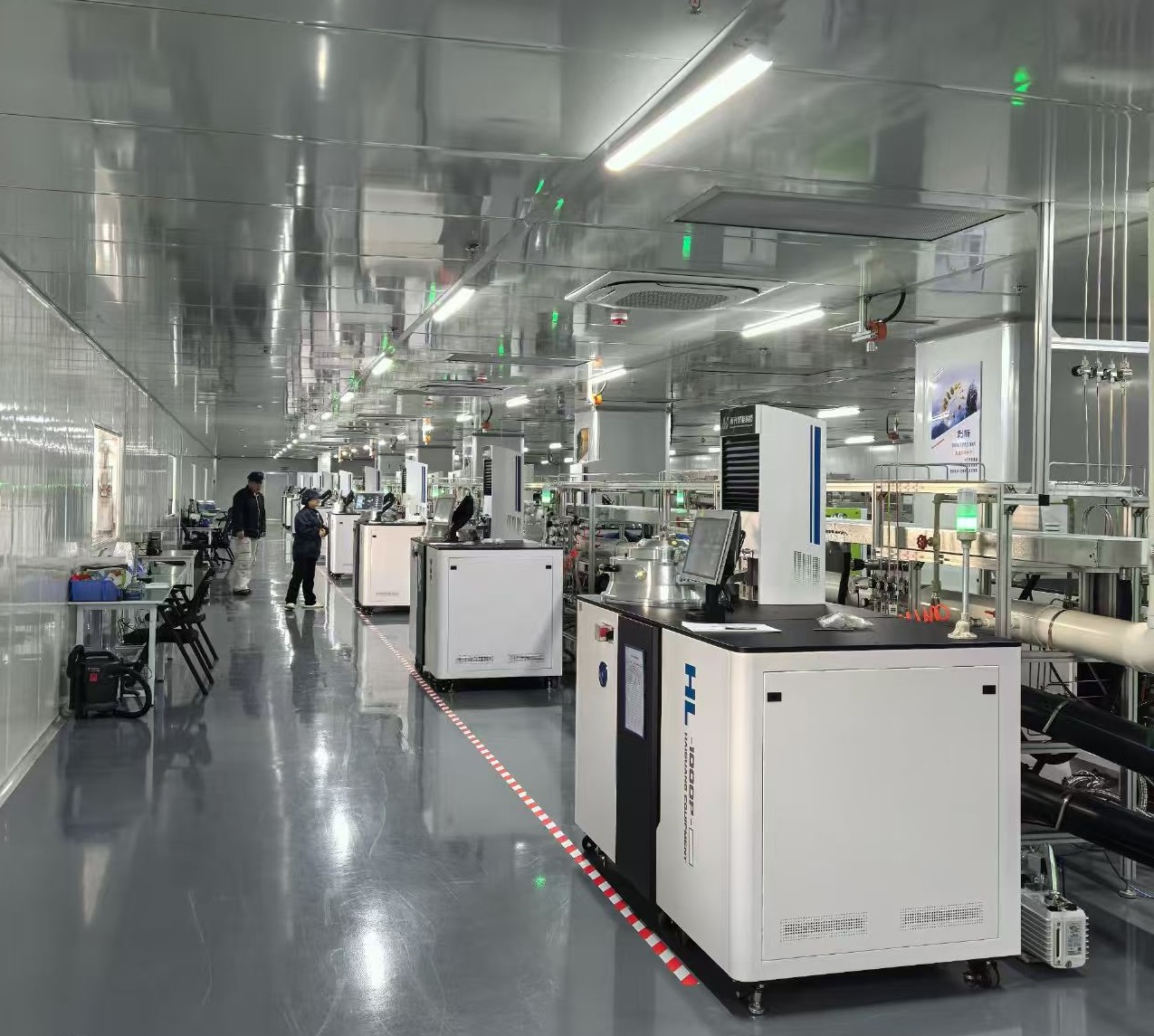
Foshan High Light Intelligent Technology crafts a line of lab-grown diamonds that blend quality and value through cutting-edge cultivation techniques and stringent quality control. Adhering to the international 4Cs standard, we offer not only loose diamonds but also finished jewelry pieces like diamond rings, necklaces, and stud earrings, along with personalized customization services. Our collection caters to diverse occasions, including wedding bands, collectibles, and everyday wear. Our product matrix precisely caters to varying budget requirements: Premium options feature 1-3 carat diamonds with D color, VVS clarity, and 3EX cut—delivering ultimate purity and exceptional fire for unparalleled luxury. Economy-friendly options feature 1-3 carat diamonds with DEF color, VS1 clarity, and 3EX cut—free from visible flaws for daily wear—priced at just 1/5 to 1/10 of comparable natural diamonds. For customers without specific requirements, we default to recommending gold settings with D color, VS1 clarity, and 3EX cut diamonds, balancing quality and value for a foolproof purchase. Each diamond comes with an authoritative IGI certificate, featuring unique traceability codes and supporting re-inspection. Customization services are available, allowing selection of 18K gold, 14K gold, or platinum settings paired with exclusive mounting techniques to create one-of-a-kind jewelry. This comprehensive approach caters to the sparkling aspirations of consumers across all budgets.
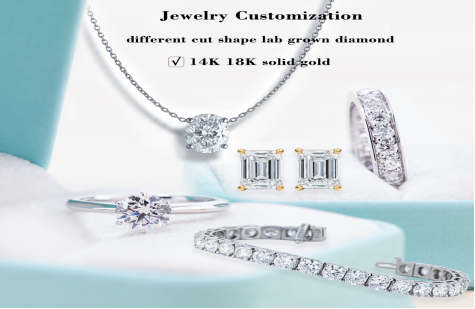
Foshan Highlight Intelligent Technology Co., Ltd. has been deeply involved in the CVD-grown diamond field for many years. Leveraging its mature core technologies and differentiated process layout, it has achieved full-dimensional coverage of white diamond products. All of the company's white diamond products are pure carbon crystals with a hardness of 10. Their physical and chemical properties are completely consistent with natural white diamonds, placing them firmly in the category of genuine diamonds.
Significant core technological advantages: Relying on a stable and controllable cultivation environment, it can produce high-color diamonds ranging from D to F, with clarity generally reaching VS1 or higher standards. They are virtually flawless to the naked eye, and their fire and brilliance rival top-grade natural white diamonds.
Our product highlights: Standardized grading standards, transparent and controllable selection: Strictly adhering to the international diamond grading system, key parameters such as color (D-J), clarity (SI1-VVS1), cut (EX-VG), and carat weight are clearly marked. Products come with authoritative IGI testing certificates, supporting full traceability and verification.
Green and sustainable development, fulfilling social responsibility: The cultivation process requires no extraction of earth's crustal resources, avoiding the environmental damage caused by natural diamond mining from the source. It is a superior choice that combines aesthetic value with environmental protection.
High cost-performance advantage, breaking down market price barriers: Compared to natural white diamonds, our CVD white diamonds are significantly more competitive in price. Within the same budget, consumers can choose larger carat or higher quality products, helping them easily achieve “real diamond freedom.”
*The articles and pictures are only for industry communication and sharing. If there is any infringement, please contact us to delete them.









-

CVD Single-Crystal Diamonds: An Analysis of the Complete Processing Workflow from Gas-Phase Deposition to Finished Diamond Chips
MPCVD (Microwave Plasma Chemical Vapor Deposition) technology is currently the core process for producing high-quality single-crystal diamond s. Thanks to its advantages of low defect rates, high purity, and controllable large dimensions, it is widely used in fields such as semiconductor heat dissipation, precision optics, and high-end sensors. The final quality of single-crystal diamond s depends on comprehensive process control throughout the entire workflow—from vapor deposition growth to pos
-
Single-Crystal or Polycrystalline Diamond — Which Has Greater Potential?
As diamond continues to enter industries such as semiconductors, thermal management, optics, high-power electronics, and precision machining, the requirements for diamond materials are also evolving.
-
Diamond Polishing and Grinding Processes: Core Challenges and Industry Hurdles
Diamond is often hailed as the “ultimate material” – ranking 10 on the Mohs hardness scale, boasting an ultra‑high thermal conductivity (~2,200 W/(m·K)), excellent chemical stability, and broad optical transparency. These properties make it irreplaceable in cutting‑edge applications such as semiconductor heat dissipation, high‑end optics, and quantum chips. Yet the paradox of “good materials are hard to process” is nowhere more evident than in diamond. From rough grinding for planarization to at
-
Single-Crystal vs Polycrystalline CVD Diamond: Process Difference Lies in Growth Logic, Not Equipment
The process difference between single crystal and polycrystalline CVD diamond lies not in equipment, but in growth logic. Single crystal and polycrystalline CVD diamond are two functional new materials with completely independent growth mechanisms, lattice structures and performance systems. Their process logic, product features and application boundaries diverge fundamentally from the very start of deposition and growth. Comparing or selecting materials without considering their underlying crys